%20%20--%3E%0A%3Csvg%20version%3D%221.1%22%20id%3D%22Layer_1%22%20xmlns%3D%22http%3A%2F%2Fwww.w3.org%2F2000%2Fsvg%22%20xmlns%3Axlink%3D%22http%3A%2F%2Fwww.w3.org%2F1999%2Fxlink%22%20x%3D%220px%22%20y%3D%220px%22%0A%09%20width%3D%2239px%22%20height%3D%2240px%22%20viewBox%3D%220%200%2039%2040%22%20enable-background%3D%22new%200%200%2039%2040%22%20xml%3Aspace%3D%22preserve%22%3E%0A%3Cpath%20fill%3D%22%23FFFFFF%22%20d%3D%22M38.5%2C7H28.2v26h10.3V7z%22%2F%3E%0A%3Cpath%20fill-rule%3D%22evenodd%22%20clip-rule%3D%22evenodd%22%20fill%3D%22%23FFFFFF%22%20d%3D%22M26.1%2C25.5c0%2C5.8-4.1%2C7.5-12.9%2C7.5C3.9%2C33%2C0%2C31.2%2C0%2C25.2v-1.1h11.6%0A%09v2.4c0%2C0.7%2C0.1%2C1.4%2C1.2%2C1.4c1%2C0%2C1.2-0.4%2C1.2-1.3v-0.9c0-1.6-0.9-1.6-3.5-2.2C2.2%2C21.7%2C0%2C19.7%2C0%2C15.3v-0.9C0%2C9.3%2C5.5%2C7%2C12.9%2C7%0A%09c10.2%2C0%2C12.8%2C2.6%2C12.8%2C7.4v1.8h-11v-2.9c0-0.6-0.4-1.1-1.2-1.1c-0.6%2C0-1.2%2C0.4-1.2%2C1.1v0.9c0%2C1.5%2C0.9%2C2%2C3.3%2C2.5%0A%09c8%2C1.6%2C10.5%2C3.3%2C10.5%2C7.5V25.5z%22%2F%3E%0A%3C%2Fsvg%3E%0A)
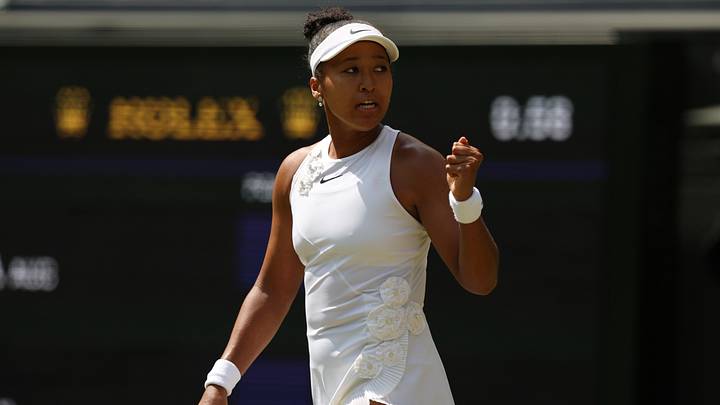
2026 Wimbledon Midterm Grades: Naomi Osaka Stuns Aryna Sabalenka
Touch grass, as the kids say, and everything changes. The world softens, the soul fills, tennis points quicken and the ball stays low.
Here at Wimbledon 2026, the Serena Williams comeback came loudly, left quietly, and what did we learn? Not necessarily a lot. She still does things her way. She can still serve mightily. Time still spares no one its indignities and ravages.
We also learned—or at least had reinforced—that tennis is bigger than any one individual. In Serena’s absence, other players came to the fore—young, old, future stars and happy qualifiers. A theme emerged: reliable winners winning, and star-crossed former winners (Grigor Dimitrov, Matteo Berrettini, Naomi Osaka, and Barbora Krejčíková) returning. The upsets were relatively minor, but the quality was major. And much intrigue remains.
As we head into Week 2, here are your midterm grades.
A
Jannik Sinner: The men’s top seed survived and advanced. On the women’s side, the top three seeds are out, with Aryna Sabalenka falling to Osaka and No. 2 Elena Rybakina and No. 3 Iga Świątek also eliminated.
Novak Djokovic: Yes, he gets high marks for his tennis and durability at 39 years old (It’s not hard to see him winning the whole shebang), but also for this restaurant-quality mid-match prank.
Czech, please: They just keep coming. The Czech players showed up, and Jiří Lehečka, Marie Bouzková, Linda Nosková and Karolína Muchová remain—this from a country of 10 million and an unfriendly climate for tennis.
Roman Safiullin: Unsure if he’d ever play again due to injury, the Russian qualifier reached the middle weekend, beating João Fonseca along the way.
Americans: At this writing Taylor Fritz is still alive on the men’s side, while four American women remain in the draw. Plus, there were some strong unexpected results (Ashlyn Krueger, Claire Liu) as a bonus.
WTA: Planting its flagship event in Saudi Arabia was always a problematic, cynical cash grab, no matter how much cosmetic work went into the messaging and marketing. Moving the WTA Finals to Indian Wells—a familiar, tennis-friendly pocket—is the equivalent of a point well-played.
Asia: Players from a variety of countries made their mark. Japan (Osaka and Shintaro Mochizuki), the Philippines (Alexandra Eala), Indonesia (Janice Tjen) and Thailand (Mananchaya Sawangkaew) were well represented.
Michael Zheng: Having graduated from Columbia while at Roland Garros, the former NCAA champion qualified (for his third consecutive major) and won two rounds. He won’t need to qualify at the U.S. Open, and he likely won’t need a wild card, either. He’ll be ranked sufficiently high as his career takes off.
Arthur Fery: The Brit not only won his first three matches but—a terrific flex—wore earplugs to drown out the mid-match bleatings of his opponent Damir Džumhur.
Daniel Evans: He should have gotten a main draw wild card. He should have gotten a more gracious and dignified send-off from the tournament. Still, as his admirable career comes to an end, someone ought to tell him that more fans than perhaps he realizes appreciate his achievements and contributions. (And note that he is coaching Henry Searle so we haven’t seen the last of him.)
B+
Serena Williams: At 44, and in her first match since 2022, Serena didn’t get the win, but she acquitted herself respectably and rolled back the clock on her serve. She then had to pull out of doubles due to a knee injury.
Maya Joint: She played with poise and fearlessness, beating Serena Williams and thwarting an anticipated comeback. Then, after winning the first set, she lets an opportunity slip against Alexandra Eala.
B
Maja Chwalińska: The Roland Garros finalist—a rare seeded Wimbledon wild card—showed she can play on grass, holding match point in her first-round match against Thailand’s Mananchaya Sawangkaew. Then, she rolled her ankle and lost in three sets.
Bianca Andreescu: The former major champion (2019 U.S. Open) qualified for the main draw but then lost a winnable first-round match to Zhang Shuai 7–6, 7–6.
Pablo Carreño Busta: A former top-10 player, now 34, won his first career match at Wimbledon, beating Denis Shapovalov. He then lost a two-day affair against Rafael Jódar.
B-
Jodseca: Jódar and Fonseca—peers, fellow UVA recruits, next-generation stars who slayed in Paris—both left the grass quietly, falling to qualifiers.
C
Ben Shelton: He entered Wimbledon as the fourth seed. In his past two majors, he lost to Raphaël Collignon (then ranked No. 62) and Finnish qualifier Otto Virtanen. It’s been a strange season for Shelton in which he’s won three titles, achieved a career-high ranking and regressed at the biggest events.
Stefanos Tsitsipas: He once camped out in the top 10 and came within games of winning majors. Now, he’s barely in the top 100 and mounted virtually no challenge against 39-year-old Djokovic.
Brits: Emma Raducanu and Jack Draper withdrew due to injury. Then, on Day 1, 10 of 11 British players lost. If the All England Club is going to restrict prize money on the grounds that it is investing Wimbledon revenues in British tennis, at least give us something to show for your investment.
Injury mania: Here we are, in early July, and the list of injured players (starting with Carlos Alcaraz) is lengthy. How much better would this sport be if the rash of injuries were taken more seriously by, notionally, the leaders?
Bad actors: People who lose money gambling on sports—not least tennis—and then troll athletes: Your time is coming.
More Tennis from Sports Illustrated
 Add us as a preferred source on Google
Jon Wertheim is a senior writer for Sports Illustrated and has been part of the full-time SI writing staff since 1997, largely focusing on the tennis beat, sports business and social issues, and enterprise journalism. In addition to his work at SI, he is a correspondent for “60 Minutes” and a commentator for The Tennis Channel. He has authored 11 books and has been honored with two Emmys, numerous writing and investigative journalism awards, and the Eugene Scott Award from the International Tennis Hall of Fame. Wertheim is a longtime member of the New York Bar Association (retired), the International Tennis Writers Association and the Writers Guild of America. He has a bachelor’s in history from Yale University and received a law degree from the University of Pennsylvania. He resides in New York City and Paris with his wife, who is a divorce mediator and adjunct law professor. They have two children.
Follow jon_wertheim