
Michael Soroka Could be Valuable Addition to Astros in Free Agency
In this story:
Daikin Park was not a pitcher-friendly ballpark, especially in 2026, when it finished as the fifth ballpark with the highest home run park factor (113), despite being 2% below the league average overall.
Now, the big detail here is that, during that same period, right-handed hitters got the better end of it, with a 117 park factor for home runs, often taking advantage of the short porch of just 310 feet where the Crawford Boxes are located in left field.
That said, it is clear that preventing runs through home runs is one of the main challenges for Houston Astros pitchers, so the team should work to counteract that trend and find pitchers with projections who can provide stability to the rotation and bullpen.

In 2026, Astros pitchers allowed the second-highest number of Doubters home runs, a total of 114, behind only the Arizona Diamondbacks, who were affected by 185. However, while xHR favored Arizona with a projection of 32.7 fewer home runs, Houston pitchers had a difference of just 6.8, which makes us think even more about how urgent the plan should be to prevent next season from becoming chaos in that regard once again.
Why do pitchers like Michael Soroka fit this profile?

I have written here about some of the options that seem reasonable to me for strengthening the Astros’ starting staff, such as Dustin May, Casey Mize and Clay Holmes, but each of them has been somewhat vulnerable at some point to allowing a high rate of home runs when right-handed hitters pulled the ball.
Holmes had one of the best percentages in the group, but his allowed HR/FB rate on Pull increased from 20.7% last year to 29.4% this season. May, who had allowed 46.2% in 2025, improved to 21.2%, while Mize’s decline seems the most concerning, suffering a disparity in his xFIP from 6.60 to 8.45.

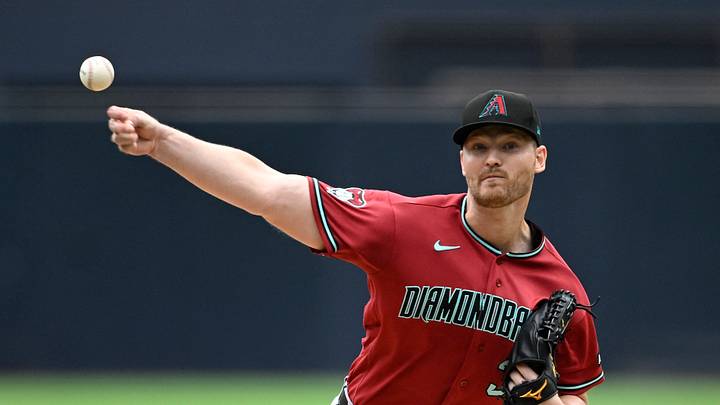
That is how we get to the pitcher who offers the best balance among the more affordable options the Astros could access, right-hander Michael Soroka, who has had an impressive recovery after going through injuries and inconsistencies. You probably remember the kid, as he debuted at 20 years old with the Atlanta Braves, pitching six scoreless innings against the New York Mets on May 1, 2018. But it was not until his second season that Soroka became a pitching revelation when he recorded 4.0 fWAR with a solid 13-4 season, a 2.68 ERA and a 3.85 xFIP in 174 ⅔ innings across 29 starts.
That has been the best version of his career, that of a pitcher who did not need to rely on strikeouts to survive, as he had pretty good control and the ability to limit home run production. Of course, Soroka has had to adjust many things since then, and it was not until this season that he produced a solid performance on the mound again.

In his first full season as a starter for the Diamondbacks, Soroka once again surpassed 20 starts and 100 innings in a single season for the first time since 2019, and finished recording the second-best fWAR of his career at 2.7 after working in 21 games and recording 116 innings. His 8.84 strikeout rate was slightly better than that of that brief 2019 version, he maintained a similar range in his walk rate at 2.25 and also limited home runs, allowing just 8.0% after recording 12.0%, 14.4% and 26.5% in the previous three seasons with different teams: the Nationals and Cubs last year, the Chicago White Sox in 2024 and the Braves in 2023.
Now, returning to the starting point here, when we talk about home run prevention based on the problem that has been common for Houston pitchers at Daikin Park and other ballparks that often favor hitters, Soroka stands out as one of the main alternatives.
Among qualified pitchers who allowed at least 145 pulled balls by right-handed hitters, Soroka recorded the third-lowest HR/FB rate at 17.1% after allowing 147 batted balls, behind only Dylan Cease (11.9% in 168 opportunities) and Landen Roupp (15.4% in 194 opportunities), in a ranking where the Astros’ number-one starter, Hunter Brown, did not qualify, as he allowed 100 batted balls, but his allowed percentage was 47.1%.
As I wrote here at the beginning, Arizona pitchers were precisely the most exposed to allowing home runs in the “Doubters” category, and right-handers have had to deal with a difficult scenario at Chase Field, the ballpark with a 106 park effect since 2024, the second-highest in all of Major League Baseball, behind only Coors Field (111), the hitters’ paradise.

Contrary to what the results of how Soroka has limited home runs in a difficult pitching environment might suggest, what gives even more credit to his run prevention is that hitters finished with a 23.2% Pull AIR% rate, the highest of his career in seasons with at least 200 batters faced, a percentage well above the league average of 16.9%.
At this point, the recovery of his four-seam fastball (he finished in the 89th percentile), which improved its Run Value from -3 in 2025 to +4 this year, has been a key point and one of the main weapons for avoiding hard contact against right-handers, without forgetting that breaking pitches (91st percentile) also helped Soroka finish in the 91st percentile in the league in pitching.

Given the Astros’ problems sustaining their starting rotation, I would put Soroka among the main options currently available on the market, although without overlooking his injury history and the fact that he is coming off a recovery season. For that reason, a short-term deal could be the most suitable option. Some projections estimate that around $15-17 million in AAV would be reasonable for Soroka, who will pitch at 30 years old in 2027. So, based on the standards with which players have reached free agency this year, perhaps an offer for a couple of years between $30-34 million would be a good deal.
 Add us as a preferred source on Google

Yirsandy is a baseball writer specializing in MLB coverage with experience across multiple teams and storylines. He currently writes for Diamond Centric, where he covers the New York Mets, San Diego Padres, Chicago Cubs, Milwaukee Brewers, and Kansas City Royals. My work focuses on game coverage, player analysis, and storytelling that connects performance with context. My Substack has also been an important part of my writing development, where I’ve built much of my baseball coverage and storytelling voice over time. I’m passionate about combining reporting, research, and thoughtful analysis to produce engaging baseball content for readers.
Follow Yirsandy