
Rebuilding the Starting Rotation Must Be Houston’s Priority This Winter
In this story:
There are many ways to analyze the collapse of the Houston Astros’ pitching in 2026, but what is indeed not debatable is that the starters finished with the worst percentage of quality starts in franchise history.
Houston finished with just 44 quality starts, for a percentage of 27.2%, well below the 40.7% recorded by the 2021 rotation, the second-worst mark in the last 10 seasons.
As you already know, Houston used 19 different starters, and 12 of them finished with at least five starts. That says a lot about the stability of the starting rotation, which went through several injuries and inconsistencies.

Of course, this has many interpretations, and we will go deeper here. Perhaps now you remember that the Astros used several openers throughout the season, and that could have influenced the percentage of quality starts to some extent.
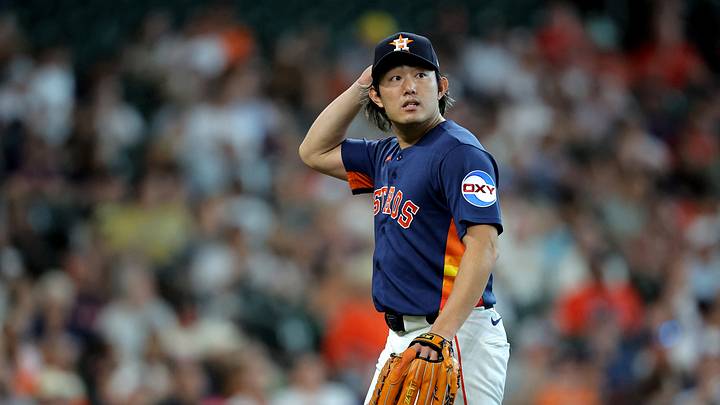
However, the big problems went beyond that, as the Astros combined to record 60 starts that did not reach five innings. Starters Tatsuya Imai (8), Cristian Javier (7), Peter Lambert (6), Hunter Brown (4), and Spencer Arrighetti (4) combined for 29 of them.
So the problem here went beyond the short outings that the openers had to make, and that was the turning point in ending up with the worst collapse in terms of quality starts.
Big Questions Left by Starting Staff’s Inconsistencies

As a whole, if we analyze Houston’s starting staff over the last decade, there has not been a worse one when it comes to durability, stability, and dominance. I know those are big words, but there are plenty of reasons to support that statement, beyond the regression in quality starts.
That said, let’s go deeper into some key statistics that show us how far Houston’s rotation collapsed in 2026.

There is enough material to analyze detail by detail here. So, let’s start with fWAR, since I think it is one of the most baffling records.
Houston accumulated just 7.5 fWAR, and 87% came from the combined contributions of Lambert (2.4) and Brown (1.9).
Now, what seems almost inadmissible is that the entire 2020 rotation accumulated 6.3 fWAR, just 1.2 fewer in only 60 starts because of the season shortened by the pandemic.
Then, if you scroll through the other columns, you will see that in 2026 they finished with the worst xFIP, and in FanGraphs’ pitching metrics such as Stuff+, Location+, and Pitching+, available since 2020, they also had the worst grades in each of them. In Stuff+, they recorded a grade of 99, the only one that came close to reaching the league average.
This says a lot about how limited this group of pitchers was throughout the season, without being able to add real value that can become a hope for dominance or long-term durability.
But there is more. Did you make sure to look at the pitch percentages? Here we go.
Houston’s 2026 version has the highest percentages of contact allowed inside and outside the strike zone, which clearly tells us how vulnerable the overall pitch mix was.
Continuing along those lines, two even more revealing statistics appear: the lowest ground-ball rate and the second-highest home run rate.
In other words, throughout the year, the Astros’ starters were threatened by fly balls, a trend that led to them being unable to develop collective stability to induce ground balls more frequently and get out of some difficult situations by counting on the infield defense.
Part of that problem could have been solved if they had had more pitchers capable of striking batters out consistently, but it was the exact opposite, as the 2026 staff finished with the worst strikeout rate of the decade and the highest walk rate, two things that usually cause a breakdown in run prevention.
On Tuesday, Houston announced the hiring of Spencer Medick as the organization’s new pitching director, and there are also rumors that Matt Kleine, assistant general manager of the Milwaukee Brewers, could be a strong candidate to fill the team’s general manager position.
So getting to work and organizing priorities starting this winter will be fundamental. The Astros will not compete every year with the same luck of competing in a mediocre division as happened this year, when they captured the American League West with an 81-81 (.500) record, just one game ahead of the Texas Rangers (80-82), and with a negative run differential of 32 runs (734 scored and 766 allowed).
 Add us as a preferred source on Google

Yirsandy is a baseball writer specializing in MLB coverage with experience across multiple teams and storylines. He currently writes for Diamond Centric, where he covers the New York Mets, San Diego Padres, Chicago Cubs, Milwaukee Brewers, and Kansas City Royals. My work focuses on game coverage, player analysis, and storytelling that connects performance with context. My Substack has also been an important part of my writing development, where I’ve built much of my baseball coverage and storytelling voice over time. I’m passionate about combining reporting, research, and thoughtful analysis to produce engaging baseball content for readers.
Follow Yirsandy