%20%20--%3E%0A%3Csvg%20version%3D%221.1%22%20id%3D%22Layer_1%22%20xmlns%3D%22http%3A%2F%2Fwww.w3.org%2F2000%2Fsvg%22%20xmlns%3Axlink%3D%22http%3A%2F%2Fwww.w3.org%2F1999%2Fxlink%22%20x%3D%220px%22%20y%3D%220px%22%0A%09%20width%3D%2239px%22%20height%3D%2240px%22%20viewBox%3D%220%200%2039%2040%22%20enable-background%3D%22new%200%200%2039%2040%22%20xml%3Aspace%3D%22preserve%22%3E%0A%3Cpath%20fill%3D%22%23FFFFFF%22%20d%3D%22M38.5%2C7H28.2v26h10.3V7z%22%2F%3E%0A%3Cpath%20fill-rule%3D%22evenodd%22%20clip-rule%3D%22evenodd%22%20fill%3D%22%23FFFFFF%22%20d%3D%22M26.1%2C25.5c0%2C5.8-4.1%2C7.5-12.9%2C7.5C3.9%2C33%2C0%2C31.2%2C0%2C25.2v-1.1h11.6%0A%09v2.4c0%2C0.7%2C0.1%2C1.4%2C1.2%2C1.4c1%2C0%2C1.2-0.4%2C1.2-1.3v-0.9c0-1.6-0.9-1.6-3.5-2.2C2.2%2C21.7%2C0%2C19.7%2C0%2C15.3v-0.9C0%2C9.3%2C5.5%2C7%2C12.9%2C7%0A%09c10.2%2C0%2C12.8%2C2.6%2C12.8%2C7.4v1.8h-11v-2.9c0-0.6-0.4-1.1-1.2-1.1c-0.6%2C0-1.2%2C0.4-1.2%2C1.1v0.9c0%2C1.5%2C0.9%2C2%2C3.3%2C2.5%0A%09c8%2C1.6%2C10.5%2C3.3%2C10.5%2C7.5V25.5z%22%2F%3E%0A%3C%2Fsvg%3E%0A)
Baseball—and Its Free Agency Pool—Is Starved of Right-Handed Power Hitters
In this story:
This article is a part of Verducci’s View, a weekly baseball newsletter from Sports Illustrated senior writer Tom Verducci. Every Monday, Tom empties out his notebook over email and covers MLB’s hottest topics, provides in-depth analysis through both text and video breakdowns, looks forward to what’s worth watching during the week and more.
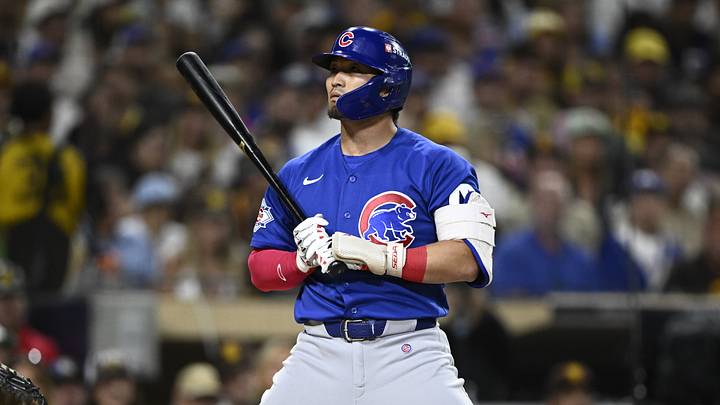
Where have all the right-handed power hitters gone? Don’t look to free agency, where your best choices are Randy Arozarena, Seiya Suzuki and Ryan Jeffers.
The game has hit at least a three-decade low when it comes to right-handed power. This free agent class accentuates how hard it is to find right-handed hitters who can mash.
The facts:
- Only eight right-handed hitters hit 30 home runs this season, half as many as the previous season and the fewest since 2014. In 2019 there were 34!
- Right-handed hitters this season produced the fewest hits in any season in the wild card era (full seasons since 1995).
- Plate appearances by right-handed hitters have dropped 14% in just the past four years, hitting a wild card era low of 51.2% in 2026. It was 60.2% four years ago.
Teams that desperately need right-handed thump include the Guardians (a major league low 57 home runs from righthanders, even with the acquisition of Jo Adell), Marlins and Royals (second and third fewest home runs) and the Phillies, Angels and Mariners (who ranked 28-29-30 in right-handed slugging). They are the neediest of what was a league-wide trend in 2026:
2026 Rankings by RHH in Wild Card Era
Statistic | Ranking |
|---|---|
Hits | Fewest |
Plate Appearances | Fewest |
Doubles | Fewest |
Batting Average | Tied for lowest |
Home Runs | Fewest since 2014 |
Slugging | Tied for lowest since 2014 |
We are seeing a sharp decline in how many times right-handed batters come to the plate and in how productive they are in those diminished chances:

What’s going on? Has left-handed hitting become more common on amateur development levels? Shohei Ohtani is right-handed, for instance, but grew up learning to hit left-handed because of the advantage of being closer to first base. In the first round of the draft this year, teams took more left-handed hitters (13) than right-handed (11, with one switch-hitter). The trend against right-handed hitting may be purely cyclical, but it’s real for whatever reason.
Are right-handed hitters getting pitched differently? Compared to 2019, the boom season of right-handed power (with a one-batter minimum for pitchers), righties are seeing fewer right-handed pitchers—66.4% back then compared to 59.8% this year—which theoretically should help them.
One key difference shows up in fastballs. Righties are seeing less of them but do less with them. Their average vs. fastballs since 2019 has dropped far more than against non-fastballs, which is probably related to velocity (increased from 92.4 to 93.8) and shaping in the growing popularity of the three-fastball family.
Right-Handed Hitters by Pitch Types
Year | Pct. of Fastballs | BA vs. Fastballs | Pct. of Non-Fastballs | BA vs. Non-Fastballs |
|---|---|---|---|---|
2019 | 58.9% | .272 | 40.4% | .224 |
2026 | 55.8% | .260 | 43.8% | .221 |

The Right Choices
Let’s look at the top right-handed bats, who should do well in this market because of scarcity, but all have their flaws.
1. Seiya Suzuki, 32
A consistent performer, Suzuki has put together four straight years with at least 132 games, a .473 slug, 20 homers and a 125 OPS+. He is the only right-handed hitter with four straight years of at least 20 homers and a 125 OPS+. He makes good swing decisions.
But there are some warning signs that should limit the length of his deal. He turns 33 in August, is not a plus baserunner, saw a drop in his exit velocity in 2026 and as a pull-side, fastball hitter—he likes to catch the ball out front—has some holes that can be exploited.
2. Randy Arozarena, 32
Mark him down as a consistent 20-20-20 guy: 20 homers, 20 steals and 20 hit by pitches. He is coming off a full-season best .381 OBP in part because of 26 HBPs, the third straight year he’s gone 20-20-20. He stands on the plate and does not give ground.
Again, the aging curve is an issue. Arozarena is a poor defender with a poor arm whose sprint speed has declined four straight years.
3. Ryan Jeffers, 30
A bat-first catcher, Jeffers made some sustainable swing adjustments that, with good swing decisions, has led to a .440 slug over the past four years. His defense is below average, but he’s a valuable bat when splitting time between catching and DH. He would seem to be a perfect fit for the Yankees.
4. Ty France, 32
He turned his career around in a huge year with the Padres in which he hit the ball harder than ever, 91.5 mph, up a full 2 mph from 2025, with his best bat speed. He’s essentially a right-handed Jake Bauers with a better glove. A bet on France is a bet that the bat speed and power continue to play without a long track record and some swing-and-miss and chase in his game.
5. Alec Bohm, 30
Bohm looks like he should have more power, given his size and his swing, but it’s just not there. In six full seasons he’s never hit more than 20 home runs. He doesn’t get the ball in the air to the pull side. What he does do well is use the whole field with runners on, explaining a career .314 average with RISP, well beyond his overall mark of .273. Teams must ask if it’s worth it for a corner player with little value as a defender or a baserunner. Or does someone see a way to unlock more power in his game, as happened with Bauers?
Best of the rest: Gleyber Torres, 30; Carson Kelly, 32; Mauricio Dubon, 32, Luis Robert Jr., 29; Tyler Stephenson, 30; Taylor Ward, 33.

The Bauers Bargain
The Red Sox got a bargain and a great addition in Jake Bauers at four years and $58 million. Boston needed to add only $34.85 million over three years to the qualifying offer on the table from Milwaukee. The Red Sox got a 3.3 WAR player for an overall AAV of $14.5 million, which is less than what the Reds gave Jeimer Candelario ($15 million) three years ago.
Bauers is not a plus defender, so he is likely to see more time at DH than at first base. His signing should finally get Boston to move off left-handed hitters Jarren Duran, who needs a change of scenery, and Masataka Yoshida, who has little power and almost no value on defense or the bases. The Red Sox have given them 1,806 plate appearances over the past two years with too little return (OPS+ of 97 and 104, respectively).
The Red Sox were a premier run prevention team last year. But their offense lacked firepower, especially for a team that plays in a hitter’s park. Outside of their 32–5 streak—no doubt they were amazing for six weeks—the Red Sox went 55–72 because they lacked enough punch. Only one team, Toronto, hit the ball with less exit velocity than the Red Sox.
Boston needs more than Bauers to fix the offense. It needs a healthy season from Roman Anthony. It needs to decide whether to give the shortstop job to Franklin Arias, who should be an upgrade over Trevor Story (93 OPS+ and .296 OBP after 1,590 plate appearances with the team). It needs to see if Adley Rutschman can reverse a career decline (.240 and 101 OPS+ over his past three seasons, .268 and 129 over his first two).
 Add us as a preferred source on Google

Tom Verducci is a senior writer for Sports Illustrated who has covered Major League Baseball since 1981. He also serves as an analyst for FOX Sports and the MLB Network; is a New York Times best-selling author; and cohosts The Book of Joe podcast with Joe Maddon. A five-time Emmy Award winner across three categories (studio analyst, reporter, short form writing) and nominated in a fourth (game analyst), he is a three-time National Sportswriter of the Year winner, two-time National Magazine Award finalist, and a Penn State Distinguished Alumnus Award recipient. Verducci is a member of the National Sports Media Hall of Fame, Baseball Writers Association of America (including past New York chapter chairman) and a Baseball Hall of Fame voter since 1993. He also is the only writer to be a game analyst for World Series telecasts. He lives in New Jersey with his wife, with whom he has two children.