
Mariners’ Cole Young Is No AL Gold Glove Lock as Defensive Metrics Clash
In this story:
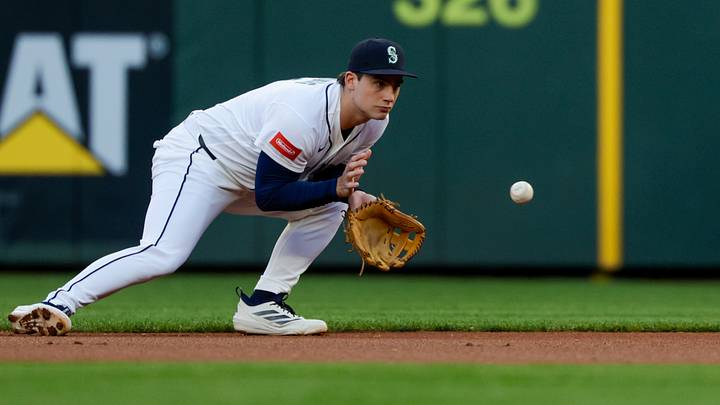
Acronym salesmen have to love Gold Glove debates. DRS can tell you one story while OAA says another. Cole Young’s 2026 résumé is living in the middle of it all. The Mariners can make a case that their 23-year-old second baseman deserves serious Gold Glove consideration. Calling him the obvious winner would require ignoring a bunch of data.
In SABR’s most recent published SDI rankings, covering games through Aug. 9, Young led AL second basemen at 3.8. Zach McKinstry followed at 2.9, while Chase Meidroth ranked sixth at 0.3. Since SABR hasn’t released a newer in-season update, those figures represent a snapshot of the race rather than its current standings.
Cole Young Has Earned His Place in the Gold Glove Race
The SDI lead carries a lot of the lifting. The metric accounts for approximately 25 percent of the Rawlings Gold Glove selection process, with its results added to votes from managers and coaches. Young entered the final stretch with a measurable advantage in one of the award’s official ingredients.
Defensive Runs Saved has also been friendly to him. Sports Info Solutions named Young one of its Defensive Players of the Month for March and April, then credited him with an AL-leading 11 DRS at second base through the first half.
That gives Young a legitimate résumé. It also gives Mariners fans permission to stump for their guy without wearing teal-colored blinders. Then Statcast walks into the room and pours cold water across the ballot.
As of Sept. 11, Baseball Savant graded Young at -4 Outs Above Average at second base and -3 Fielding Run Value overall. Meidroth, meanwhile, had +8 OAA and a +9 Fielding Run Value when MLB.com’s experts selected him as their predicted AL Gold Glove winner on Sept. 8. That’s not just a gap, it’s a canyon.
Baseball’s Defensive Math Cannot Agree on Cole Young
DRS and OAA examine overlapping defensive work through different models. They weigh positioning, range, opportunity and play difficulty differently. SDI blends information from multiple systems in an attempt to create a broader evaluation. None of them owns a perfect view of defense.
That’s how one second baseman can look elite on one leaderboard and below average on another. Young’s case depends heavily on DRS and SDI. Meidroth owns the cleaner Statcast argument. Gold Glove voters will have to decide whether they value Young’s body of converted plays or Meidroth’s success relative to Statcast’s estimated difficulty. Anyone declaring Young a runaway favorite is selling certainty the numbers simply can’t support.
Seattle can enjoy the larger development regardless of the outcome. Young recorded -9 OAA across 621 innings at second base during his 2025 debut. He has handled more than 1,200 innings there in 2026 while establishing himself as an everyday player. Even though Statcast remains skeptical. DRS, SDI, and honestly just a simple eye test says he has made a substantial leap.
Our verdict is straightforward. Young belongs among the Gold Glove finalists. Meidroth has a strong argument to win it. Young has enough support from the award’s own preferred data to keep this race open.
A trophy would look great on Young’s shelf. Seattle’s bigger victory is knowing second base no longer needs another temporary answer.
 Add us as a preferred source on Google
Tremayne Person is the Publisher for Mariners On SI and the Site Expert at Friars on Base, with additional bylines across FanSided’s MLB division. He founded the Keep It Electric podcast in 2023 and covers baseball with a blend of analysis, context, and a little well-timed side-eye just to keep things honest. Tremayne grew up a Mariners fan in Richmond, Va., and that passion ultimately led him to move to Seattle to cover the team closely and become a regular at home games. Through his writing, he connects with fans who want a deeper, more personal understanding of the game. When he’s not at T-Mobile Park, he’s with his dog, gaming, or finding the next storyline worth digging into.
Follow TremaynePerson