
Mariners’ Vaunted Pitching Lab May Have Overengineered George Kirby
In this story:
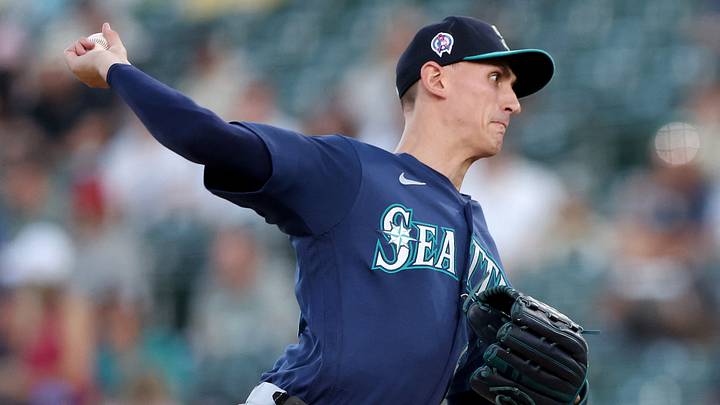
George Kirby used to make pitching look uncomplicated. He was a strikethrower, challenged hitters with a lively four-seam fastball and trusted his command to clean up the rest. The Mariners handed him more tools, more shapes and more choices. Somewhere inside all that tinkering, his best weapon was no longer the same.
A conversation sparked by Charlie Wright of MLB Trade Rumors, Kirby threw seven different pitches at least 80 times in 2026. It sounds impressive until we figure out what the production of that looked like. He finished with a career-worst 4.33 ERA, and his 4.20 expected ERA can’t bail him out. It was a poor season by his standards. And it was because Kirby consistently pitched poorly.
The biggest problem sat at the center of his arsenal.
Kirby’s four-seam fastball once carried him into the majors and quickly established him as a frontline starter. It generated a +17 run value during his rookie season in 2022, when he threw it nearly 46 percent of the time. Hitters knew it was coming and they still struggled to do much with it.
That dominance has faded. Opponents batted .251 against Kirby’s four-seamer in 2026, up from .188 the previous season. Its whiff rate dropped from 30.7 percent to 23.4 percent, while the strikeout rate it generated fell to 20.4 percent. The pitch reached a career-best average velocity of 96.7 mph and somehow became easier to hit.
The Mariners have a history of building their reputation on helping pitchers optimize arsenals, reshape their breaking stuff and squeeze more production from their movement. That reputation has been earned. They have developed legitimate major-league starters and turned unremarkable acquisitions into useful arms.
Success can create its own blind spots, though. A pitching department obsessed with finding the next adjustment can miss the value of leaving a good formula alone.
The Mariners Should Simplify George Kirby’s 2027 Plan
Kirby now has a four-seamer, sinker, sweeper, curveball, changeup, cutter and splitter competing for space in his repertoire. He used the splitter the least in 2026 and ultimately abandoned it halfway through the season. Still, those pitchers are a lot of information for a pitcher whose original appeal was his ability to attack the strike zone with conviction.
The results suggest Kirby has accumulated options without preserving a dominant identity. His sinker produced the best run value in his arsenal in 2026, and even that pitch finished at only +2. The curveball, changeup and splitter were all negative offerings. Seven pitches gave hitters seven different looks. None made them particularly uncomfortable.
So, maybe, just maybe we need to put the toolbox away for a little while. Kirby’s 2027 project should begin with his four-seamer. The velocity is still there. His arm is capable of producing premium stuff. The Mariners need to determine why the pitch lost movement, missed fewer bats and became more predictable despite arriving faster than ever.
Maybe the answer involves changing its shape. His arm angle is back to its original delivery. So maybe it’s more about how Kirby needs to alter where he throws his stuff. Or the sinker could move to a larger role while the four-seamer becomes more situational. Whatever they decide, the goal should be a smaller collection of pitches Kirby can execute with aggression.
He remains too talented to write off and too important to treat like a laboratory experiment. The Mariners helped build one of baseball’s most gifted young starters. Their next challenge is clearing away the clutter they may have helped create.
 Add us as a preferred source on Google
Tremayne Person is the Publisher for Mariners On SI and the Site Expert at Friars on Base, with additional bylines across FanSided’s MLB division. He founded the Keep It Electric podcast in 2023 and covers baseball with a blend of analysis, context, and a little well-timed side-eye just to keep things honest. Tremayne grew up a Mariners fan in Richmond, Va., and that passion ultimately led him to move to Seattle to cover the team closely and become a regular at home games. Through his writing, he connects with fans who want a deeper, more personal understanding of the game. When he’s not at T-Mobile Park, he’s with his dog, gaming, or finding the next storyline worth digging into.
Follow TremaynePerson