%20%20--%3E%0A%3Csvg%20version%3D%221.1%22%20id%3D%22Layer_1%22%20xmlns%3D%22http%3A%2F%2Fwww.w3.org%2F2000%2Fsvg%22%20xmlns%3Axlink%3D%22http%3A%2F%2Fwww.w3.org%2F1999%2Fxlink%22%20x%3D%220px%22%20y%3D%220px%22%0A%09%20width%3D%2239px%22%20height%3D%2240px%22%20viewBox%3D%220%200%2039%2040%22%20enable-background%3D%22new%200%200%2039%2040%22%20xml%3Aspace%3D%22preserve%22%3E%0A%3Cpath%20fill%3D%22%23FFFFFF%22%20d%3D%22M38.5%2C7H28.2v26h10.3V7z%22%2F%3E%0A%3Cpath%20fill-rule%3D%22evenodd%22%20clip-rule%3D%22evenodd%22%20fill%3D%22%23FFFFFF%22%20d%3D%22M26.1%2C25.5c0%2C5.8-4.1%2C7.5-12.9%2C7.5C3.9%2C33%2C0%2C31.2%2C0%2C25.2v-1.1h11.6%0A%09v2.4c0%2C0.7%2C0.1%2C1.4%2C1.2%2C1.4c1%2C0%2C1.2-0.4%2C1.2-1.3v-0.9c0-1.6-0.9-1.6-3.5-2.2C2.2%2C21.7%2C0%2C19.7%2C0%2C15.3v-0.9C0%2C9.3%2C5.5%2C7%2C12.9%2C7%0A%09c10.2%2C0%2C12.8%2C2.6%2C12.8%2C7.4v1.8h-11v-2.9c0-0.6-0.4-1.1-1.2-1.1c-0.6%2C0-1.2%2C0.4-1.2%2C1.1v0.9c0%2C1.5%2C0.9%2C2%2C3.3%2C2.5%0A%09c8%2C1.6%2C10.5%2C3.3%2C10.5%2C7.5V25.5z%22%2F%3E%0A%3C%2Fsvg%3E%0A)
MLB Postseason Power Rankings: Strength and Weaknesses for Every Playoff Team
In this story:
The postseason field is finally set. After Sunday’s results on the final day of the regular season, we officially know what 12 teams will be in contention for the 2026 World Series.
The Diamondbacks, despite their late push, fell short of the playoffs, thanks to a Phillies win on Sunday against the Rays. Meanwhile, the final domino to fall in the American League went in favor of the Astros, who secured the AL West title with a victory over the Athletics on Sunday. Houston becomes the worst team to ever make the playoffs in a 162-game season, sneaking in and winning the division with just an 81–81 record.
Fans won’t have to wait long for postseason to get underway, with the Wild Card series set to begin on Tuesday. But before the action gets going, we’re going to do a final power ranking, assessing where all 12 teams sit and detailing their biggest strength and weakness.
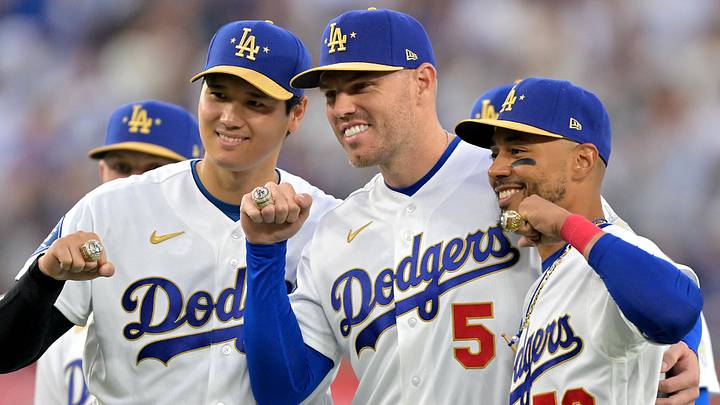
1. Los Angeles Dodgers
Biggest strength: Elite starting pitching, lineup
Biggest weakness: Bullpen
The Dodgers may be the No. 2 seed in the National League, but they’re built to win in October. It’s hard to determine what’s a greater strength between their loaded starting rotation or their star-studded lineup. There’s no weaknesses in their rotation, with All-Star caliber pitchers available to take the mound every night, even with Shohei Ohtani restricted to DH duties. There isn’t a team in MLB with more postseason experience than Los Angeles, who have won back-to-back World Series with this core. During the regular season, the Dodgers had MLB’s second-highest OPS (.762) and fourth-best ERA (3.55). If there’s any way to beat them it’s by getting after a bullpen that has been inconsistent throughout the season, though it’s still a top-10 unit. Injuries have plagued their relief pitching corps, however, with the likes of Blake Treinen, Edgardo Henriquez and Will Klein all currently on IL.
2. Milwaukee Brewers
Biggest strength: Elite pitching
Biggest weakness: Lack of power
The Brewers’ rotation, headlined by NL Cy Young favorite Jacob Misiorowski, has been one of MLB’s best, and it’s helped the team secure the league’s best regular-season record. The starting rotation owns MLB’s fifth-best ERA (3.65) and their bullpen has been equally impressive, ranking third in MLB with a 3.40 ERA. Milwaukee has scored the second-most runs in the league this season (832), as their small-ball approach has worked wonders for them. But in October, when a single swing of the bat can dramatically change a team’s fortunes and rallies are harder to come by, they might not have the power hitters capable of providing that big home run swing. The Brewers didn’t have a single 30-home run hitter this season and had just three everyday starters with a slugging percentage above .450.
3. Tampa Bay Rays
Biggest strength: Elite starting pitching
Biggest weakness: Bottom-third of the lineup
The Rays had the best record in the American League this season, largely thanks to their pitching. The starting rotation has been excellent, ranking third in MLB with a 3.51 ERA. Drew Rasmussen has quietly been one of MLB’s best arms, and Freddy Peralta has begun to rediscover his previous form after a rough go with the Mets and a shaky start on the mound in Tampa. Much like the Brewers, the Rays primarily utilize a small-ball approach offensively. The Rays hit the ninth-fewest home runs in MLB this year, and despite rostering some elite hitters such as Junior Caminero and Yandy Diaz, they haven’t received much production out of the bottom third of their lineup, which is their biggest weakness with the postseason looming.
4. Atlanta Braves
Biggest strength: Deep lineup
Biggest weakness: Plate discipline, low on-base rates
The Braves are another team with an abundance of postseason experience in the lineup. They have several players that can turn a game on its head with one swing of the bat, and had five 20-plus home run hitters during the regular season in Matt Olson, Michael Harris, Drake Baldwin, Ozzie Albies and Ronald Acuña Jr. Although the lineup is flush with talent, the group has a tendency to chase pitches out of the zone, and they don’t draw walks at a high rate. The Braves ranked 28th in MLB in on-base percentage (.309) during the regular season, often opting for an aggressive approach at the plate rather than a patient one. That could prove costly in October against some of the best pitchers in the sport, where slowing the game down and getting runners on base by any means necessary will be crucial.

5. New York Yankees
Biggest strength: Elite pitching rotation
Biggest weakness: Offense (without Aaron Judge), high strikeout rates
Yankees starting pitchers led MLB with a 3.30 ERA this season, and they’ll have one of the best rotations in the postseason with Cam Schlittler, Max Fried, Gerrit Cole and Carlos Rodon set to take the mound in October. The bullpen has been a bit inconsistent, but they should be able to ride their starting rotation deep into games. The biggest weakness for the Yankees is their lineup, particularly without Aaron Judge in the mix. New York had the sixth-most strikeouts this season and were tied for 11th in MLB with a .720 OPS. With Judge out of the lineup, however, their OPS falls to a .690 mark, which would be 29th in MLB.
6. San Diego Padres
Biggest strength: Elite bullpen
Biggest weakness: Starting pitching
The Padres’ bullpen has been as reliable as they come this season, and the team flexes multiple elite relievers who they can reliably turn the ball over to in the later innings in Mason Miller, Yuki Matsui and Adrian Morejon, among others. San Diego has shaken off a slow start to the year and are playing at an extremely high level heading into the postseason. The offense is alive again after a dreadful first couple of months of the season, with players like Fernando Tatis Jr. and Jackson Merrill having been among MLB’s best second-half performers at the plate. The starting pitching will be the x-factor in October, however. With Casey Mize landing on the IL, their options in the rotation are even thinner. Remaining competitive within the first six innings will be crucial for the Padres, whose starting pitchers rank 21st in MLB with a 4.42 ERA this year.
7. Chicago Cubs
Biggest strength: Dominant lineup
Biggest weakness: Starting pitching
The Cubs have had MLB’s best offense this season, leading the league in OPS (.767), walks (674), runs scored (850) and slugging percentage (.428). They’ve been particularly elite since the All-Star break, logging a .797 OPS in their last 66 games. With Pete Crow-Armstrong playing at an MVP level and Alex Bregman having enjoyed a monster second half, the Cubs’ offense will be tough to shut down in October. Of course, they’ll need their pitching to live up to their end of the bargain, which it’s struggled to do this season. Chicago’s starting pitching has been disappointing and plagued by injuries. The starting rotation ranks 18th in MLB with a 4.27 ERA this year and have surrendered the third-most home runs (142).
8. Boston Red Sox
Biggest strength: Elite pitching
Biggest weakness: Inconsistent offense
The Red Sox’s pitching as a whole has been excellent. Boston’s bullpen owns a league-best 3.00 ERA this season, and no group of relievers in MLB has surrendered fewer home runs (55). Their starters have been great, too, ranking eighth in the league with a 3.92 ERA, and they boast a solid mix of veterans (Sonny Gray and Ranger Suarez) and young, emerging starters (Payton Tolle and Jake Bennett). Offensively, however, the Red Sox have been prone to spells of inconsistency. They started the season ice cold before enjoying a scalding hot summer streak, but they’ve come crashing back down to earth in the final month of the season. The Red Sox rank dead last in MLB in OPS (.651) throughout the month of September, and they’re batting a league-worst .219 in that span.
9. Cleveland Guardians
Biggest strength: Starting pitching
Biggest weakness: Lack of power
The Guardians starting pitching has been a top-10 unit this season, ranking ninth in ERA (3.93) and fifth in strikeouts (878). Parker Messick has been superb in his first full season in MLB, and Gavin Williams has emerged as one of the league’s best strikeout pitchers. Cleveland will feel confident with those two spearheading the rotation, but they may struggle to get the run support required to take advantage of their quality starters. The Guardians rank 24th in MLB with 678 runs scored, 26th in OPS (.696) and 27th in home runs (162) this season. If they can’t come up with some big at-bats, it won’t matter how effective their pitching is in October.

10. Philadelphia Phillies
Biggest strength: Starting pitching
Biggest weakness: Defense, bullpen
The Phillies have one of the best starting rotations in MLB, but they’ve been plagued by some underperforming position players and a lackluster bullpen. There’s arguably no better trio of starters in MLB than Cristopher Sánchez, Zack Wheeler and Jesús Luzardo. The team’s starting rotation ranks seventh in the league with a 3.80 ERA, but their bullpen ranks 21st in ERA (4.43). Defensively, the Phillies have been atrocious, too. Only the Athletics have fewer defensive runs saved than the Phillies’ -43, according to the Fielding Bible, and the infield has been a serious concern, with Trea Turner, Bryce Harper and Alec Bohm all ranking among the bottom 26 defensive players (of 270 qualified players) in MLB in terms of outs above average, per Statcast. Defensive shortcomings and mishaps could prove highly costly in October, and that’s an area that’s plagued Philadelphia all season.
11. Chicago White Sox
Biggest strength: Power hitting
Biggest weakness: Starting pitching
The White Sox have a potent lineup and are the only team in MLB that have three players who hit 30 or more home runs in Miguel Vargas, Munetaka Murakami and Colson Montgomery. Chicago hit the fifth-most home runs this season (211) and scored the fifth-most runs (776). While the offense is among the league’s best in terms of power, the White Sox starting pitching is a serious concern. The starting rotation posted a season ERA of 4.60 (fourth-worst in MLB), a 1.34 WHIP (sixth-worst in MLB) and recorded the third-fewest strikeouts of any starting rotation in the league. Chicago’s starters also threw the fewest innings in MLB this season, often struggling to get deep into games before the baton was passed to the bullpen. If the starting rotation can’t keep runs off the board, it might not matter how explosive their lineup can be.
12. Houston Astros
Biggest strength: Power hitting
Biggest weakness: Starting pitching
Yordan Alvarez is likely to win the AL MVP, and he’s the type of hitter teams will not be eager to pitch to in October. No team in MLB hit more home runs than the Astros, who hit 226. In addition to Alvarez’s 42, Houston had four other players with 20-plus homers, including Christian Walker (29), Isaac Paredes (25), Jeremy Peña (22) and Cam Smith (21). They don’t have much to worry about offensively, but their lineup will need to produce in order to ease the burden on their starting rotation, which has largely struggled this year. Hunter Brown remains a reliable ace, but beyond him there’s a lack of experience and talent within the rotation. Astros starters ranked 27th in MLB with a 4.81 ERA and 1.40 WHIP, both of which were the worst among all teams that qualified for the postseason, and they walked the most batters in MLB this season. If the lineup can’t make up for the rotation’s shortcomings, it could be a short postseason stint for Houston this year.
 Add us as a preferred source on Google
Karl Rasmussen is a staff writer for Sports Illustrated. A University of Oregon alum who joined SI in February 2023, his work has appeared on 12up and ClutchPoints. Rasmussen is a loyal Tottenham, Jets, Yankees and Ducks fan.
Follow Karlras920