%20%20--%3E%0A%3Csvg%20version%3D%221.1%22%20id%3D%22Layer_1%22%20xmlns%3D%22http%3A%2F%2Fwww.w3.org%2F2000%2Fsvg%22%20xmlns%3Axlink%3D%22http%3A%2F%2Fwww.w3.org%2F1999%2Fxlink%22%20x%3D%220px%22%20y%3D%220px%22%0A%09%20width%3D%2239px%22%20height%3D%2240px%22%20viewBox%3D%220%200%2039%2040%22%20enable-background%3D%22new%200%200%2039%2040%22%20xml%3Aspace%3D%22preserve%22%3E%0A%3Cpath%20fill%3D%22%23FFFFFF%22%20d%3D%22M38.5%2C7H28.2v26h10.3V7z%22%2F%3E%0A%3Cpath%20fill-rule%3D%22evenodd%22%20clip-rule%3D%22evenodd%22%20fill%3D%22%23FFFFFF%22%20d%3D%22M26.1%2C25.5c0%2C5.8-4.1%2C7.5-12.9%2C7.5C3.9%2C33%2C0%2C31.2%2C0%2C25.2v-1.1h11.6%0A%09v2.4c0%2C0.7%2C0.1%2C1.4%2C1.2%2C1.4c1%2C0%2C1.2-0.4%2C1.2-1.3v-0.9c0-1.6-0.9-1.6-3.5-2.2C2.2%2C21.7%2C0%2C19.7%2C0%2C15.3v-0.9C0%2C9.3%2C5.5%2C7%2C12.9%2C7%0A%09c10.2%2C0%2C12.8%2C2.6%2C12.8%2C7.4v1.8h-11v-2.9c0-0.6-0.4-1.1-1.2-1.1c-0.6%2C0-1.2%2C0.4-1.2%2C1.1v0.9c0%2C1.5%2C0.9%2C2%2C3.3%2C2.5%0A%09c8%2C1.6%2C10.5%2C3.3%2C10.5%2C7.5V25.5z%22%2F%3E%0A%3C%2Fsvg%3E%0A)
SI:AM | Everything You Need to Know About the World Baseball Classic
Good morning, I’m Dan Gartland. I’ll admit it’s a little jarring to return from my post-Olympics break and already have the World Baseball Classic starting.
In today’s SI:AM:
🌎 WBC preview
🏈 Franchise tag updates
🏀 Eight men’s hoops contenders
If you’re reading this on SI.com, click here to subscribe and receive SI:AM directly in your inbox each morning.
World Baseball Classic FAQ
If you look at a calendar, you might find it hard to believe that there are baseball games with actual stakes beginning tonight. But it’s true. That’s right, it’s already time for the World Baseball Classic. It starts tonight with Chinese Taipei against Australia at 10 p.m. ET on FS1.
The last WBC, which took place in 2023 and ended with Shohei Ohtani striking out Mike Trout to win the championship for Japan, seemed to mark a turning point for a tournament that was previously an afterthought. Players have grown increasingly enthusiastic about the event, and fans should be too. If you’re interested at all in this year’s edition, here’s what you need to know.
Which countries are participating?
There are 20 teams in the tournament, ranging from powerhouses like the United States, Japan and the Dominican Republic to surprising entrants like Israel, Italy and Czechia. The teams are divided into four pools of five teams each. The United States is in Pool B with Mexico, Brazil, Great Britain and Italy. Those games will be played in Houston, while Pool A will play its games in San Juan, Puerto Rico, Pool C will play in Tokyo and Pool D will play in Miami.
What’s the format?
Each team will play the other four teams in its pool once. At the conclusion of the round-robin phase, the top two teams in each pool will advance to the knockout stage, which is a single-elimination bracket. The knockout stage begins on March 13, and the championship game is on March 17.
Are there big names competing?
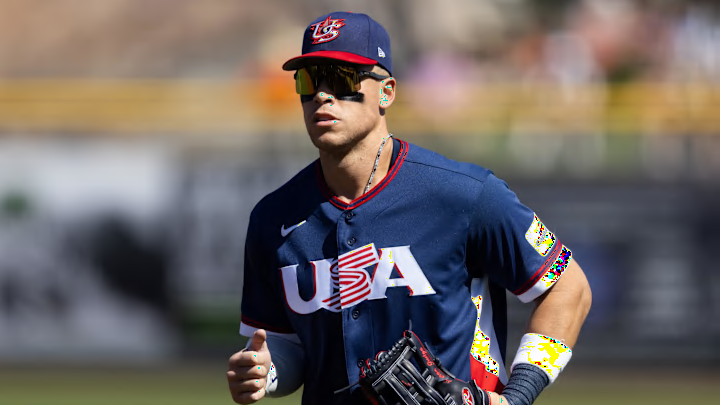
Mostly. The biggest name in the sport, Shohei Ohtani, is back after starring for Japan in the 2023 edition. His Dodgers teammate Yoshinobu Yamamoto is also on the Japanese roster, along with a couple of highly touted players who will make their MLB debuts this season: pitcher Tatsuya Imai and infielder Munetaka Murakami. The U.S. roster is headlined by pitchers Tarik Skubal and Paul Skenes, while Aaron Judge, Cal Raleigh, Bryce Harper and Kyle Schwarber will form the heart of the lineup. Those are just some of the nearly 200 MLB players who have signed up.

There are a few stars who opted out, like Bo Bichette and Freddie Freeman. Bichette had previously represented his mother’s home country of Brazil, but he chose to stay with the Mets for the duration of spring training as he prepares to switch from shortstop to third base this season. Freeman had honored his late mother by representing her native Canada in 2017 and ’23 but cited personal reasons in declining the invite this time around.
There’s also the question of how much players will participate, even if they’ve agreed to take part. Skubal, for instance, will only start one game in pool play for Team USA and then return to the Tigers. Teams can name up to six players to their designated pitcher pool who are eligible to be added to the roster after the tournament starts. Teams can swap up to four pitchers after pool play and up to two after the quarterfinal round.
The most significant player participation storyline involves the Puerto Rican team. Ten players from Puerto Rico, including Francisco Lindor, Carlos Correa, José Berríos, Emilio Pagán, Victor Caratini and Alexis Díaz, were forced to pull out of the tournament after they were unable to obtain the necessary insurance. The insurance issues aren’t unique to Team PR—Venezuela’s Jose Altuve and the Dominican Republic’s Elly De La Cruz are among the most notable players who have failed to obtain insurance—but the matter has disproportionately affected Puerto Rican players. The problem was severe enough that Puerto Rico reportedly considered withdrawing from the tournament early last month.
How did they find 20 teams to participate?
Baseball isn’t a global sport the way soccer and basketball are. There aren’t very many countries that routinely produce high-level professional baseball players, but the WBC gets around this with some pretty lenient eligibility requirements.
Players are eligible to represent a country if they or at least one of their parents were born there, or if they are a citizen or legal permanent resident of that country. That’s pretty standard in international sports. What’s not standard is that players can petition to represent a country if they believe they meet that country’s requirements to obtain a passport, even if they have not been granted one.

Italy, for example, grants citizenship to people who have a grandparent who was born in the country, which means the Italian team is composed almost entirely of players born in the United States, like Vinny Pasquantino. All Jewish people are eligible for Israeli citizenship, so Team Israel is similarly full of U.S.-born players. Great Britain’s team is made up of mostly players born in the U.S. and the Bahamas. Its only two U.K.-born players were raised in the United States.
It’s easy to discount the international nature of the tournament when you see rosters full of players with somewhat tenuous ties to the nation they represent, but we shouldn’t doubt the sincerity of the players’ desire to represent these countries. They wouldn’t be taking time away from their MLB teams to play in this tournament if it weren’t meaningful to them.
So it’s basically all Americans wearing other countries’ flags?
No, not at all. The overwhelming majority of MLB players are from the U.S., but the WBC will be an opportunity for American baseball fans to familiarize themselves with players in other countries with their own high-level pro leagues, like Japan, South Korea and Taiwan. It’s also an amazing opportunity for players from non-traditional baseball markets to get a moment in the spotlight. Without U.S.-born MLB players representing other nations, it wouldn’t be possible to field teams from 20 countries. Expanding the field like that makes for some fascinating stories.
The Israeli team has one player who was born in Israel: Assaf Lowengart, a 28-year-old outfielder who last played organized baseball in 2024. He batted .154 in 21 games for the New York Boulders of the independent Frontier League. Even if he doesn’t get in a game, he’ll get to spend the next couple of weeks hanging out with big leaguers.
Dante Bichette Jr., a former first-round pick who last played professionally in 2019, will represent Brazil. Former Mets infielder Rubén Tejada hasn’t played in affiliated baseball since 2021, but he’ll play for Panama. Gabriele Quattrini is a 29-year-old starting pitcher who has dominated the Italian league, but he is the only Italian-born player on the team’s roster who’s never played professionally in North America. He’ll get an opportunity to compete against the best in the world.
The best story, though, is the team from Czechia. They were the ultimate underdog in 2023, a team of amateur players representing a country with a small but dedicated baseball community. They even beat China in their first game, 8–5. They’re back again this year to prove that baseball really is a global game.
The best of Sports Illustrated

- Albert Breer explains why Falcons tight end Kyle Pitts Sr. and Cowboys receiver George Pickens will likely play on the franchise tag.
- The Colts’ decision to use the transition tag on Daniel Jones raises a lot of questions—and a lot of red flags, Conor Orr writes.
- The Seahawks won a Super Bowl with a group of pass rushers who played as a unit, showing that a defense doesn’t need to revolve around one star. In light of Seattle’s success, Orr also digs into the benefits and drawbacks of trading for Raiders star Maxx Crosby.
- Matt Verderame identifies the winners and losers of the 2026 franchise tag deadline.
- Daniel Flick reveals his post-NFL combine mock draft, and only two quarterbacks are projected to be selected in the first round.
- Kevin Sweeney makes the case for eight schools that could win the men’s NCAA championship.
- Sports Illustrated’s women’s college basketball writers discuss the most interesting conference tournament battles, bubble teams and the risers and fallers from the past week of play.
The top five…
… things I saw last night:
5. Kirill Kaprizov’s empty-netter to become the Wild’s all-time leader in goals scored.
4. The shower of confetti on the court after Miami (Ohio) won its final home game of the season to improve to 30–0 and clinch the MAC regular-season championship. The RedHawks are one win away from a perfect regular season.
3. The court-storming in Tempe after Arizona State upset Kansas in the Sun Devils’ final home game of the season.
2. Anthony Edwards’s stepback dagger against the Grizzlies.
1. Macklin Celebrini’s nifty deke, leading to his 30th goal of the season.
 Add us as a preferred source on Google
Dan Gartland writes Sports Illustrated’s flagship daily newsletter, SI:AM, and is the host of the “Stadium Wonders” video series. He joined the SI staff in 2014, having previously been published on Deadspin and Slate. Gartland, a graduate of Fordham University, is a former Sports Jeopardy! champion (Season 1, Episode 5).
Follow Dan_Gartland