
Why Zach McKinstry May No Longer Fit Into the Tigers’ Future
In this story:
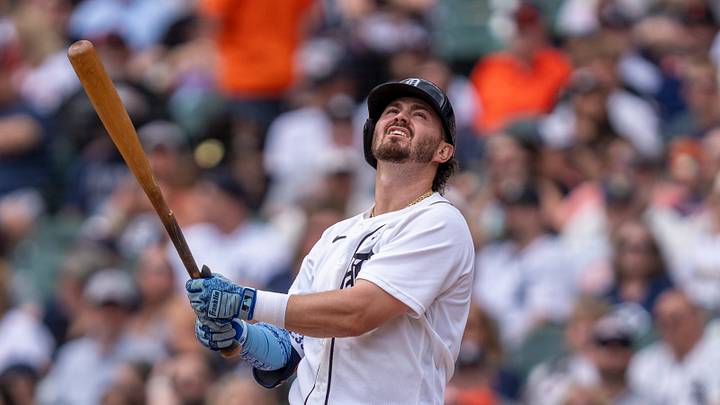
The Detroit Tigers have a Gold Glove finalist whose place on the 2027 roster still deserves scrutiny.
Zach McKinstry’s American League utility Gold Glove nomination reflects a real contribution. He finished with 12 fielding runs above average by Statcast’s measure while moving between the infield and outfield.
That flexibility helps manager A.J. Hinch cover injuries, protect leads and change matchups. Giving it up would carry a cost.
Still, the Tigers should explore a trade and be prepared to move on at McKinstry’s projected arbitration price. His defensive value must be weighed against an increasingly difficult question: How much playing time should Detroit reserve for his bat?
The Offensive Decline Changes His Role

McKinstry hit .199/.288/.294 with four home runs in 423 plate appearances in 2026. That is a substantial offensive burden for a player receiving frequent starts.
The underlying contact offers limited reassurance. His hard-hit rate fell to 22.5%, and Statcast calculated a .310 expected slugging percentage. Those measures suggest weak contact contributed to the results, making a substantial rebound difficult to assume.
MLB Trade Rumors projects a $5 million salary for McKinstry’s final arbitration season. That figure is an estimate, and Detroit could negotiate a different amount. Nevertheless, it establishes the approximate price of retaining him.
Five million dollars is manageable for a productive utility player. The problem is defining a role that makes the investment worthwhile.
If McKinstry receives another substantial share of starts, Detroit risks absorbing similar offensive limitations. If his opportunities shrink, the Tigers must decide whether a defense-focused reserve represents their best use of that money and roster spot.
His case belongs among Detroit’s major offseason contract decisions, with his projected responsibilities driving the recommendation.
The Tigers Must Replace His Coverage, Too

Detroit’s early 2027 lineup projection illustrates the changing personnel. Kevin McGonigle, Hao-Yu Lee and Colt Keith offer options across the infield, while Max Clark gives the outfield another young regular.
Their development should influence how Detroit distributes starts. Those players need meaningful opportunities to establish themselves.
They do not collectively guarantee McKinstry’s defensive production, however. He appeared in 62 games in right field, 45 at second base, and 34 at shortstop. Replacing that coverage requires more than pointing toward a prospect list.
President of baseball operations Scott Harris has acknowledged that insufficient depth left Detroit vulnerable when injuries hit in 2026. Removing an experienced reserve without dependable alternatives would invite the same difficulty.
The Tigers should therefore map out backup shortstop, second-base and outfield duties before finalizing their bench. A right-handed reserve with a credible offensive role would be worth pursuing, alongside sufficient defensive coverage and depth at Triple-A Toledo.
A trade could appeal to a club seeking versatile defense, although Detroit should be realistic about the return for one remaining season of control and a struggling bat.
If no deal develops, a non-tender should remain on the table. That choice needs to accompany a replacement plan.
McKinstry can still help a Major League roster. Detroit should prioritize building a bench around its emerging lineup, even if doing so means moving on from a valuable defender.
 Add us as a preferred source on Google
Alvin Garcia is a Puerto Rico-born sportswriter and U.S. Army veteran. He has covered Major League Baseball since 2022, producing breaking news, game coverage, analysis, roster stories and player features for national and team-focused publications. His previous work has appeared at Heavy, The Sporting News, Athlon Sports, Yardbarker, and FanSided. Garcia brings a data-informed, fan-focused approach to his coverage.