
Ryan Jeffers’ Qualifying Offer Decision Deeply Impacts Twins Offseason Plans
In this story:
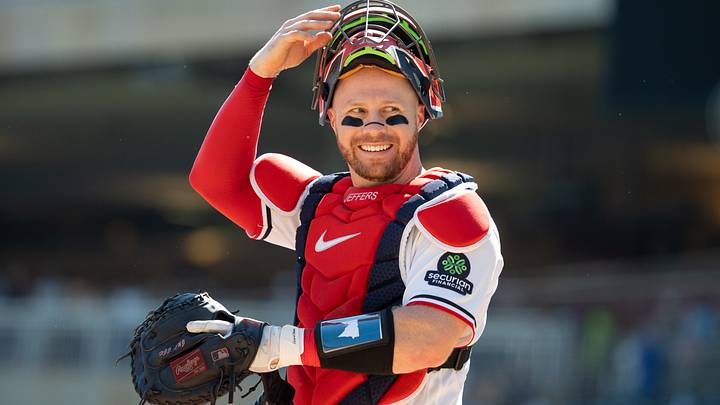
Minnesota Twins general manager Jeremy Zoll made it clear during this week's MLB general manager's meetings in Las Vegas that he wanted catcher Ryan Jeffers to return.
But Jeffers is a free agent for the first time. Even though Minnesota made a qualifying offer for the catcher, the decision is his. All Zoll can do is continue to wait and plan ahead, he told ESPN.
He also said that he’s remained engaged with Jeffers’ representatives and that he’s been “candid” with potential replacements, saying that catcher Victor Caratini won’t catch 162 games in 2027 — assuming the entire season is played.
Whatever Jeffers decides, it will have an impact.
Ryan Jeffers’ Big Decision

Per Bobby Nightengale at the Minneapolis Star-Tribune, Jeffers is set to decline the qualifying offer. That comes with consequences for both parties.
His qualifying offer for 2027 is $23.15 million. That's guaranteed money for Jeffers should he accept. Clearly, there is long-term risk. But it's more money than Jeffers has made in his entire career and one shouldn't discount the possibility that he could ultimately accept to the offer given there is so much tumult around collective bargaining agreement negotiations.
Several veterans accepted last year's qualifying offer because of a soft free agent market. Those players included Detroit Tigers second baseman Gleyber Torres and Chicago Cubs pitchers Shota Imanaga.
This free agent market looks soft again due to CBA negotiations. But Jeffers has an advantage. He is without question the best catcher on the free agent market. He's 29 years old, he's coming off a season in which he finished with 4.7 wins above replacement and he hits for power and average at the plate.
He's the kind of catcher teams can build around for three to five years and the Twins haven’t ruled out a long-term deal.
If he accepts the deal, or the Twins can put together a long-term contract, that impacts payroll. Spotrac has Minnesota with $131 million in payroll right how and $189 million in projected payroll — and that is without Jeffers’ qualifying offer. If he accepts the QO, that puts the Twins over $200 million with no other signings.
So what happens if Jeffers turns down the QO, as many expect? He’ll enter the market as the No. 1 catcher but will have less than a month to land a deal. Why? The expectation is that there will be a work stoppage in December if no agreement on a CBA is reached. After that Jeffers can’t sign a deal and he’ll be at the mercy of whatever the new CBA becomes. If the QO is the baseline for a competitive AAV in free agency, he may have a hard time finding that in three weeks.
As for the Twins, it’s rare that a player re-signs a player that turns down a QO. If Jeffers signs somewhere else, Minnesota gets draft pick compensation from the team that signs him. Plus, the Twins must find a backup to Caratini.
Whatever happens, Jeffers’ decision will have an impact on what the Twins do the rest of this offseason.
 Add us as a preferred source on Google

Matthew Postins is an award-winning sports journalist who covers Major League Baseball for OnSI. He also covers the Big 12 Conference for Heartland College Sports.