
What Ryan Jeffers’ Free Agency Will Reveal About the Twins’ Direction
In this story:
The Minnesota Twins can make a strong case for re-signing Ryan Jeffers. The harder question is how much of their next roster they should build around that decision.
The Twins need a catcher, but retaining a useful player would preserve part of the roster that already exists. Minnesota would still have to improve elsewhere.
Chairman Tom Pohlad pledged a higher payroll for 2027 without announcing a specific budget. That leaves general manager Jeremy Zoll facing a test of priorities: how much to spend maintaining strength at catcher, and how much to reserve for pitching upgrades.
Jeffers’ approaching free agency should clarify that balance. Minnesota should prioritize a manageable multi-year return while funding bullpen additions. That is a recommendation based on roster fit, not a report of an offer or negotiations.
Jeffers’ Value Starts With the Alternatives

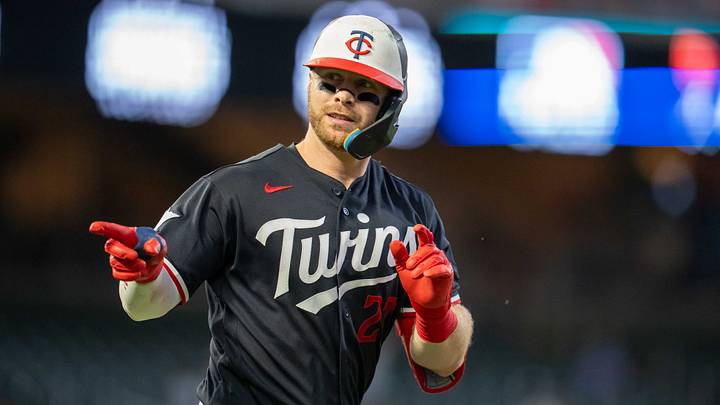
Jeffers finished 2026 hitting .256/.353/.461 with 14 home runs in 92 games. His ability to reach base and provide power gave the Twins a reason to invest at a position where finding an adequate replacement could be difficult.
Victor Caratini remains under contract for 2027. Minnesota therefore has one part of a catching tandem in place, but increasing his workload would still leave the front office needing another catcher.
The organization’s investment in Vahn Lackey does not eliminate that immediate expense. The No. 3 pick in the 2026 MLB draft has a projected 2029 arrival in MLB Pipeline’s rankings. That estimate can change, but building next year’s roster around an accelerated promotion would place unnecessary pressure on his development.
A three-year Jeffers agreement would run through 2029. Some overlap with a developing catcher could become useful: the Twins would have time to evaluate Lackey’s readiness and determine how to distribute the workload.
That is the broader argument for retaining Jeffers. Paying an established catcher can support a prospect’s development by allowing the organization to promote him when he is ready, rather than when a Major League vacancy demands it.
The alternative also carries costs. Minnesota could pursue another free agent or trade for a catcher, but either route would require money, players or both. Any claimed savings from letting Jeffers leave must account for that replacement.
As the Twins’ payroll analysis explained, expiring contracts create openings in the lineup and bullpen along with financial flexibility. Those openings cannot be treated as free.
Payroll Discipline Must Produce a Better Roster

Price remains the strongest argument against making Jeffers an automatic signing.
Spotrac’s calculated market value placed him at approximately $40 million over three years, a benchmark examined in On SI’s recent Jeffers market analysis. That is a valuation model, not his reported asking price or a contract available for Minnesota to accept.
An agreement around that size would average roughly $13.3 million annually, about twice his $6.7 million salary in 2026. The actual payroll impact would depend on the contract’s structure.
At 29, Jeffers would be seeking a commitment covering several years of catching work. His 92-game campaign also belongs in the evaluation of expected availability. Minnesota should pay for a realistic workload and future production, rather than assume his strongest stretches would continue uninterrupted.
There are competing needs. A.J. Minter and Taylor Rogers also have expiring contracts, as the Twins’ pending free-agent tracker outlined. Re-signing Jeffers would not fill those bullpen vacancies.
The club should compare complete roster plans. One could pair Jeffers with two meaningful relief additions. Another could combine a less expensive catching acquisition with stronger bullpen investments. The second approach would be defensible only if the expected pitching improvement justified the catching downgrade and the replacement’s acquisition cost.
A lower payroll alone would not establish that Minnesota made the better choice. Neither would bringing back a familiar player establish that the roster improved.
The Twins also should separate this negotiation from their decision to keep Jeffers at the trade deadline. That choice does not obligate them to win a bidding war now. His next contract should stand on the value he could provide over its term.
There is a reason to seek stability beyond one year. Joe Ryan, Pablo López, Bailey Ober and Dean Kremer can reach free agency after 2027. Securing the catcher position for multiple years could keep Minnesota from facing another catching vacancy alongside major rotation turnover.
The Twins should pursue a three-year return near the published valuation, provided ownership also funds meaningful bullpen improvement. If competing offers push the commitment beyond that plan, Zoll should be prepared to pursue a credible replacement.
Keeping Jeffers should help Minnesota build a deeper roster. Ownership’s promised increase will mean little if it only covers the cost of returning to the same position.
 Add us as a preferred source on Google
