
Sonny Gray Returns to Minnesota With One Difference the Twins Still Have to Resolve
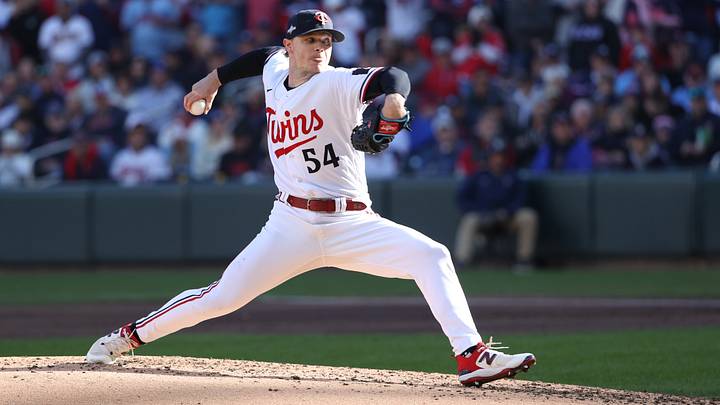
In this story:
If the criterion were solely dominance, Sonny Gray stood out among the top starting pitchers in free agency after a consistent season in which he became the main arm of the Boston Red Sox rotation throughout the year. However, I didn't have much hope that Minnesota would invest $55 million to bring him back for a couple of years, perhaps because I am a little skeptical about second stints.
Gray’s previous contract was part of a three-year, $30.5 million extension he had signed with Cincinnati for the 2020-2022 period, with a club option for 2023. During his two seasons with Minnesota, Gray earned $23.57 million ($10.87 million in 2022 and $12.7 million in 2023).
Gray’s evolution and the weight of his defensive support

Gray finished with an 18-5 record and a 2.72 ERA, the best of his entire 14-season career and despite having a regression in his strikeouts with a 7.93 K/9 —the lowest since 2016— his control and the reduction in home runs pushed him to post a 3.68 xFIP and 3.4 fWAR at 36 years old. Of course, he is no longer the pitcher who arrived in Minnesota at 32 and put together the best two-season stretch of his entire career, posting a combined 7.8 fWAR. During that span, Gray had a 3.66 xFIP in 2022 and 3.64 in 2023, which, although they were a fundamental part of his impact, were above his sustained 3.19 average over these last three campaigns.
How could that be? Two key points have had a major influence:
- Gray has improved his SO/BB rate from 3.30 during his previous stint in Minnesota to 4.50 since leaving there and pitching two seasons for the St. Louis Cardinals in 2024 and 2025, before moving to the Red Sox in 2026.
- The opportunity to pitch with a better defense. This point seems much more revealing to me, assuming that Gray’s strikeout rate declined considerably in 2026. The 2022-2023 Twins finished with -16 Fielding Run Value, ranking 20th in MLB during those two years. Then, Gray had better defensive support, as in his two campaigns with the Cardinals, the team was among the league’s elite, accumulating +20 FRV between 2024 and 2025. This year’s Red Sox also provided great defensive value by posting +24 FRV, the sixth-best mark in all of Major League Baseball.
The defensive challenge awaiting Gray in Minnesota

This is exactly the point I wanted to get to, as alarm bells are going off because the Twins finished 25th in the league in FRV, with a negative value of -21, hence some of the team’s decisions to try to improve the defense.
According to Steamer projections at FanGraphs, Gray will have a slight increase in his strikeouts, and this could be the best way to avoid compromising defensive situations if Minnesota’s defense does not improve. With that projected improvement in strikeouts, Gray is projected to post a 3.66 xFIP, quite close to the 3.69 he accumulated this year with the Red Sox. Even so, the .283 BABIP he allowed in 2026, which was the lowest since the .277 following his first year with Minnesota, is projected to make a slight jump to .304.

As expected, we are talking about projections, so that estimate could also vary depending on how the Twins’ defense performs. The uncomfortable point here is that the Twins have had their most critical problems in the infield, with -25 FRV over the last two seasons. Despite everything, Gray has one point in his favor: when adjusting the 17 home runs he allowed in 2026 for Target Field’s park effects, that figure would have dropped to 14, while the 176 he has allowed throughout his career would be reduced to 157.
So, without a doubt, Gray’s addition and the qualifying offer accepted by catcher Ryan Jeffers have been two of the best pieces of news for Minnesota this winter. Although they still have to move forward with other priorities to improve their infield, especially on the right side, probably by adding a second baseman or a first baseman, in addition to finding another impact reliever for the bullpen.
 Add us as a preferred source on Google

Yirsandy is a baseball writer specializing in MLB coverage with experience across multiple teams and storylines. He currently writes for Diamond Centric, where he covers the New York Mets, San Diego Padres, Chicago Cubs, Milwaukee Brewers, and Kansas City Royals. My work focuses on game coverage, player analysis, and storytelling that connects performance with context. My Substack has also been an important part of my writing development, where I’ve built much of my baseball coverage and storytelling voice over time. I’m passionate about combining reporting, research, and thoughtful analysis to produce engaging baseball content for readers.