%20%20--%3E%0A%3Csvg%20version%3D%221.1%22%20id%3D%22Layer_1%22%20xmlns%3D%22http%3A%2F%2Fwww.w3.org%2F2000%2Fsvg%22%20xmlns%3Axlink%3D%22http%3A%2F%2Fwww.w3.org%2F1999%2Fxlink%22%20x%3D%220px%22%20y%3D%220px%22%0A%09%20width%3D%2239px%22%20height%3D%2240px%22%20viewBox%3D%220%200%2039%2040%22%20enable-background%3D%22new%200%200%2039%2040%22%20xml%3Aspace%3D%22preserve%22%3E%0A%3Cpath%20fill%3D%22%23FFFFFF%22%20d%3D%22M38.5%2C7H28.2v26h10.3V7z%22%2F%3E%0A%3Cpath%20fill-rule%3D%22evenodd%22%20clip-rule%3D%22evenodd%22%20fill%3D%22%23FFFFFF%22%20d%3D%22M26.1%2C25.5c0%2C5.8-4.1%2C7.5-12.9%2C7.5C3.9%2C33%2C0%2C31.2%2C0%2C25.2v-1.1h11.6%0A%09v2.4c0%2C0.7%2C0.1%2C1.4%2C1.2%2C1.4c1%2C0%2C1.2-0.4%2C1.2-1.3v-0.9c0-1.6-0.9-1.6-3.5-2.2C2.2%2C21.7%2C0%2C19.7%2C0%2C15.3v-0.9C0%2C9.3%2C5.5%2C7%2C12.9%2C7%0A%09c10.2%2C0%2C12.8%2C2.6%2C12.8%2C7.4v1.8h-11v-2.9c0-0.6-0.4-1.1-1.2-1.1c-0.6%2C0-1.2%2C0.4-1.2%2C1.1v0.9c0%2C1.5%2C0.9%2C2%2C3.3%2C2.5%0A%09c8%2C1.6%2C10.5%2C3.3%2C10.5%2C7.5V25.5z%22%2F%3E%0A%3C%2Fsvg%3E%0A)
Billionaires Are Buying—and Selling—Sports Franchises at All-Time High Prices. Will It Continue?
In this story:
Over the past 16 months, six major American sports franchises have been purchased for a combined value of $54.9 billion.
The Celtics were sold at a valuation of $6.1 billion in March 2025. Months later, the Lakers followed suit at a valuation of $10 billion. In 2026, the Trail Blazers went for $4.3 billion; the Seahawks, fresh off a Super Bowl win, went for $9.6 billion; the Padres were sold for $3.9 billion. The Timberwolves changed hands at the price of $4.5 billion. Then the Lakers were sold again, this time for $12.5 billion. The most recent transaction featured another California baseball team, as the Angels were sold for $4 billion.
Checks were not written for those amounts. Each party involved purchased majority control, which is but a percentage of the total valuation, and so much more goes into a team purchase than simply handing over a bag of cold, hard cash. But it’s still no small potatoes. These are numbers on a scale we’ve never seen. The Seahawks, Angels and Lakers (twice) all set records for sale price in their respective sports.
Sports teams have never been so expensive—and their value is increasing exponentially. Based on sale price the Lakers increased in value by $2.5 billion from 2025 to ’26. Once upon a time, the wealthy bought sports franchises as something to lord over their equally rich friends. Now? These franchises are some of the most valuable assets in the world.
How did sports teams become so expensive? And why are the ultra-rich so interested in purchasing them at such great costs?
Why are sports teams worth so much?

To understand the trend, we have to start with the most basic economic principle of them all: the law of supply and demand.
Sports teams are inherently a product, and the supply of that product is limited. In the 21st century, the number of American sports franchises has largely remained static. Expansion in the NBA, NFL and NHL has added a few to the pile, but over the last 30 or so years, the number of teams hasn’t changed very much. But the demand remains: Every sports team has a long list of potential buyers when they go up for sale. It’s an exclusive club. Opportunities to gain membership are rare, which makes them enormously valuable to interested parties. To some, there isn’t a cap on how much money they’d pay to take advantage.
That’s remained largely true throughout history. But what’s changed in the last 15 years (and what has become one of the primary drivers of these price points) is the amount of people who have the purchasing power to make a competitive bid.
“The supply of interested parties just got bigger,” Steve Amato, a partner at Deloitte who oversees the firm’s sports, media, and entertainment M&A group, told Sports Illustrated. “It’s now bigger than a population of just wealthy individuals. But the wealthy individuals, which has always been the population going after the sports teams, that population has grown quite tremendously.”
To Amato’s point: in 2009, Forbes recorded 357 American billionaires. In 2026, the Wall Street Journal counted 1,135. And the inclusion of private equity has expanded ownership beyond the billionaire class—to some degree, anyway. PE firms are permitted to own minority stakes in teams across the four major American sports leagues, a change that came recently after many years of leagues forbidding private equity investments across the board. There are more wealthy investors and more ways for those wealthy investors to get involved.
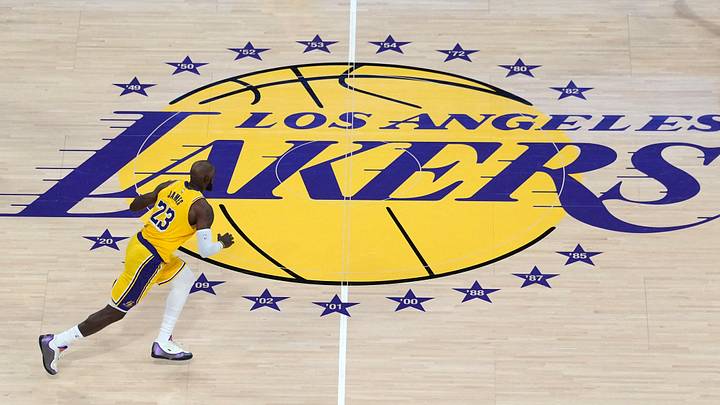
But that alone doesn’t explain why these prices have skyrocketed to the degree we see now, and the recent Lakers saga is a prime example. Ten years ago, the NBA’s most famous franchise was valued at $2.7 billion. Five years ago, they clocked in at $4.6 billion. In 2025, the Lakers were sold for over twice that number, going for $10 billion. One calendar year later, they went for $12.5 billion.

No matter which price point you choose, it marks an astronomical increase in a very short period of time—a degree of inflation that can’t be solely chalked up to a larger pool of potential buyers. What goes into such a dramatic increase in value in such a short span when it comes to a team like the Lakers?
There’s the tangible and intangible.
‘It’s a real business now.’

“Sports was a … I'll call it a hobby or a vanity investment for a time,” Amato says. “Sports are a business now, and they’re underpinned by these big, big media contracts. Look at the NBA, with a 10-year $76 billion deal, and they're just getting started on that. The NFL had $110 billion over 10 years. The value of these media contracts are tremendous. And what investors like is the predictability of cash flow. So now you're locking into a 10-year agreement, you basically know what your share of that is over 10 years. Private equity loves that and investors like it as well. And as long as those media rights continue to increase in value, you should see the franchise values following along.”
Those media rights can be seen as a rising tide that lifts all boats. Then there’s all the other arms of an NBA team that can drive revenue and increase the overall price point.
“When you purchase an entity, there's a lot of complex accounting that comes along with it,” begins Gary Hecht, professor of accountancy at the University of Illinois at Urbana-Champaign. “There is the book value of the asset. What kind of marketing revenue agreements they have, like with other entities, like advertising. Maybe there's the value of the facilities, the building, the land, everything that comes up with the team, which is obviously different for every team and different ownership structures. All that stuff has tangible value reflected on the financial statements if there were such a thing. The book value is that measurable, reliable value that occurs.
“So many factors will influence the price (at large),” he continued, “With upside and value being the biggest ones with sports teams. These things, they increase in value like crazy. Another is perception. If somebody is willing to pay something, what they pay is the market value at the time of purchase. That’s what the most reliable indicator of value is.”
The last point is ultimately the most critical: The math can add up to a specific number, but that number can get much higher if a buyer is willing to pay more. That is one of the many reasons why the Lakers’ sale shocked the sports world. There was no dramatic change that would logically lead to an increase in value from $10 billion to $12.5 billion in one year’s time. Yet Joshua Kushner and the new ownership group were willing to pay the difference to take control.
“When you look at the other things that push up the values, especially with the Lakers and some of the other bigger team names, it's the brand, right?” Amato says. “The Lakers have been around forever. They're known by pretty much everybody. They're probably known more readily than some of the other smaller-market teams. Teams in a bigger market demand bigger fan bases, bigger prices. You can't forget about the fans’ role in this valuation. Because the fans are a valuable part of the formula. Fan loyalty drives ticket sales. Fans now love to pay for experiences, whether it be getting on the court or meeting a player or doing something like that. All that drives consumer products at the end of the day. There's a number of revenue streams, very diversified, in a sports team that are seemingly increasing now in this market.”
“All that great stuff about a team flows in as value,” says Hecht. “The financial stuff, but also the non-financial stuff like status, vindication, and power. All owners aren’t money hungry or power hungry, or anything like that. But there's a lot of status that comes with owning a team. It’s a tight club. You get all that value.”
It may feel like a meaningless discussion for the billions of people who will never be in position to put up a bid for their favorite sports franchise. But understanding what’s happening in front of us is key to understanding what the future holds.
Sports are a business now, as Amato emphasized above; they are treated as assets, not another rich person’s toy. The cat is out of the bag in that regard and it’s not likely to change. Not every owner will run their team like a business, and where winning championships falls on the priority list has differed according to each owner throughout the history of sports. But the money now changing hands is generational, and with that comes a different matrix of decision-making. Trends will emerge accordingly.
It’s natural to wonder if one of those trends will be flipping sports teams like houses. Mark Walter effectively made $2.5 billion year-over-year on his Lakers investment. Private equity, a bigger player than ever before in sports, is an industry infamous for prioritizing profit over all. Will even the most famous of sports franchises become footnotes in the wealthy’s portfolios, able to be acquired at any time if the price is right?
The experts interviewed for this story offered differing opinions.
“Absolutely, we could see more of it,” Hecht affirmed. “There's an age-old saying: What do you trade on? Do you trade on fundamental value or do you trade on perceptions of that value? Sometimes the value is not driven by fundamentals at all. It's driven by market behavior. If this happened with the Lakers, this could happen with other teams as well.”
Amato disagreed.
“I think there are special circumstances with the Timberwolves and the Lakers,” he says. “What you'll see by and large is the wealthy investors, whether it’s Kushner or (new Seahawks owner) Vinod Khosla, whoever it is, I think they're in it for a long time. Maybe generationally. With private equity now coming into these things, selling minority shares is a good way for some of these families to take some money off the table without really giving up any control or a lot of rights. I think you will see non-controlling shares flip. Not flip after one year or two years, but flip after a seven-, 10-, 12-year period. That aligns with the private equity investment mentality.
“Sports is now a business that's appealing to wealthy investors, not just hobby investors because it's a business. When you're putting that much money into something, you care about it. They’re not just putting money in to go to a cocktail party and say, oh, I own this or I own that. It's a real business.”
No matter how the future unfolds after the last few years saw billions of dollars move as teams changed hands: There’s never been more money in sports. That much is apparent.
Listen to SI’s NBA podcast, Open Floor, below or on Apple and Spotify. Watch the show on SI’s YouTube channel.
 Add us as a preferred source on Google
Liam McKeone is a senior news writer for the NBA team at Sports Illustrated. He has been in the industry covering the NBA and other sports as a content creator starting in 2017. Prior to joining SI, McKeone worked for NBC Sports Boston and The Big Lead. In addition to his work as a writer, he has hosted the Press Pass Podcast covering sports media and The Big Stream covering pop culture. A graduate of Fordham University, he is always up for a good debate and enjoys loudly arguing about sports, rap music, books and video games. McKeone has been a member of the National Sports Media Association since 2020.
Follow liam_mckeone