
Why The Cavaliers Should Stay Patient With Peyton Watson’s Uneven Start
In this story:
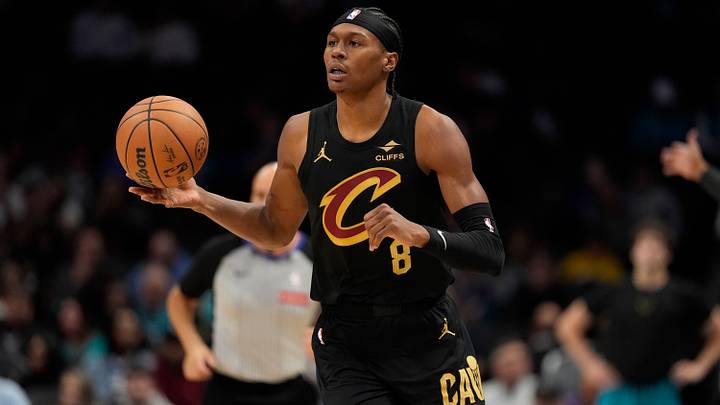
Peyton Watson’s offensive struggles are clear. So are the reasons the Cleveland Cavaliers should give him time to work through them.
Through 10 appearances, Watson has provided disruptive defense and a willingness to attack off the dribble that adds another dimension to Cleveland’s wing rotation. His shooting and finishing need improvement, but evaluating his start requires accounting for the possessions he influences without scoring.
Watson is shooting 23.8% from the 3-point range, making 10 of 42 attempts. He has converted 20 of 37 shots around the rim, or 54.1%, and is shooting 38% from the midrange.
He is 3-for-21 on attempts classified as wide open, shooting 14.3%, compared with 7-for-18 on open attempts, or 38.9%. His catch-and-shoot production stands at 10 for 40, or 25%.
Those results show that creating space for Watson has not consistently translated into points. They also leave a clear area for improvement without requiring Cleveland to redesign its offense.
Those figures leave room for growth throughout his offensive game. His rim finishing and midrange shooting each fall in the 54th percentile, closer to the middle of the pack than the efficiency Cleveland would like from those opportunities.
Patience does not require overlooking those shortcomings. It requires weighing them against what Watson already supplies.
His defensive production provides the strongest argument.
Watson has collected eight steals and 17 blocks, combining for 25 across his first 10 appearances. His 2.9% block rate places him in the 100th percentile.
That production also has a foundation beyond this opening stretch. Watson has ranked no lower than the 96th percentile in block rate in any of his professional seasons.
His ability to disrupt shots gives Cleveland another layer of protection around its big men. When a perimeter defender gets beaten or a rotation arrives late, Watson can still affect the finish.
His four-block performance in Cleveland’s victory over New York illustrated that value. A late rejection of Miles McBride helped produce a transition scoring opportunity for Jarrett Allen, connecting a defensive stop directly to a basket at a critical moment.
PEYTON pic.twitter.com/koLt43hcCW
— Mack Perry (@DevaronPerry) November 12, 2026
Watson also offers something Cleveland has struggled to consistently generate from its wings: penetration.
He averages 7.5 drives per game, third on the team. That exceeds the listed Cleveland marks of De’Andre Hunter, Jaylon Tyson, Max Strus, Isaac Okoro and Dean Wade during the Donovan Mitchell era.
Hunter averaged 6.8 drives in 2024-25, while Tyson averaged 5.5 in 2025-26. Strus’ highest Cleveland figure was 4.2.
Watson’s willingness to attack closeouts can force another defender to rotate, creating opportunities beyond the initial perimeter pass. That is useful alongside Mitchell and James Harden, whose creation can draw help toward the ball.
The results still need improvement. Watson is shooting 45.5% on field-goal attempts generated by drives, averaging 3.3 such attempts per game. Getting into the defense consistently is a foundation; converting those advantages into efficient shots and passes is the next step.
Cleveland can also help by varying how it involves him.
Watson averages 36.4 touches, fourth on the team but below the 44.4 he averaged last season with Denver. That difference does not establish why his shooting has declined, though it shows he is operating with fewer opportunities to handle the ball.
His production as a roll man and cutter suggests ways to diversify those opportunities. He is scoring 1.10 points per possession as a pick-and-roll roll man and 1.00 as a cutter.
Those actions can involve him near the basket while taking advantage of the attention Cleveland’s leading scorers attract.
The Cavaliers need Watson to make more open shots and finish more reliably. His defensive activity and ability to penetrate, however, already give him ways to help while those areas develop.
Ten appearances are enough to identify what needs work. They are not enough to dismiss a wing whose strengths address needs Cleveland has spent years trying to fill. Give it time, Cavs fans. This is an acquisition that could pay dividends.
 Add us as a preferred source on Google

Mack Perry is a lifelong Cleveland Cavaliers fan who has been covering the team since 2019 through The It's Cavalier Podcast. He provides Cavs fans with analysis, commentary, and year-round coverage, combining a fan's passion with an analytical approach to the team both on and off the court.
Follow DevaronPerry