%22%3E%0A%3Cpath%20d%3D%22M0%208.81909H6.36369V27.8725H0V8.81909Z%22%20fill%3D%22white%22%2F%3E%0A%3Cpath%20d%3D%22M8.54785%2013.008H14.7233V15.079C15.674%2013.8552%2017.1708%2012.6597%2019.2701%2012.6597C22.3955%2012.6597%2024.3629%2014.7307%2024.3629%2018.0726V27.8723H18.1875V20.0589C18.1875%2018.7786%2017.425%2018.0443%2016.5025%2018.0443C15.5799%2018.0443%2014.7327%2018.7786%2014.7327%2020.0589V27.8723H8.55727V13.0174L8.54785%2013.008Z%22%20fill%3D%22white%22%2F%3E%0A%3Cpath%20d%3D%22M25.7754%2020.5485V20.492C25.7754%2015.7852%2028.6089%2012.6504%2032.1202%2012.6504C34.3795%2012.6504%2035.6316%2013.6294%2036.5824%2014.6932V8H42.7578V27.863H36.5824V26.0367C35.5751%2027.1287%2034.436%2028.2113%2032.1767%2028.2113C28.5807%2028.2113%2025.7848%2025.0765%2025.7848%2020.5391L25.7754%2020.5485ZM36.7142%2020.4732V20.4167C36.7142%2018.9482%2035.6504%2017.7526%2034.2383%2017.7526C32.8263%2017.7526%2031.7625%2018.9199%2031.7625%2020.4167V20.4732C31.7625%2021.97%2032.8263%2023.1373%2034.2383%2023.1373C35.6504%2023.1373%2036.7142%2021.97%2036.7142%2020.4732Z%22%20fill%3D%22white%22%2F%3E%0A%3Cpath%20d%3D%22M44.668%208H51.0599V11.9444H44.668V8ZM44.7715%2013.0081H50.9469V27.863H44.7715V13.0081Z%22%20fill%3D%22white%22%2F%3E%0A%3Cpath%20d%3D%22M52.3965%2023.6551V23.5986C52.3965%2020.6333%2054.5993%2018.9765%2058.0541%2018.9765C59.3062%2018.9765%2060.9159%2019.2495%2061.5655%2019.5225V19.2777C61.5655%2017.9221%2060.7182%2017.1314%2058.8167%2017.1314C57.2916%2017.1314%2056.0114%2017.4609%2054.7123%2017.9786L53.6203%2013.8742C55.3336%2013.2247%2057.2916%2012.7822%2059.8804%2012.7822C62.9022%2012.7822%2064.8603%2013.4129%2066.1688%2014.712C67.289%2015.8323%2067.722%2017.2726%2067.722%2019.4189V27.8819H61.5466V26.3851C60.5111%2027.5053%2059.1273%2028.2396%2057.2728%2028.2396C54.411%2028.2396%2052.4059%2026.611%2052.4059%2023.6645L52.3965%2023.6551ZM61.6219%2022.3748V21.7441C61.2642%2021.6123%2060.7276%2021.4993%2060.2099%2021.4993C58.9861%2021.4993%2058.3083%2022.2336%2058.3083%2023.1562V23.2126C58.3083%2024.0881%2058.939%2024.6529%2059.7204%2024.6529C60.8124%2024.6529%2061.6219%2023.7775%2061.6219%2022.3654V22.3748Z%22%20fill%3D%22white%22%2F%3E%0A%3Cpath%20d%3D%22M69.5674%2013.008H75.7428V15.079C76.6936%2013.8552%2078.1904%2012.6597%2080.2896%2012.6597C83.415%2012.6597%2085.3825%2014.7307%2085.3825%2018.0726V27.8723H79.2071V20.0589C79.2071%2018.7786%2078.4445%2018.0443%2077.522%2018.0443C76.5994%2018.0443%2075.7522%2018.7786%2075.7522%2020.0589V27.8723H69.5768V13.0174L69.5674%2013.008Z%22%20fill%3D%22white%22%2F%3E%0A%3Cpath%20d%3D%22M86.6631%2023.6551V23.5986C86.6631%2020.6333%2088.8659%2018.9765%2092.3207%2018.9765C93.5728%2018.9765%2095.1825%2019.2495%2095.8321%2019.5225V19.2777C95.8321%2017.9221%2094.9848%2017.1314%2093.0833%2017.1314C91.5582%2017.1314%2090.278%2017.4609%2088.9789%2017.9786L87.8869%2013.8742C89.6002%2013.2247%2091.5582%2012.7822%2094.147%2012.7822C97.1688%2012.7822%2099.1269%2013.4129%20100.435%2014.712C101.556%2015.8323%20101.989%2017.2726%20101.989%2019.4189V27.8819H95.8132V26.3851C94.7777%2027.5053%2093.3939%2028.2396%2091.5394%2028.2396C88.6776%2028.2396%2086.6725%2026.611%2086.6725%2023.6645L86.6631%2023.6551ZM95.8885%2022.3748V21.7441C95.5308%2021.6123%2094.9942%2021.4993%2094.4765%2021.4993C93.2527%2021.4993%2092.5749%2022.2336%2092.5749%2023.1562V23.2126C92.5749%2024.0881%2093.2056%2024.6529%2093.987%2024.6529C95.079%2024.6529%2095.8885%2023.7775%2095.8885%2022.3654V22.3748Z%22%20fill%3D%22white%22%2F%3E%0A%3Cpath%20d%3D%22M111.017%208.81909H119.593C124.657%208.81909%20128.112%2011.0784%20128.112%2015.597V15.6535C128.112%2020.2568%20124.601%2022.7044%20119.461%2022.7044H117.39V27.8725H111.026V8.81909H111.017ZM119.103%2018.1575C120.732%2018.1575%20121.824%2017.4232%20121.824%2016.0583V16.0018C121.824%2014.618%20120.816%2013.9025%20119.131%2013.9025H117.39V18.1481H119.103V18.1575Z%22%20fill%3D%22white%22%2F%3E%0A%3Cpath%20d%3D%22M128.3%2023.6551V23.5986C128.3%2020.6333%20130.503%2018.9765%20133.957%2018.9765C135.209%2018.9765%20136.819%2019.2495%20137.469%2019.5225V19.2777C137.469%2017.9221%20136.622%2017.1314%20134.72%2017.1314C133.195%2017.1314%20131.915%2017.4609%20130.616%2017.9786L129.524%2013.8742C131.237%2013.2247%20133.195%2012.7822%20135.784%2012.7822C138.806%2012.7822%20140.764%2013.4129%20142.072%2014.712C143.183%2015.8323%20143.625%2017.2726%20143.625%2019.4189V27.8819H137.45V26.3851C136.414%2027.5053%20135.031%2028.2396%20133.176%2028.2396C130.314%2028.2396%20128.309%2026.611%20128.309%2023.6645L128.3%2023.6551ZM137.525%2022.3748V21.7441C137.168%2021.6123%20136.631%2021.4993%20136.113%2021.4993C134.889%2021.4993%20134.212%2022.2336%20134.212%2023.1562V23.2126C134.212%2024.0881%20134.842%2024.6529%20135.624%2024.6529C136.716%2024.6529%20137.525%2023.7775%20137.525%2022.3654V22.3748Z%22%20fill%3D%22white%22%2F%3E%0A%3Cpath%20d%3D%22M145.018%2020.5204V20.4639C145.018%2016.303%20148.285%2012.6787%20153.123%2012.6787C156.39%2012.6787%20158.706%2014.3638%20159.845%2016.7831L155.411%2019.2872C154.893%2018.3364%20154.244%2017.7904%20153.236%2017.7904C151.928%2017.7904%20150.949%2018.9388%20150.949%2020.4074V20.4639C150.949%2022.0171%20151.928%2023.128%20153.152%2023.128C154.244%2023.128%20154.865%2022.582%20155.467%2021.6312L159.958%2024.1917C158.621%2026.6675%20156.362%2028.249%20152.822%2028.249C148.304%2028.249%20145.009%2024.6812%20145.009%2020.5204H145.018Z%22%20fill%3D%22white%22%2F%3E%0A%3Cpath%20d%3D%22M160.146%2020.5203V20.4638C160.146%2016.0299%20163.328%2012.6504%20167.79%2012.6504C173.072%2012.6504%20175.519%2016.3217%20175.519%2020.8403C175.519%2021.1698%20175.519%2021.5464%20175.491%2021.8759H165.936C166.369%2023.1844%20167.404%2023.8621%20168.741%2023.8621C169.852%2023.8621%20170.784%2023.3444%20171.763%2022.3371L175.086%2024.9824C173.618%2026.884%20171.518%2028.2207%20168.308%2028.2207C163.432%2028.2207%20160.146%2025.1424%20160.146%2020.5203ZM169.89%2019.1647C169.758%2017.7526%20168.911%2016.9336%20167.819%2016.9336C166.727%2016.9336%20166.049%2017.8091%20165.861%2019.1647H169.89Z%22%20fill%3D%22white%22%2F%3E%0A%3Cpath%20d%3D%22M176.997%2013.008H183.172V16.0015C184.02%2013.987%20185.375%2012.6785%20187.823%2012.7914V19.3528H187.173C184.556%2019.3528%20183.172%2020.7931%20183.172%2024.0879V27.8723H176.997V13.0174V13.008Z%22%20fill%3D%22white%22%2F%3E%0A%3Cpath%20d%3D%22M187.936%2026.0745L190.035%2022.5632C191.833%2023.674%20193.847%2024.22%20195.532%2024.22C196.135%2024.22%20196.427%2024.0882%20196.427%2023.7305V23.674C196.427%2023.3728%20196.154%2023.1845%20194.657%2022.7985C190.901%2021.876%20188.585%2020.8687%20188.585%2017.7904V17.7339C188.585%2014.4674%20191.202%2012.6411%20195.062%2012.6411C197.509%2012.6411%20199.938%2013.2624%20201.727%2014.3544L199.769%2018.0258C198.187%2017.1503%20196.286%2016.642%20195.033%2016.642C194.431%2016.642%20194.158%2016.802%20194.158%2017.1032V17.1597C194.158%2017.4609%20194.488%2017.6492%20195.984%2018.0352C199.74%2018.9577%20202%2019.9932%20202%2023.0433V23.0998C202%2026.3381%20199.58%2028.2114%20195.551%2028.2114C192.671%2028.2114%20190.054%2027.4772%20187.936%2026.0651V26.0745Z%22%20fill%3D%22white%22%2F%3E%0A%3Cpath%20fill-rule%3D%22evenodd%22%20clip-rule%3D%22evenodd%22%20d%3D%22M211.368%204.36764C217.191%20-1.45588%20226.632%20-1.45588%20232.456%204.36764C238.279%2010.1912%20238.279%2019.6324%20232.456%2025.4559L221.912%2036L211.368%2025.4559C205.544%2019.6324%20205.544%2010.1912%20211.368%204.36764ZM214.009%207.55761C213.948%207.86849%20213.916%208.39718%20213.916%209.14566V10.4189C213.916%2011.1832%20213.948%2011.7198%20214.013%2012.0267C214.078%2012.3317%20214.278%2012.6168%20214.617%2012.8762C214.956%2013.1376%20215.403%2013.3316%20215.958%2013.4623C216.512%2013.593%20217.1%2013.6584%20217.837%2013.6584C218.573%2013.6584%20219.217%2013.591%20219.769%2013.4524C220.322%2013.3158%20220.761%2013.1178%20221.086%2012.8604C221.411%2012.6029%20221.605%2012.3178%20221.666%2012.0069C221.728%2011.6961%20221.759%2011.1674%20221.759%2010.4189V9.14566C221.759%208.38134%20221.728%207.84473%20221.662%207.53781C221.597%207.23287%20221.397%206.94971%20221.058%206.68834C220.72%206.42696%20220.272%206.23291%20219.718%206.10223C219.163%205.97154%20218.536%205.90619%20217.839%205.90619C217.102%205.90619%20216.459%205.97352%20215.906%206.11213C215.352%206.24875%20214.914%206.44677%20214.589%206.70418C214.265%206.9616%20214.071%207.24673%20214.009%207.55761ZM219.276%2024.8638C222.876%2024.8638%20224.557%2024.2064%20224.557%2021.862V21.858V21.3155C224.557%2019.6581%20223.516%2018.971%20220.252%2018.3136C219.278%2018.1136%20218.908%2017.9136%20218.908%2017.3136V16.9414C218.908%2016.6543%20219.177%2016.5117%20219.413%2016.5117C219.749%2016.5117%20219.918%2016.7137%20219.918%2016.9414V18.1136H224.391V17.3988C224.391%2015.4563%20223.347%2014.4266%20219.177%2014.4266C216.15%2014.4266%20213.896%2015.3414%20213.896%2017.3711V17.7433C213.896%2019.5155%20214.805%2020.3155%20218.201%2021.0303C218.28%2021.0472%20218.355%2021.063%20218.427%2021.0781C219.329%2021.2674%20219.647%2021.3341%20219.647%2021.9174V22.2897C219.647%2022.6619%20219.546%2022.8045%20219.142%2022.8045C218.67%2022.8045%20218.637%2022.5471%20218.637%2022.262V21.2897H213.894V21.7471C213.894%2024.149%20215.476%2024.8638%20219.276%2024.8638ZM225.424%2024.5569H229.925V14.7355H225.424V24.5569ZM226.955%2013.5019H229.925V6.06064H227.092V9.411L225.193%206.06064H222.359V13.5019H225.193V10.1199L226.955%2013.5019ZM218.269%2012.152C218.204%2012.2688%20218.055%2012.3262%20217.825%2012.3262L217.827%2012.3282C217.604%2012.3282%20217.459%2012.2767%20217.398%2012.1758C217.336%2012.0748%20217.305%2011.8074%20217.305%2011.3758V7.90068C217.305%207.51852%20217.352%207.28684%20217.445%207.20962C217.538%207.13239%20217.675%207.09279%20217.851%207.09279C218.059%207.09279%20218.198%207.14031%20218.265%207.23734C218.332%207.33239%20218.366%207.55416%20218.366%207.90068V11.3203C218.366%2011.7579%20218.334%2012.0352%20218.269%2012.152Z%22%20fill%3D%22white%22%2F%3E%0A%3C%2Fg%3E%0A%3Cdefs%3E%0A%3CclipPath%20id%3D%22clip0_15229_1944%22%3E%0A%3Crect%20width%3D%22237%22%20height%3D%2236%22%20fill%3D%22white%22%2F%3E%0A%3C%2FclipPath%3E%0A%3C%2Fdefs%3E%0A%3C%2Fsvg%3E%0A)
Full Two-Round NBA Mock Draft: Pacers Trade for Additional Pick, Land Potential Franchise Superstar
In this story:
The National Championship stage is set, as the Michigan Wolverines prepare to face the UConn Huskies in a marquee showdown at Lucas Oil Stadium, in Indianapolis, Indiana.
Once the final buzzer sounds, attention will quickly shift to the NBA Draft Lottery on Mother’s Day, where franchises will learn their fate. Especially for the Pacers, who only keep their pick if it lands within the top four.
Using a simulated spin from Tankathon, the basketball gods revealed the four teams projected to land the top picks in this year’s draft:
No 1. Pick - Brooklyn Nets
No 2. Pick - Indiana Pacers
No. 3 Pick - Washington Wizards
No. 4 Pick - Dallas Mavericks
Here is how the rest of lottery played out:

No. 5 Pick - Utah Jazz
No. 6 Pick - Sacramento Kings
No. 7 Pick - Atlanta Hawks (via NOLA)
No. 8 Pick - Memphis Grizzles
No. 9 Pick - Chicago Bulls
No. 10 Pick - Milwaukee Bucks
No. 11 Pick - Golden State Warriors
No. 12 Pick - Oklahoma City Thunder (via LAC)
No. 13 Pick - Miami Heat
No. 14 Pick - Memphis Grizzlies (via ORL)
Now that the lottery order is set and the draft landscape is beginning to take shape, it’s time to zoom out and evaluate the full picture.
With team needs becoming clearer, I’ve put together a complete two-round mock draft—factoring in roster fits, upside swings and a handful of trades sprinkled throughout to reflect just how chaotic draft night can be.
And this one doesn’t lack fireworks. The Kings, Grizzlies, Jazz, Mavericks, Pacers and Hornets all make significant moves, reshaping the board in ways that could alter the trajectory of multiple franchises.
First Round of the 2026 NBA Mock Draft:
1. Brooklyn Nets - AJ Dybantsa | Forward | Brigham Young University

Winning the lottery gives the Nets a pivotal opportunity to accelerate their rebuild, and they capitalize by selecting high-upside wing A.J. Dybantsa. At 6-foot-9, he fits the prototype of a modern small forward, blending size with dynamic three-level scoring that can impact the game in multiple ways. While his shot-making ability stands out, his decision-making can be inconsistent at times.
Dybantsa’s competitiveness and work ethic were evident all season long, but especially in his final game at BYU, where he erupted for 35 points, 10 rebounds and went 12-for-12 from the free-throw line, carrying the offensive load despite a loss to Texas.
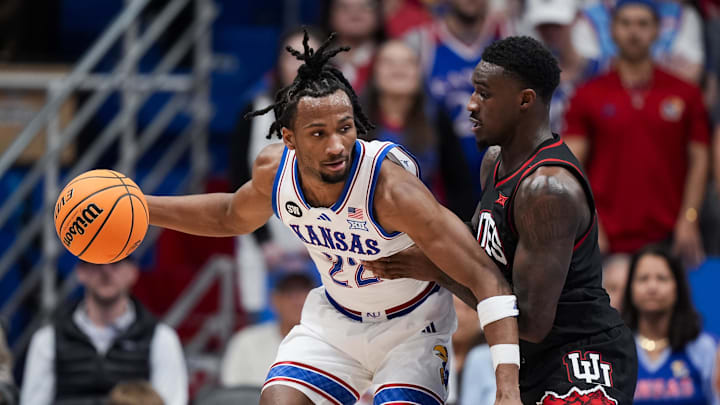
2. Indiana Pacers - Darryn Peterson | Guard | Kansas

Holding the second overall pick, the Indiana Pacers face a pivotal decision, but ultimately lean into upside while prioritizing fit within their system. Darryn Peterson checks both boxes—a dynamic three-level scorer capable of taking over games from anywhere on the floor.
Regarded as one of the most polished guard prospects in recent memory, with comparisons to Kobe Bryant and Ray Allen, Peterson has the tools to become a franchise cornerstone. He would likely begin his rookie season in a reserve role, but a breakout year could force Indiana into some difficult long-term decisions, especially with Andrew Nembhard already established alongside Tyrese Haliburton in the backcourt.
3. Washington Wizards - Cameron Boozer | Forward | Duke

The Washington Wizards opt for the best player available, selecting Cameron Boozer to bolster an already crowded frontcourt alongside Alex Sarr and Anthony Davis. With Davis unlikely to be a long-term piece, this selection gives Washington a chance to evaluate whether Boozer and Sarr can develop into a sustainable pairing for the future.
Boozer enters the draft as one of the most polished prospects in the class, blending efficient three-level scoring with elite rebounding production. While his long-term upside may not match that of Darryn Peterson or A.J. Dybantsa, his well-rounded game and consistency make him one of the safest bets among the top prospects.
4. Dallas Mavericks - Darius Acuff Jr. | Guard | Arkansas - Traded to SAC

The Dallas Mavericks make this selection on behalf of the Sacramento Kings, who aggressively move up the board as they begin a new phase of their rebuild, targeting Arkansas guard Darius Acuff Jr. Sacramento’s fan base has remained one of the league’s most passionate, but sustained success has been limited, with only a brief “Light the Beam” playoff run ending in a first-round loss to Golden State.
With reports already linking the Kings to Acuff, this type of bold move aligns with their need for a potential cornerstone. Acuff brings a competitive edge and clear star upside, combining a score-first mentality with the ability to control games. He attacks downhill with ease, excels in pick-and-roll situations and uses his physicality to compensate for his 6-foot-3, 190-pound frame.
5). Utah Jazz - Caleb Wilson | Forward | North Carolina - Traded to MEM

The Utah Jazz find themselves in an unexpected position when Caleb Wilson is still available at No. 5, opting to select the North Carolina forward despite an already crowded frontcourt. With strong guard depth projected later in the round, Utah quickly explores trade options, ultimately finding a willing partner in the Memphis Grizzlies, who make an aggressive move up to secure Wilson.
The Grizzlies acquire a relentless rebounder and explosive finisher, who brings high-level energy and production around the rim. Drawing comparisons to players like Chris Bosh, Kevin Garnett, Jermaine O’Neal and Pascal Siakam, he’s viewed as a high-upside, two-way forward with a nonstop motor—thriving in transition, controlling the glass and flashing the potential to develop into a complete offensive weapon.
6). Sacramento Kings - Keaton Wagler | Guard | Illinois - Traded to DAL

The Mavericks come away with Wagler in this scenario, landing a prospect who fits seamlessly alongside Kyrie Irving. His size allows them to share the floor effectively, while also giving Wagler the opportunity to learn from one of the league’s most skilled guards. With Cooper Flagg already operating as a willing passer at the four, Dallas continues to build a roster centered around ball movement and offensive versatility.
Wagler helped lead Illinois to a Final Four appearance, highlighted by a statement win over Houston before falling to UConn. A natural scorer with a strong feel for the game, he consistently finds ways to produce while continuing to grow defensively. With his length, scoring instincts and high basketball IQ, Wagler projects as a coveted prospect in the 5–8 range, drawing comparisons to Tyrese Haliburton.
TRADE: The Dallas Mavericks have traded the draft rights to Darius Acuff Jr. to the Sacramento Kings for the draft rights to Keaton Wagler, a 2027 first round pick (from San Antonio), and a 2029 unprotected pick.
Why Dallas does the deal:
The Dallas Mavericks were tempted to take Caleb Wilson here, but with Cooper Flagg at the four, getting long-term guard help here is what is best for the Mavericks. They take the best guard on the board, Darius Acuff Jr., knowing that the Sacramento Kings have eyes for him, and trade back two picks to get Keaton Wagler, a perfect fit next to Kyrie Irving in the backcourt, while also getting two additional first round picks from Sacramento,
Why Sacramento does the deal:
Sacramento is ecstatic about landing Acuff Jr., believing he could be the face of the franchise moving forward as they enter a long rebuild. They do give up future picks, but the 2027 pick is one they acquired from Charlotte, who looks to be a playoff team moving forward, and they part ways with a pick three years down the road. It is a hefty price, but Acuff Jr. has one of the highest ceilings of anyone on the board here.
7. Atlanta Hawks (via NOLA) - Brayden Burries | Guard | Arizona

The Hawks land a talented guard in Burries, a seamless fit alongside Nickeil Alexander-Walker and within Quin Snyder’s system. A terrific combo guard at Arizona, Burries showcased his ability to impact the game on both ends, playing with a level of poise and confidence that stands out for his age.
With three-level scoring, a physical edge and a mature approach, he has all the tools to continue ascending. And with his game still just scratching the surface, Burries profiles as one of the biggest potential risers on draft night.
8. Memphis Grizzlies - Kingston Flemings | Guard | Houston - Traded to UTA

The Memphis Grizzlies make this selection on behalf of the Utah Jazz following the deal involving the No. 5 overall pick, allowing Utah to come away with one of the top guards in the class in Flemings. Frequently projected in that (5-8) range across multiple mock drafts, Flemings offers strong value here as a dynamic backcourt addition.
With his quick burst, midrange scoring and effectiveness in pick-and-roll situations, he projects as a versatile guard capable of impacting the game in a variety of ways. His ability to create offense and control tempo gives Utah a foundational piece in the backcourt as he continues to develop into a potential high-level lead guard.
For more on the Grizzlies draft options, read here.
9. Chicago Bulls - Labaron Philon Jr. | Guard | Alabama

The Chicago Bulls opt for Labaron Philon Jr. over Brown Jr. in this scenario, continuing their roster reset around Matas Buzelis and Josh Giddey. By selecting the Alabama guard, Chicago adds one of the more talented and well-rounded backcourt prospects in the class.
Philon’s on-ball defense immediately stands out, and when paired with his three-level scoring ability and high basketball IQ, he profiles as a potential high-level guard at the next level. Though he has a slender frame, he plays with toughness, rebounds effectively for his position and displays strong vision as a playmaker—despite occasional turnover concerns.
10. Milwaukee Bucks - Mikel Brown Jr. | Guard | Louisville

The Milwaukee Bucks enter the offseason facing significant uncertainty, with their relationship with Giannis Antetokounmpo appearing increasingly fractured. Without clarity on what a potential return in a Giannis deal could look like, Milwaukee opts to take the best player available in this spot.
That leads them to Louisville guard Mikel Brown Jr., a natural fit alongside Ryan Rollins in the backcourt. Brown will need to add strength to maximize his potential, but his smooth pick-and-roll play and polished jumper already stand out. At 6-foot-5, his ability to operate both on and off the ball gives him the versatility to handle either guard position effectively.
This is a trade the Bucks could explore for Giannis if they choose to go that route.
11. Golden State Warriors - Yaxel Lendeborg | Forward | Michigan

Lendeborg may be one of the older prospects in this class, but he is also among the most NBA-ready. A versatile 6-foot-9 forward with playmaking ability, he made a well-rounded impact on both ends while helping lead Michigan to one of the nation’s top records. He scores efficiently inside, defends with strong instincts and profiles as one of the most polished players available at this stage of the draft.
For the Golden State Warriors, that readiness carries added importance. With Stephen Curry still leading the way, the priority is maximizing the remaining championship window—making a plug-and-play contributor like Lendeborg an ideal fit with this selection.
12. Oklahoma City Thunder - Nate Ament | Forward | Tennessee

The Oklahoma City Thunder, equipped with a deep roster and long-term flexibility, are in an ideal position to take a swing on upside with Nate Ament. He may not be ready to contribute immediately at the NBA level, but his combination of size and flashes of high-level play make him an intriguing developmental prospect.
Ament displayed his potential in the Sweet 16 against Iowa State, though his inconsistency showed in a tough outing versus Michigan, where he finished 2-for-12 from the field with seven points in 31 minutes. The tools are evident—he simply needs time and refinement to put it all together at the next level.
13. Miami Heat - Morez Johnson Jr. | Forward | Michigan

The Miami Heat prioritize defense with this selection, adding Michigan forward Morez Johnson Jr., one of the most physical and impactful defenders in the class. A dominant rebounder with a relentless motor, Johnson thrives around the rim, finishing efficiently while imposing his presence on both ends of the floor.
Although his lack of shooting range limits his offensive versatility, his interior scoring, toughness and defense-first mentality have been central to Michigan’s success this season. For Miami, he represents an ideal fit within the organization’s culture—bringing a skill set that complements Bam Adebayo while addressing a need for added physicality and frontcourt depth.
Or maybe the Heat could explore a trade for Zion Williamson.
14). Memphis Grizzlies (via ORL) - Braylon Mullins | Guard | UConn - Traded to UTA

Sixteen years after drafting an Indiana standout in Gordon Hayward, the Utah Jazz once again turn to a Hoosier guard-forward with Mullins, another underdog from the national championship stage. He projects as a rotation piece early in his career, though adding strength will be a key priority as he adjusts to the NBA level.
Offensively, Mullins brings one of the more refined skill sets in this class. A high-volume perimeter shooter, he attempts more threes than twos and converts at a 36.4% clip on 6.4 attempts per game, pairing that with a natural feel for scoring that should translate well to the next level.
TRADE: The Utah Jazz have traded the draft rights to Caleb Wilson and point guard Cody Williams to the Memphis Grizzlies for the draft rights to Kingston Flemings, Braylon Mullins and a 2030 unprotected first round pick from Orlando.
Why Utah does the deal:
Utah is caught off guard when Caleb Wilson is still on the board at No. 5, selecting him before quickly shifting focus to trade discussions. After acquiring Jaren Jackson Jr. at the deadline and already featuring All-Star Lauri Markkanen, the Jazz find themselves with a crowded frontcourt and begin exploring ways to rebalance the roster.
When Kingston Flemings slides to No. 8, Utah strikes a deal with Memphis—moving Wilson in exchange for the selection, while also acquiring the No. 14 pick. With those picks, the Jazz land Flemings and add sharpshooter Braylon Mullins, a guard-forward out of Greenfield, Indiana. The deal doesn’t stop there—Utah also secures an unprotected 2030 first-round pick from Memphis (via Orlando), though it comes at the cost of parting ways with Cody Williams to complete the transaction.
Why Memphis does the deal:
The Grizzlies entered the lottery hoping to secure a top-four pick but ultimately slid to No. 8 overall. When Caleb Wilson unexpectedly fell to Utah at No. 5, Memphis recognized an opportunity and re-engaged with a familiar trade partner to make an aggressive move up the board.
Fully committed to a rebuild, the Grizzlies prioritize upside, landing one of the top prospects in the class—even at the cost of multiple draft assets. Wilson aligns seamlessly with the direction of the franchise, and in the process, Memphis effectively turns its Jaren Jackson Jr. deal into an even more impactful long-term return.
(This is another way that the Grizzlies draft could fall.)
15. Chicago Bulls (via POR) - Aday Mara | Center | Michigan

With Portland reaching the playoffs in this scenario, the Chicago Bulls gain an additional top-15 selection and continue to reshape their roster. After adding a guard at No. 9 in Labaron Philon Jr., Chicago pivots to the frontcourt, selecting Aday Mara as the first center off the board.
At 7-foot-3, Mara offers significant upside as a developing big, combining soft touch with impressive playmaking instincts for his size. While he still needs to improve his foot speed and add strength, his high basketball IQ helps mitigate those concerns. A consistent lob threat with room to grow, Mara has the potential to develop into one of the more skilled centers at the next level.
16. Charlotte Hornets - Cameron Carr | Guard-Forward | Baylor - Traded to IND

Cameron Carr, a 6-foot-6 Baylor wing, stands out physically with a reported 7-foot-2 wingspan, giving him intriguing defensive versatility and long-term upside. After limited opportunities at Tennessee, he transferred and flourished in an expanded role, averaging 19.0 points, 5.6 rebounds and 2.6 assists per game while shooting 50.6% from the field, 38.5% from three and 80.6% from the free-throw line, along with 1.3 blocks and 0.9 steals.
Despite a slender 175-pound frame, Carr compensates with athleticism, confidence and a strong feel for the game, consistently running the floor and finishing above the rim. With his blend of length, shooting touch and emerging production, he has positioned himself as a prospect worth monitoring as he approaches his 22nd birthday in November.
TRADE: The Charlotte Hornets have traded the draft rights to Cameron Carr to the Indiana Pacers in exchange for Jarace Walker.
Why Charlotte does this deal:
The Hornets have back-to-back picks here, but are looking to win right now. Jarace Walker has spent the last three seasons developing into an everyday NBA pro. He gives the Hornets a wing that can put the ball on the floor, hit open threes at a high rate, has defensive potential and fits into this younger core. His playing time in Indiana would be limited, especially with Indiana selecting Darryn Peterson with the No. 2 overall pick in this draft.
Why Indiana does this deal:
With Jarace Walker set to become a restricted free agent in the summer of 2027, the Pacers trade for a player that fits their system perfectly and is cheaper than what Walker will likely cost them on his new deal. They moved on from Mathurin because they couldn't agree contractually to a deal, and the same could happen here with Walker.
Carr gives them good size at the guard-wing spot, with defensive upside and a massive wingspan. His ability to score the basketball is special, and while he will need to add strength to his frame, he has the confidence and assertiveness you want in a young prospect. Indiana already added a 6-foot-6 guard in Peterson with the second overall pick, but Carr's size allows for him to play either the two or three.
17. Charlotte Hornets (via PHX) - Bennett Stirtz | Guard | Iowa

The Charlotte Hornets continue to reshape their roster, first adding 22-year-old forward Jarace Walker via trade with the Pacers, and now bringing in a guard whose path to this stage has been anything but conventional. Stirtz, who rose from Division II to starring at Iowa, made a national impact by leading the Hawkeyes to a statement upset over No. 1 seed Florida.
A poised and composed floor general, Stirtz blends shooting and playmaking with a relentless work ethic that stands out. His journey alone speaks to his development, and his skill set makes him an intriguing addition for Charlotte. Head coach Charles Lee will appreciate his approach—and Hornets fans likely will, too.
18. Toronto Raptors - Hannes Steinbach | Forward-Center | Washington

The Raptors could address the point guard position here, but instead prioritize their lack of depth at center by selecting one of the most productive big men in college basketball. Steinbach brings a polished interior skill set, averaging 18.6 points and 11.6 rebounds while using his size and low-post scoring to consistently control the paint, along with showing flashes of respectable perimeter shooting.
Defensively, he offers rim protection but can have trouble when pulled into space. At just 20 years old, his ability to adjust to the speed and spacing of the NBA will be a key factor in his long-term development.
19. Oklahoma City Thunder (via PHI) - Jayden Quaintance | Forward-Center | Kentucky

Much like their earlier selection of Nate Ament, Oklahoma City takes another upside swing with Jayden Quaintance. Limited by injury during his time at Kentucky, Quaintance remains one of the most naturally gifted defensive bigs in the class, pairing elite length with athleticism and strong rebounding instincts.
If he can stay healthy, his ceiling suggests he could emerge as one of the biggest steals in the draft. Landing with a deep Thunder roster would only benefit his development, giving him the time and flexibility to grow without immediate pressure to contribute.
20. San Antonio Spurs (via ATL) - Thomas Haugh | Forward | Florida

This season, Haugh shifted from his natural role at the four into a starting spot on the wing, showcasing positional versatility even if the transition came with challenges. While he proved capable of playing multiple spots, his foot speed and limited explosiveness can make it difficult for him to consistently defend quicker players.
Haugh contributes across the board without relying on one standout skill, projecting as a frontcourt tweener who may need time to adjust to the pace of the NBA game. Though his ceiling may not match some of the higher-upside prospects, his high basketball IQ and strong fundamentals give him one of the safest floors in the top half of the draft.
21. Detroit Pistons (via MIN) - Christian Anderson | Guard | Texas Tech

The Detroit Pistons address their backcourt depth by selecting Texas Tech guard Christian Anderson, adding a player who blends scoring versatility with a strong feel for the game. A capable three-level scorer, Anderson is effective both on and off the ball, giving Detroit flexibility in how he can be deployed.
While he will need to add strength to his lean frame, his high basketball IQ and competitive nature help offset any athletic limitations. With multiple directions available at this spot, the Pistons opt for the best player on the board—filling a clear positional need in the process.
22. Atlanta Hawks (via CLE) - Patrick Ngongba II | Center | Duke

Ngongba offers the size, strength and instincts teams value in a traditional big, consistently making his presence felt as a rebounder and rim protector. While he isn’t an elite athlete and lacks perimeter shooting, which could limit his offensive ceiling, his physical tools and defensive impact remain appealing.
Injuries may influence where he ultimately lands, but that also creates an opportunity for a team like Portland to take a calculated swing on his upside. After already adding a dynamic combo guard with a previously acquired pick from New Orleans, the Trail Blazers continue to build their frontcourt by selecting a center who can develop alongside a young core featuring Onyeka Okongwu and Mouhamed Gueye.
23. Philadelphia 76ers (via HOU) - Koa Peat | Forward | Arizona

Following a breakout season at Arizona, the 76ers add a forward with intriguing upside. He leverages his strength, physicality and motor to create advantages and punish mismatches. While his perimeter shooting remains inconsistent and his size may be a slight concern for the position, his overall impact stands out. He projects as a versatile, do-it-all four with promising long-term potential.
24. Denver Nuggets - Karim Lopez | Forward | New Zealand
The Denver Nuggets have several directions they could explore with this pick, but ultimately lean into the upside of international wing Karim Lopez. At 6-foot-8, Lopez offers a compelling blend of size and ball-handling ability, giving him intriguing offensive potential. He also carries the distinction of being Mexico’s top NBA prospect, adding to the intrigue surrounding his long-term development.
Lopez plays with toughness and a high motor, traits that align well with Denver’s identity. His polished offensive skill set and versatility make him an appealing fit within the Nuggets’ system. If he continues to develop, he has the tools to become a valuable contributor in their rotation.
25. New York Knicks - Allen Graves | Forward | Santa Clara

The 6-foot-9 forward demonstrated impressive efficiency, shooting 51.7% from the field and 41.6% from three on limited volume, showcasing both his skill and feel for the game. While he may not be an elite athlete, his size, strength and high basketball IQ—paired with strong defensive awareness—should allow his well-rounded game to translate at the next level, even in a limited role early on.
Graves profiles as an ideal depth piece for teams seeking reliability at the four spot. The Knicks, already a tough playoff team when healthy, could look to make a significant move if their postseason falls short of expectations. This pick could become part of a larger deal—or the player selected here could step into a more prominent role depending on how aggressive New York chooses to be.
26. Los Angeles Lakers - Chris Cenac Jr. | Center | Houston

At 6-foot-11 with a 7-foot-3 wingspan, Cenac Jr. brings the size and length teams look for in a modern center. He stands out as one of the more agile bigs in the class, excelling as a lob threat and finishing efficiently in transition.
If his perimeter shooting continues to develop, his value could rise significantly in this range. For the Lakers, he offers an intriguing frontcourt depth piece alongside Deandre Ayton, with the potential to grow into a more impactful role.
27. Boston Celtics - Dailyn Swain | Forward | Texas

With a roster as deep as Boston’s, the Celtics have plenty of flexibility with the No. 27 pick. One logical direction would be adding a defensive-minded wing in Dailyn Swain, who brought consistent energy and effort during his season at Texas.
Swain’s upside is rooted in his 6-foot-8, 225-pound frame and defensive versatility, which has been the defining strength of his game. While his offensive development—particularly his shooting—remains a work in progress, evaluators believe his skill set could translate even better at the NBA level, giving him a chance to make an immediate impact on the defensive end.
28. Minnesota Timberwolves (via DET ) - Ebuka Okorie | Guard | Stanford

Minnesota addresses a need in the backcourt by selecting Ebuka Okorie, the top point guard available at this stage of the draft. Okorie was the engine behind Stanford’s offense, blending strong playmaking with efficient three-level scoring at the rim and from the perimeter.
On the defensive end, he competes and applies consistent ball pressure, though his smaller frame can be challenged by more physical guards.
29. Cleveland Cavaliers (via San Antonio) - Amari Allen | Forward | Alabama

Allen offers an appealing blend of size, instincts and developing shooting touch, fitting the profile of a modern NBA wing. His ability to contribute without needing the ball—through defense, ball movement and overall feel—makes him a strong complementary piece for winning teams.
With preferred center options already off the board, Cleveland opts to take the best player available, adding a versatile wing rather than forcing a positional need.
30. Dallas Mavericks (via Oklahoma City) - Joshua Jefferson | Forward | Iowa State

After moving the No. 4 pick for Keaton Wagler and adding multiple first-round selections, the Mavericks turn their attention to frontcourt depth by selecting a seasoned forward out of Iowa State. Jefferson brings physicality, playmaking and a strong feel for the game, impacting winning in a variety of ways.
While he still needs to develop his three-point shot and improve defensively on the perimeter, he projects as a reliable glue guy whose all-around skill set should translate well to the NBA level.
Second Round of the 2026 NBA Mock Draft:
31. New York Knicks (via WAS) - Motiejus Krivas | Center | Arizona

32. Memphis Grizzlies (via IND) - Tyler Tanner | Guard | Vanderbilt

33. Brooklyn Nets - Meleek Thomas | Guard | Arkansas

34. Sacramento Kings - Tounde Yessoufou | Guard-Forward | Baylor

35. San Antonio Spurs (via UTA) - Flory Bidunga | Center | Kansas

36. Oklahoma City Thunder (via Dallas) - Zuby Ejiofor | Forward | St. John's

37. Chicago Bulls (via NOLA) - Isaiah Evans | Guard-Forward | Duke

38. Los Angeles Clippers (via MEM) - Tarris Reed Jr. | Center | UConn

39. Houston Rockets (via CHI) - Alex Karaban | Forward | UConn

40. Boston Celtics (via MIL) - Henri Veesaar | Center | North Carolina

41. Miami Heat (via GSW) - Milan Momcilovic | Forward | Iowa State

42. Brooklyn Nets (via LAC) - Alex Condon | Center | Florida

43. San Antonio Spurs (via POR) - Billy Richmond | Guard | Arkansas

44. San Antonio Spurs (via MIA) - Rueben Chinyelu | Center | Florida

45. Orlando Magic - Neoklis Avdalas | Guard-Forward | Virginia Tech

Also, the Magic could look at a new coach.
46. Sacramento Kings (via CHA) - JT Toppin | Forward | Texas Tech

47. Dallas Mavericks (via PHX) - Dash Daniels | Guard | Melbourne
48. Phoenix Suns (via PHI) - Jaden Bradley | Guard | Arizona

49. Toronto Raptors - Ryan Conwell | Guard | Louisville

50. Denver Nuggets (via ATL) - Richie Saunders | Guard | Brigham Young

51. Washington Wizards (via MIN) - Pryce Sandfort | Forward | Nebraska

52. Houston Rockets - Dillon Mitchell | Forward | St. John’s

53. Los Angeles Clippers (via CLE) - Juke Harris | Guard | Wake Forest

54. Chicago Bulls (via DEN) - Braden Smith | Guard | Purdue

55. New York Knicks - Paul McNeil Jr. | Guard | NC State

56. Golden State Warriors (via LAL) - Zvonimir Ivisic | Center | Illinois

57. Atlanta Hawks (via BOS) - Bruce Thornton | Guard | Ohio State

58. New Orleans Pelicans (via DET) - Malachi Moreno | Center | Kentucky

59. Minnesota Timberwolves (SAS) - Baba Miller | Forward | Cincinnati

60. Washington Wizards (via OKC) - Trevon Brazile | Forward | Arkansas

Final Thoughts
This draft class is loaded with talent, featuring a wide range of prospects who can carve out meaningful roles at the next level. From headline-grabbing trades to intriguing selections, this mock highlighted how teams are approaching different paths—whether that’s rebuilding, retooling or simply adding depth to a competitive roster.
And the value doesn’t stop after the first round. The second round is filled with players capable of earning roster spots, whether at the back end of a 15-man roster or on two-way deals, making this one of the deeper classes in recent memory.
And just for fun, here's another mock draft by our group at OnSI.
You can follow me on X @AlexGoldenNBA and listen to my daily podcast, Setting The Pace, wherever you get your podcasts.
 Add us as a preferred source on Google
I was born in Indianapolis, Indiana and I am the host and creator of Setting The Pace: A Pacers Podcast. I have been covering the team since 2015, and talking about them on the podcast since 2018. I have been a credentialed media member since 2023.
Follow AlexGoldenNBA