
Pistons and Spurs Have Followed the Same Winning Blueprint, Ahead of Tuesday’s Match
In this story:
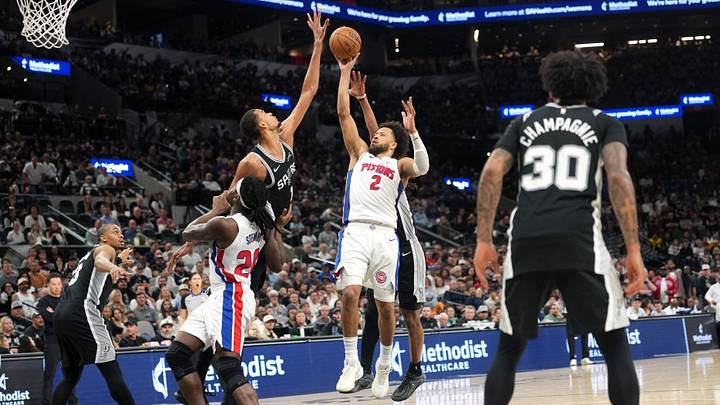
The Detroit Pistons and the San Antonio Spurs have followed similar paths over the past three years.
As they prepare to meet in the Lone Star State on Tuesday night, they serve as models for how teams can build a contender under today’s stricter collective bargaining agreement.
And Tuesday’s battle will be an early matchup between two genuine championship contenders, when just three years ago they were collecting scraps from the NBA’s basement.
Both Detroit and San Antonio bottomed out just three seasons ago, finishing the 2023–24 season at 14–68 and 22–60, respectively. They have undergone a rapid transformation, topping their conferences this year by making wholesale changes and developing their squad.
It helps, of course, to draft players like Cade Cunningham and Victor Wembanyama, but they don’t make the Pistons or the Spurs, respectively.

Drafting length and versatility
Rather than pursuing one-dimensional scorers early in their rebuilds, both front offices prioritised athletic, versatile defenders capable of disrupting opposing perimeter players.
Detroit’s defensive identity is built around physicality and relentless perimeter pressure. Led by Ausar Thompson and Ron Holland II, the Pistons developed a top-three defence capable of withstanding injuries to starting centre Jalen Duren.
Similarly, San Antonio paired Victor Wembanyama with powerful, physical guards Stephon Castle and Dylan Harper, allowing the Spurs to pressure opposing ball-handlers full-court while maintaining elite rim protection.
Detroit vs. San Antonio: The masters of the Second Apron timeline at work
Under the NBA’s strict salary cap rules, championship contenders can no longer rely on unlimited luxury-tax spending to address roster weaknesses.
Instead, teams must prioritise financial discipline and long-term roster construction. Detroit and San Antonio have demonstrated two effective strategies.
Both have done well on the financial advantages of keeping rising stars, such as Thompson and Holland in Detroit, and Castle and Harper in San Antonio, on well-valued rookie contracts.
This allows their franchise stars to enter their maximum-contract years without placing massive pressure on the salary cap.
By avoiding securing expensive contracts to ageing stars during their rebuilding years, both front offices have retained draft capital and young talent.
This flexibility lets them pursue upgrades at the Trade Deadline while strengthening their rosters without compromising long-term financial stability.
Coaches who understand their team’s culture

Success depends on building an ecosystem that prioritizes patience, continuity, and player development.
San Antonio demonstrated this by seamlessly transitioning from Gregg Popovich to head coach Mitch Johnson without disrupting its developmental pipeline.
Similarly, Detroit established long-term structural stability under J.B. Bickerstaff, transforming from a perennial lottery team into an Eastern Conference powerhouse.
And these ingredients will clash together on Tuesday.
 Add us as a preferred source on Google

A freelance journalist who has covered basketball long enough to remember LeBron James’ NBA debut for the Cavs like it was yesterday. Specializing in international basketball, John currently writes for FIBA. Outside of basketball, John is a sneaker enthusiast with over 100 pairs of Nikes/Jordans, and is adjusting to life as a new cat owner.
Follow JohnHobbsTB