%20%20--%3E%0A%3Csvg%20version%3D%221.1%22%20id%3D%22Layer_1%22%20xmlns%3D%22http%3A%2F%2Fwww.w3.org%2F2000%2Fsvg%22%20xmlns%3Axlink%3D%22http%3A%2F%2Fwww.w3.org%2F1999%2Fxlink%22%20x%3D%220px%22%20y%3D%220px%22%0A%09%20width%3D%2239px%22%20height%3D%2240px%22%20viewBox%3D%220%200%2039%2040%22%20enable-background%3D%22new%200%200%2039%2040%22%20xml%3Aspace%3D%22preserve%22%3E%0A%3Cpath%20fill%3D%22%23FFFFFF%22%20d%3D%22M38.5%2C7H28.2v26h10.3V7z%22%2F%3E%0A%3Cpath%20fill-rule%3D%22evenodd%22%20clip-rule%3D%22evenodd%22%20fill%3D%22%23FFFFFF%22%20d%3D%22M26.1%2C25.5c0%2C5.8-4.1%2C7.5-12.9%2C7.5C3.9%2C33%2C0%2C31.2%2C0%2C25.2v-1.1h11.6%0A%09v2.4c0%2C0.7%2C0.1%2C1.4%2C1.2%2C1.4c1%2C0%2C1.2-0.4%2C1.2-1.3v-0.9c0-1.6-0.9-1.6-3.5-2.2C2.2%2C21.7%2C0%2C19.7%2C0%2C15.3v-0.9C0%2C9.3%2C5.5%2C7%2C12.9%2C7%0A%09c10.2%2C0%2C12.8%2C2.6%2C12.8%2C7.4v1.8h-11v-2.9c0-0.6-0.4-1.1-1.2-1.1c-0.6%2C0-1.2%2C0.4-1.2%2C1.1v0.9c0%2C1.5%2C0.9%2C2%2C3.3%2C2.5%0A%09c8%2C1.6%2C10.5%2C3.3%2C10.5%2C7.5V25.5z%22%2F%3E%0A%3C%2Fsvg%3E%0A)
Canada, Jesse Marsch Must Ask ‘What If?’ Despite Historic World Cup Run
HOUSTON – The 2026 World Cup was served up on a picture-perfect platter for Canada and manager Jesse Marsch.
Playing as co-host, with a favorable path featuring plenty of home-cooking in places like Toronto and Vancouver, it beckoned an opportunity to solidify soccer as the nation’s second-favorite sport moving forward.
Heck, given the way things have gone in the national pastime in recent years, the World Cup could have even allowed soccer to become the country’s best sport, had Canada reached the quarterfinals and inspired millions to go outside to kick a ball in lieu of picking up a hockey stick.
Maybe it will still be a transformative experience, with the millions of dollars the Canadian federation will receive from FIFA. The player pool, as good as it ever has been, looks to be improving, and television ratings show no signs of reversal either.
Yet, in the wake of Canada’s 3-0 lopsided exit from the World Cup at NRG Stadium to Morocco, it also looks more like an incredible missed opportunity. That goes for both the team itself and for its star player, Alphonso Davies, who was supposed to use this tournament on the more familiar side of the Atlantic to make a leap to another level on and off the pitch.
Now such a moment is gone completely without any of it being seized. Years from now, when recalling this historic run and the first-ever pair of victories at the World Cup, it may not be the joy that shines through, but instead the thought of “what if?” which might haunt everyone wearing a maple leaf.
WIN FIFA WORLD CUP 2026™ FINAL TICKETS & OTHER PRIZES

The Missed Opportunity for Dramatic Upset

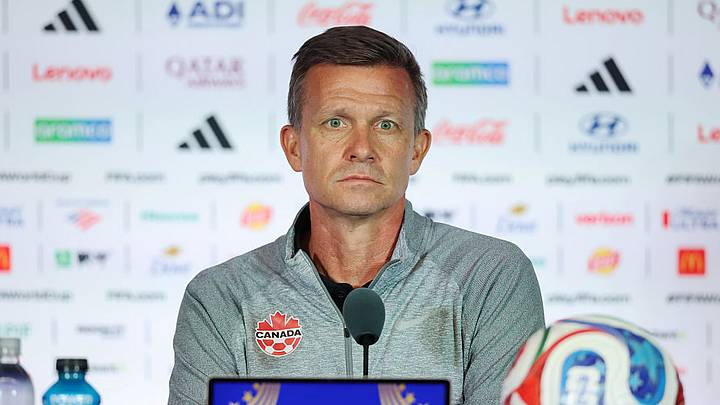
“You get knocked out of the tournament, especially when you play really well. It’s really tough to swallow,” said Marsh post-match, quite upbeat despite all three of his opponent’s goals coming more or less against the run of play. “I challenged them to understand that we can play like this all the time, like that against the best teams in the world.
“The challenge is, can we hold that standard for 90 minutes.”
To give credit to Marsch, a suffocating first half allowed the Canadians to truthfully claim they were the better side against a team ranked in the top-10 globally, per FIFA’s world rankings, and which had made a dazzling run to the semifinals just four years ago. The Atlas Lions looked shellshocked as they absorbed constant pressure and made nothing of their 67% possession at the break, notching only 0.02 xG while giving up five corners. Several members of their backline picked up yellow cards, and Ismael Saibari, who will join Davies at Bayern Munich in a few weeks, needed to be subbed off with a hamstring injury of his own.
It looked like there was an upset brewing of quite epic proportions, especially after Tani Oluwaseyi nearly slotted one home for Canada in the first 15 minutes that would have deservedly given the American manager an early lead amid the early fireworks on the 4th of July.
But nothing came from any of it, buying Morocco time. The North Africans finally got on the board when Azzedine Ounahi took advantage of some disorganized movement in front of the goal to score on a set piece in the 50th minute. He added another on a counterattack in the 82nd to all but seal the result long before Soufiane Rahimi twisted the knife with a third in stoppage time.
“We didn’t change our identity. We didn’t change our principles,” remarked Morocco manager Mohamed Ouahbi. “They had a very intense press and were very aggressive in certain areas. We just had to avoid playing in those areas.”
Though Ouahbi did not mention Davies by name, the task was surely made easier thanks to the absence of the Bayern Munich defender. He clocked just 15 minutes between the lines in this supremely disappointing World Cup while dealing with a hamstring injury he picked up earlier this spring in club play.
The Aftermath of Alphonso Davies’s Absence

Canada is not a nation blessed with many players who can truly be called “world class” on a good day, but Davies is certainly one of them. His pace and dribbling ability are as rare as they come. When he is on the field, he’s played quite the role in winning some incredible trophies the last few years in Munich and taking the national team to new heights in Concacaf.
“I felt like I wasn’t there yet. So this is why we made the decision, or I made the decision, to sit out,” he said from the mixed zone later. “I don’t want to be a burden on the team or on the pitch.”
Except that he actually was, amid the games he played with limited availability to the entire 24 hours leading up the most important match in Canada’s history with this sport.
Did the team think he was playing? Yes, until two days ago at least, when Davies started feeling the knock again. That set off another round of “Will he, or won’t he,” which his teammates deftly navigated yet again but clearly could not overcome for more than 45 minutes.
“There was no new injury but the hamstring didn't feel right. What we were hoping was that by the time this morning when he woke up that he would feel better, but he didn't. We wanted to be cautious and make sure that we weren't risking anything,” said Marsch. “Obviously at the 68th minute, when it's 1-0, it would have been great to have [him] in the match or even at halftime. But we weren't able to have [him] healthy, and it killed him more than anyone.
“I think it was the right decision to preserve him and his career, get him back to being fully healthy.”

It’s a noble thought and one that the fans and club brass back in Bavaria will surely be appreciative of, should it lead to a resurgent 2026-27 season for Davies.
Those of more died-in-the-wool Canadian variety must wonder, though, if it’s simply a perfect summation of what has been a successful, yet snakebitten World Cup.
What if Davies had been healthy and capable of using these games to turn into the soccer equivalent of countryman Wayne Gretzky, who actually got some slight “boos” from the announced crowd of nearly 68,000? What if Ismaël Koné’s leg had not been broken to rob the starting lineup of another European stalwart in a top-five league? What if Canada had simply won its group, earning a path to more games on home soil instead of having to play in front of a very pro-Moroccan contingent in Houston?
It was all right there for Canada and its best player to take advantage of. It was tailor made for the kind of run that would spur a dozen different documentaries and lead to a sense of pride across the country.
Instead, the opportunity was missed, and both Davies and Canada may have to grapple with that fact for years to come.
READ THE LATEST WORLD CUP NEWS, ANALYSIS AND INSIGHT FROM SI FC
 Add us as a preferred source on Google
Bryan Fischer is a staff writer at Sports Illustrated covering college sports. He joined the SI staff in October 2024 after spending nearly two decades at outlets such as FOX Sports, NBC Sports and CBS Sports. A member of the Football Writers Association of America’s All-America Selection Committee and a Heisman Trophy voter, Fischer has received awards for investigative journalism from the Associated Press Sports Editors and FWAA. He has a bachelor’s in communication from USC.
Follow bryandfischer