%20%20--%3E%0A%3Csvg%20version%3D%221.1%22%20id%3D%22Layer_1%22%20xmlns%3D%22http%3A%2F%2Fwww.w3.org%2F2000%2Fsvg%22%20xmlns%3Axlink%3D%22http%3A%2F%2Fwww.w3.org%2F1999%2Fxlink%22%20x%3D%220px%22%20y%3D%220px%22%0A%09%20width%3D%2239px%22%20height%3D%2240px%22%20viewBox%3D%220%200%2039%2040%22%20enable-background%3D%22new%200%200%2039%2040%22%20xml%3Aspace%3D%22preserve%22%3E%0A%3Cpath%20fill%3D%22%23FFFFFF%22%20d%3D%22M38.5%2C7H28.2v26h10.3V7z%22%2F%3E%0A%3Cpath%20fill-rule%3D%22evenodd%22%20clip-rule%3D%22evenodd%22%20fill%3D%22%23FFFFFF%22%20d%3D%22M26.1%2C25.5c0%2C5.8-4.1%2C7.5-12.9%2C7.5C3.9%2C33%2C0%2C31.2%2C0%2C25.2v-1.1h11.6%0A%09v2.4c0%2C0.7%2C0.1%2C1.4%2C1.2%2C1.4c1%2C0%2C1.2-0.4%2C1.2-1.3v-0.9c0-1.6-0.9-1.6-3.5-2.2C2.2%2C21.7%2C0%2C19.7%2C0%2C15.3v-0.9C0%2C9.3%2C5.5%2C7%2C12.9%2C7%0A%09c10.2%2C0%2C12.8%2C2.6%2C12.8%2C7.4v1.8h-11v-2.9c0-0.6-0.4-1.1-1.2-1.1c-0.6%2C0-1.2%2C0.4-1.2%2C1.1v0.9c0%2C1.5%2C0.9%2C2%2C3.3%2C2.5%0A%09c8%2C1.6%2C10.5%2C3.3%2C10.5%2C7.5V25.5z%22%2F%3E%0A%3C%2Fsvg%3E%0A)
The Closest Ballon d’Or Races of All Time—Ranked
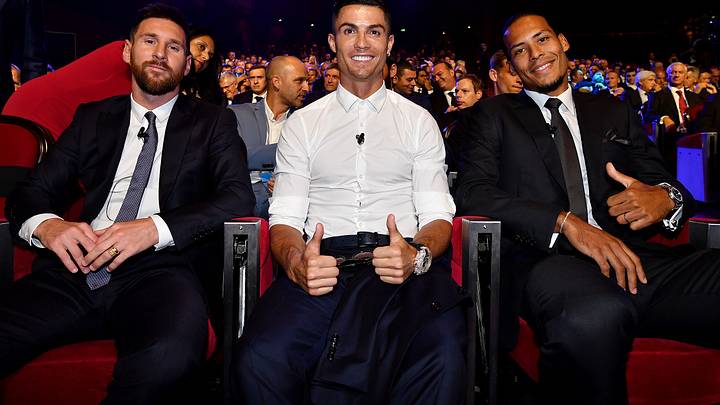
Sometimes, the Ballon d’Or race is a one-sided affair.
When Lionel Messi won the award for the third time in 2011, he claimed 47.88% of the vote, more than double the tally of his closest rival, Cristiano Ronaldo. Five years later, Ronaldo got his revenge, winning the 2016 award with 745 votes to Messi’s 316 following the end of the FIFA-Ballon d’Or partnership.
But not every race has been so decisive. Throughout the award’s history, several winners have edged out their rivals by the narrowest of margins, with just a handful of votes separating glory from disappointment.
Here, Sports Illustrated looks at the five closest Ballon d’Or races of all time.
5. The Inauguration

1st: Stanley Matthews (47 Points)
2nd: Alfredo Di Stéfano (44 Points)
3rd: Raymond Kopa (33 Points)
The inaugural Ballon d’Or was decided by just three points out of a possible 243, with Blackpool and England legend Sir Stanley Matthews edging out Real Madrid icon Alfredo Di Stéfano to make history.
Di Stéfano and third-place finisher Raymond Kopa would win the next two editions, respectively. So, no hard feelings?
4. Little Giant, Littler Margin

1st: Allan Simonsen (74 Points)
2nd: Kevin Keegan (71 Points)
3rd: Michel Platini (70 Points)
Allan Simonsen was nicknamed “The Little Giant” during his career, thanks to his 5'5" stature and explosive style of play, which helped him score goals in abundance.
During his time at Borussia Mönchengladbach, Simonsen won the Ballon d’Or by an equally narrow margin, finishing just three points ahead of Kevin Keegan and four clear of Michel Platini in the 1977 voting.
Simonsen claimed the prize after helping Mönchengladbach win the Bundesliga title and scoring in the 1977 European Cup final—albeit in defeat—as the Foals lost to (rather ironically) Keegan’s Liverpool.
3. Beckenbauer Wins Battle of the West Germans

1st: Franz Beckenbauer (81 Points)
=2nd: Gerd Müller (79 Points)
=2nd: Günter Netzer (79 Points)
West Germany holds the distinction of being the only country to sweep all three spots on the Ballon d’Or podium in the same year—and it did so twice.
The first came in 1972, following the country’s European Championship triumph. Franz Beckenbauer narrowly claimed France Football’s prestigious award, finishing just two points ahead of compatriots Gerd Müller and Günter Netzer.
2. Super Sammer

1st: Mattias Sammer (144 Points)
2nd: Ronaldo(143 Points)
3rd: Alan Shearer (107 Points)
The 1996 Ballon d’Or was decided by just one point—the joint-narrowest winning margin in the award’s history.
Borussia Dortmund and Germany defender Matthias Sammer edged out a young Ronaldo Nazário after helping Dortmund win the Bundesliga and Germany claim the European Championship.
Ronaldo would get his revenge the following year, scooping the award at just 21 to become the youngest Ballon d’Or winner in history.
1. Charlton vs. Eusébio

1st: Bobby Charlton (81 Points)
2nd: Eusébio (80 Points)
3rd: Franz Beckenbauer (59 Points)
Ten years after Stanley Matthews’s triumph, Sir Bobby Charlton became the second Englishman to win the Ballon d’Or.
Charlton claimed the award after helping England win the 1966 World Cup, starring in a semifinal victory over Portugal with a brace that proved decisive in a 2–1 win.
He ultimately edged Portugal’s Eusébio—who had scored Portugal’s only goal in that semifinal—by just one point to take home the prize.
Other Close Ballon d’Or Races

The Ballon d’Or has seen its fair share of nail-biters over the years.
In 1969, AC Milan’s Gianni Rivera edged Cagliari’s Luigi Riva by just four points, becoming the first winner to beat a compatriot to the award.
The FIFA Ballon d’Or era brought a different scoring system, with the winners in 2010, 2011 and 2012 all surpassing 1,000 points. Voting was also expanded to include national team coaches and captains, alongside journalists.
The closest race of the joint-award era came in 2013, when Cristiano Ronaldo claimed his first Ballon d’Or as a Real Madrid player—winning 27.99% of the vote compared to Messi’s 24.72% and Franck Ribéry’s 23.36%.
Six years later, Messi narrowly beat Liverpool defender Virgil van Dijk to the 2019 prize after helping Barcelona dominate domestically. Van Dijk, meanwhile, had led Liverpool to Champions League glory and was widely tipped to win, but Messi edged him by just seven points.
Messi was back at it in 2023, beating Manchester City striker Erling Haaland by just five points to claim his eighth Ballon d’Or after captaining Argentina to World Cup glory.
 Add us as a preferred source on Google

Barnaby Lane, better known as Barney, is a soccer writer for SI FC. With nearly a decade of experience in the industry, he has worked for a range of household-name publications in both the United States and the United Kingdom, and has interviewed some of the world’s biggest athletes—from Usain Bolt and Rafael Nadal to Christian Pulisic (though his favorite interview remains Adebayo Akinfenwa). Barney specializes in Premier League soccer, covering everything from the nostalgia of years gone by to the modern, vastly different landscape of today’s game. He also has experience reporting on La Liga and Major League Soccer, the latter of which he developed a particular affinity for during his university days at Virginia Commonwealth University in Richmond.