%20%20--%3E%0A%3Csvg%20version%3D%221.1%22%20id%3D%22Layer_1%22%20xmlns%3D%22http%3A%2F%2Fwww.w3.org%2F2000%2Fsvg%22%20xmlns%3Axlink%3D%22http%3A%2F%2Fwww.w3.org%2F1999%2Fxlink%22%20x%3D%220px%22%20y%3D%220px%22%0A%09%20width%3D%2239px%22%20height%3D%2240px%22%20viewBox%3D%220%200%2039%2040%22%20enable-background%3D%22new%200%200%2039%2040%22%20xml%3Aspace%3D%22preserve%22%3E%0A%3Cpath%20fill%3D%22%23FFFFFF%22%20d%3D%22M38.5%2C7H28.2v26h10.3V7z%22%2F%3E%0A%3Cpath%20fill-rule%3D%22evenodd%22%20clip-rule%3D%22evenodd%22%20fill%3D%22%23FFFFFF%22%20d%3D%22M26.1%2C25.5c0%2C5.8-4.1%2C7.5-12.9%2C7.5C3.9%2C33%2C0%2C31.2%2C0%2C25.2v-1.1h11.6%0A%09v2.4c0%2C0.7%2C0.1%2C1.4%2C1.2%2C1.4c1%2C0%2C1.2-0.4%2C1.2-1.3v-0.9c0-1.6-0.9-1.6-3.5-2.2C2.2%2C21.7%2C0%2C19.7%2C0%2C15.3v-0.9C0%2C9.3%2C5.5%2C7%2C12.9%2C7%0A%09c10.2%2C0%2C12.8%2C2.6%2C12.8%2C7.4v1.8h-11v-2.9c0-0.6-0.4-1.1-1.2-1.1c-0.6%2C0-1.2%2C0.4-1.2%2C1.1v0.9c0%2C1.5%2C0.9%2C2%2C3.3%2C2.5%0A%09c8%2C1.6%2C10.5%2C3.3%2C10.5%2C7.5V25.5z%22%2F%3E%0A%3C%2Fsvg%3E%0A)
SI:AM | The Casual Fan’s Guide to the World Cup
Good morning, I’m Dan Gartland. While we’re talking about the World Cup, check out SI’s Fan Zone.
In today’s SI:AM:
🏀 Cover star Cam Boozer
🔥 Pirates bring the heat
🗣️ Cut Caitlin Clark some slack
If you’re reading this on SI.com, click here to subscribe and receive SI:AM directly in your inbox each morning.
One day from the World Cup
The start of the World Cup sort of snuck up on me.
For months now, I’ve kept the month of June in the back of my mind as the start of the tournament, but only in the past several days did I realize just how soon it’s set to begin. The first match is tomorrow at 3 p.m. ET as Mexico faces South Africa at the iconic Estadio Azteca in Mexico City. The United States’ first game is at 9 p.m. ET on Friday against Paraguay in Los Angeles. The third co-host, Canada, will play its first match in Toronto against Bosnia-Herzegovina at 3 p.m. ET on Friday.
Speaking purely of the competition, the World Cup is always a fun time. It’s everything surrounding the tournament that makes your skin crawl. Every tournament after the 2006 edition in Germany has been marked by varying degrees of controversy, from the use of migrant laborers in Qatar to protests in Brazil and South Africa over the use of public funding to support the tournament. The 2018 World Cup was hosted by Russia, four years after it invaded the Donbas region of Ukraine, so the U.S. won’t be the first country to host a World Cup while actively fighting a war it instigated.
If you’re able to put all that behind you, the World Cup will be five weeks of top-notch competition in the world’s most popular sport. Even if you’re not usually a soccer fan, you should definitely give it a shot. Here’s a high-level breakdown for those of you who aren’t terribly familiar with the game.
What’s different
The main thing that separates this World Cup from previous editions is that the tournament field has been expanded from 32 teams to 48. The upside of that is it will allow more nations (especially smaller ones) to have their moment in the sun. The downside will be a diluted group stage.
The obvious reason why the opening round might feel watered down is that teams will be spread across 12 groups, compared to eight in the previous 32-team format. That means fewer instances of top teams being drawn into the same group. Less obviously, the new format means the stakes are lower in the group stage.
Previously, the top two teams in each of the eight groups advanced to the 16-team knockout stage. This time, the knockout stage features 32 teams. Instead of half the teams being eliminated after the group stage, only a third will be. In addition to each group’s top two finishers, the eight best third-place teams will also move on. That decreases the sense of urgency to perform well in the group stage.
Beyond the format changes, there are also a handful of new rules in place. Check out this summary by SI’s Tom Gott for a more detailed look at some of the rule changes FIFA has introduced for the tournament.
Who’s in
The expanded field means there are some unfamiliar flags in this year’s tournament. Four teams—Cabo Verde, Curaçao, Jordan and Uzbekistan—have qualified for the World Cup for the first time. Qatar earned a spot in the field for the first time after qualifying automatically as host in 2022. Eight teams will be making their first men’s World Cup appearance in at least 20 years: DR Congo (first appearance since 1974) and Haiti (’74), Iraq (’86), Austria (’98), Norway (’98), Scotland (’98), Türkiye (2002) and Czechia (’06).
Most of those teams are unlikely to make much noise. Uzbekistan, for example, is the highest-ranked of the four debutants but checks in at 50th in the current FIFA world rankings.
But if you’re looking for a team to latch onto that isn’t a World Cup mainstay, keep an eye on Norway. For one thing, the Norwegian team did an amazing pre-tournament photoshoot where they dressed up like Vikings and posed in front of longboats in a fjord. They’re also pretty dang good. Their FIFA ranking (31st) isn’t particularly impressive, but the more rigorous Elo Ratings have them at No. 11. Norway hasn’t lost a competitive match since October 2024. Its two best players are midfielder and captain Martin Ødegaard, who also captains Premier League champion and Champions League runner-up Arsenal, and forward Erling Haaland, who just led the Premier League in goals for the third time in four seasons.
Who’s out
Even with the expanded field, there are still several familiar teams that failed to qualify. The most notable is Italy, which has not qualified for a men’s World Cup since 2014 and has only one World Cup victory since winning the tournament in 2006.
Costa Rica had become a World Cup mainstay, qualifying for five of the past six tournaments and reaching the quarterfinals in 2014, but failed to qualify this year. (Only three spots were up for grabs for Concacaf teams because the United States, Mexico and Canada qualified automatically as co-hosts.) Cameroon, which qualified for eight of the last 11 tournaments, and Denmark, which participated in five of the last seven, also missed out.
Big names to watch
I mentioned Erling Haaland briefly, but it’s probably worth expanding on him. He’s such a fun player to watch. He’s enormous (just hair shy of 6'5" and roughly 200 pounds), aggressive, powerful and highly skilled. He turns 26 next month and is already Norway’s all-time leading goalscorer—by a wide margin. He has 55 international goals in 50 appearances, 22 more goals than the next man on the list.
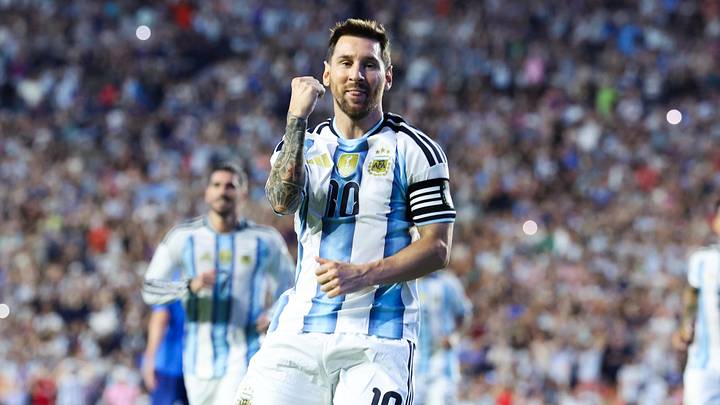
This will also be the final World Cup for some of the greatest players in the history of sport, like Lionel Messi (38) and Cristiano Ronaldo (41). Legendary 40-year-old Croatian midfielder Luka Modrić also made his team’s roster. The Brazilian icon Neymar, who is 34, also earned a spot on the team despite a rough few years.
If I had to guess which player will garner the most attention throughout the tournament, I’d say Spain’s Lamine Yamal is a good bet. He already seized headlines at the 2024 European Championships as a 16-year-old, playing a key role in Spain’s run to the title. He won’t turn 19 until just before the semifinals of this year’s tournament. Yamal is even more of a topic of conversation because he’s recovering from a hamstring injury that caused him to miss the final month of the La Liga season. He hasn’t played in a game since April 22. A big performance on the world stage would be a great way to announce his return.
The best of Sports Illustrated

- Cameron Boozer has won at every level. In the deepest draft in years, will NBA teams value that? Bryan Fischer profiles the draft’s most accomplished prospect, who has built his own résumé beyond the Boozer name.
- Gilberto Manzano unveils his 2026 offseason winners and losers, which include a pair of AFC quarterbacks, a defensive lineman, Chicago residents and a certain head coach.
- It’s been a while since the Bears shuffled to a Super Bowl championship, but now Chicago is talented enough to make a postseason run. Matt Verderame analyzes their chances of winning it all in our Super Bowl road map series.
- Tom Verducci argues that the Pirates are the hardest-throwing pitching staff in MLB history.
- Please don’t call this version of Yankees pitcher Gerrit Cole “vintage” Cole, Verducci writes.
- Tim Capurso breaks down the American League Cy Young Award race, which has a clear leader in Cam Schlittler and a compelling cast of pursuers.
- Amid the rumors, conspiracy theories and Zapruder-like examinations of body language, Emma Baccellieri says Caitlin Clark is owed some nuance.
- Fischer contends that the College Football Playoff must take a stand against Texas Tech and its defense of quarterback Brendan Sorsby.
The top five…
… things I saw last night:
5. A nice diving catch by Bobby Witt Jr. on a low line drive.
4. A good throw by Braves outfielder Eli White and a better tag by catcher Austin Wynns to prevent a run.
3. A great play deep in the hole by Mookie Betts.
2. Braden Montgomery’s walk-off home run in his MLB debut for the White Sox. (Montgomery is the fifth player in MLB history to hit a walk-off homer in his debut.)
1. Jordan Staal’s go-ahead goal for the Hurricanes while falling to the ice. Carolina held on to win and tie the series at two games apiece.
 Add us as a preferred source on Google
Dan Gartland writes Sports Illustrated’s flagship daily newsletter, SI:AM, and is the host of the “Stadium Wonders” video series. He joined the SI staff in 2014, having previously been published on Deadspin and Slate. Gartland, a graduate of Fordham University, is a former Sports Jeopardy! champion (Season 1, Episode 5).
Follow Dan_Gartland