%20%20--%3E%0A%3Csvg%20version%3D%221.1%22%20id%3D%22Layer_1%22%20xmlns%3D%22http%3A%2F%2Fwww.w3.org%2F2000%2Fsvg%22%20xmlns%3Axlink%3D%22http%3A%2F%2Fwww.w3.org%2F1999%2Fxlink%22%20x%3D%220px%22%20y%3D%220px%22%0A%09%20width%3D%2239px%22%20height%3D%2240px%22%20viewBox%3D%220%200%2039%2040%22%20enable-background%3D%22new%200%200%2039%2040%22%20xml%3Aspace%3D%22preserve%22%3E%0A%3Cpath%20fill%3D%22%23FFFFFF%22%20d%3D%22M38.5%2C7H28.2v26h10.3V7z%22%2F%3E%0A%3Cpath%20fill-rule%3D%22evenodd%22%20clip-rule%3D%22evenodd%22%20fill%3D%22%23FFFFFF%22%20d%3D%22M26.1%2C25.5c0%2C5.8-4.1%2C7.5-12.9%2C7.5C3.9%2C33%2C0%2C31.2%2C0%2C25.2v-1.1h11.6%0A%09v2.4c0%2C0.7%2C0.1%2C1.4%2C1.2%2C1.4c1%2C0%2C1.2-0.4%2C1.2-1.3v-0.9c0-1.6-0.9-1.6-3.5-2.2C2.2%2C21.7%2C0%2C19.7%2C0%2C15.3v-0.9C0%2C9.3%2C5.5%2C7%2C12.9%2C7%0A%09c10.2%2C0%2C12.8%2C2.6%2C12.8%2C7.4v1.8h-11v-2.9c0-0.6-0.4-1.1-1.2-1.1c-0.6%2C0-1.2%2C0.4-1.2%2C1.1v0.9c0%2C1.5%2C0.9%2C2%2C3.3%2C2.5%0A%09c8%2C1.6%2C10.5%2C3.3%2C10.5%2C7.5V25.5z%22%2F%3E%0A%3C%2Fsvg%3E%0A)
FIFA Reject Belgium’s Appeal Against Folarin Balogun Ban Reversal
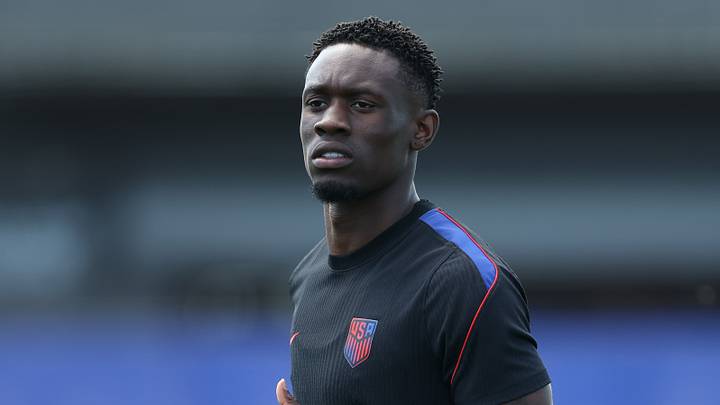
FIFA has rejected Belgium’s appeal over the eligibility of U.S. men’s national team striker Folarin Balogun, meaning he will be available to play in the round of 16 at Lumen Field in Seattle.
The Royal Belgian Football Association (RBFA) accused FIFA of not playing to its own rules after it suspended the one-match ban issused to the striker after his red card in the World Cup round of 32 win over Bosnia and Herzegovina.
FIFA’s Disciplinary Committee opted to suspend his red card for one year, allowing him to serve the suspension at a future date instead of in the round of 16, having held extraordinary talks with U.S. President Donald Trump and other government officials.
The adjustment came days after FIFA confirmed that there was no appeal process for a red card in the tournament, much to the annoyance of Belgium. The Red Devils were granted a right of appeal, eventually, less than 20 hours before the slated kickoff time against the USMNT.
‘FIFA Ensured Appeal Would be Inadmissible’
The RBFA said it was “astonished” by the decision in a statement, and wrote to FIFA “requesting a copy of the decision, an explanation of the process that had been followed and setting out its position regarding the applicable regulations.” The European nation later clarified it was told by FIFA that the written request was considered to constitute an appeal.
With a judge already appointed, the RBFA said it was given “only a few hours” to then complete that appeal, but “no information” was provided by FIFA. Belgium went on to claim that FIFA had made it so any appeal would “inadmissible” by failing to its own processes.
“FIFA’s own regulations state that the reasoned decision must first have been communicated to the appellant,” its statement read. “While the RBFA was merely seeking legitimate explanations, FIFA itself created an appeal and immediately ensured that it would be declared inadmissible.
“FIFA deliberately removed the section concerning the automatic suspension of players from its presentation. This topic had nonetheless been part of all such meetings before each of the previous four matches. The RBFA questioned FIFA, both orally and in writing, about the reasons for this change, yet once again received no response.
“To be clear, as of this moment, the RBFA has still not received any decision or any explanation from FIFA regarding this matter. It therefore has no alternative but to challenge the player’s eligibility for the upcoming match.”
The FIFA appeals committee, made up of 14 representatives, had an adjudicator unrelated to UEFA or Concacaf, leaving both American Neil Eggleston, the chairperson of the committee, and Swedish representative Thomas Bodström, the deputy chairperson, out of the process.
White House Involvement

U.S. President Donald Trump and the White House quickly made their feelings known about Balogun’s red card suspension, with the President posting “Thank you to FIFA for doing what was right, and reversing a great injustice!” on Truth Social in the hours after the ruling was announced. FIFA, meanwhile, had not posted the decision on its social media platforms but instead unveiled it in a press release.
Trump subsequently admitted to reporters at the White House that he’d spoken to Gianni Infantino about the red card, confidently proclaiming that, in his opinion, Balogun had not committed a foul. He also said the referee was a “little bit suspect if you check his past.” Infantino later posted a defiant statement, admitting he spoke to Trump while defending FIFA’s protocols and reiterating that he will always fight for “the integrity of our competitions and the credibility of FIFA at all times.”
Commerce Secretary Howard Lutnick, who sat next to Infantino at the match against Bosnia and Herzegovina, led the recruitment of lawyers to find a solution to Balogun’s absence in the round of 16. Andrew Giuliani, the executive director of the White House Task Force for the World Cup, was also part of the process, working with lawyers to navigate the star forward’s status.
According to FIFA’s statutes, participants must abide by political neutrality and political interference is not permitted. Questions have inevitably arisen regarding Balogun’s case, given the public fondness shown between Trump and Infantino, highlighted by the FIFA Peace Prize awarded in December at the World Cup draw in Washington, D.C.
“Red cards are not overturned by political phone calls,” posted former FIFA President Sepp Blatter, the center of a 2015 corruption case, posted to X. “They are overturned by rules, evidence and independent bodies. If a U.S. President intervenes with the FIFA President—and a player is suddenly cleared before a World Cup knockout match—the question is unavoidable: Quo vadis [Where are you going], FIFA?
“Football must never become a playground for political power.”
READ THE LATEST USMNT NEWS, ANALYSIS AND INSIGHT FROM SI FC
 Add us as a preferred source on Google
Ben Steiner is an American-Canadian journalist who brings in-depth experience, having covered the North American national teams, MLS, CPL, NWSL, NSL and Liga MX for prominent outlets, including MLSsoccer.com, CBC Sports, and OneSoccer.
Follow BenSteiner00