%20%20--%3E%0A%3Csvg%20version%3D%221.1%22%20id%3D%22Layer_1%22%20xmlns%3D%22http%3A%2F%2Fwww.w3.org%2F2000%2Fsvg%22%20xmlns%3Axlink%3D%22http%3A%2F%2Fwww.w3.org%2F1999%2Fxlink%22%20x%3D%220px%22%20y%3D%220px%22%0A%09%20width%3D%2239px%22%20height%3D%2240px%22%20viewBox%3D%220%200%2039%2040%22%20enable-background%3D%22new%200%200%2039%2040%22%20xml%3Aspace%3D%22preserve%22%3E%0A%3Cpath%20fill%3D%22%23FFFFFF%22%20d%3D%22M38.5%2C7H28.2v26h10.3V7z%22%2F%3E%0A%3Cpath%20fill-rule%3D%22evenodd%22%20clip-rule%3D%22evenodd%22%20fill%3D%22%23FFFFFF%22%20d%3D%22M26.1%2C25.5c0%2C5.8-4.1%2C7.5-12.9%2C7.5C3.9%2C33%2C0%2C31.2%2C0%2C25.2v-1.1h11.6%0A%09v2.4c0%2C0.7%2C0.1%2C1.4%2C1.2%2C1.4c1%2C0%2C1.2-0.4%2C1.2-1.3v-0.9c0-1.6-0.9-1.6-3.5-2.2C2.2%2C21.7%2C0%2C19.7%2C0%2C15.3v-0.9C0%2C9.3%2C5.5%2C7%2C12.9%2C7%0A%09c10.2%2C0%2C12.8%2C2.6%2C12.8%2C7.4v1.8h-11v-2.9c0-0.6-0.4-1.1-1.2-1.1c-0.6%2C0-1.2%2C0.4-1.2%2C1.1v0.9c0%2C1.5%2C0.9%2C2%2C3.3%2C2.5%0A%09c8%2C1.6%2C10.5%2C3.3%2C10.5%2C7.5V25.5z%22%2F%3E%0A%3C%2Fsvg%3E%0A)
What You Get for $2.3 Million 2026 World Cup Ticket
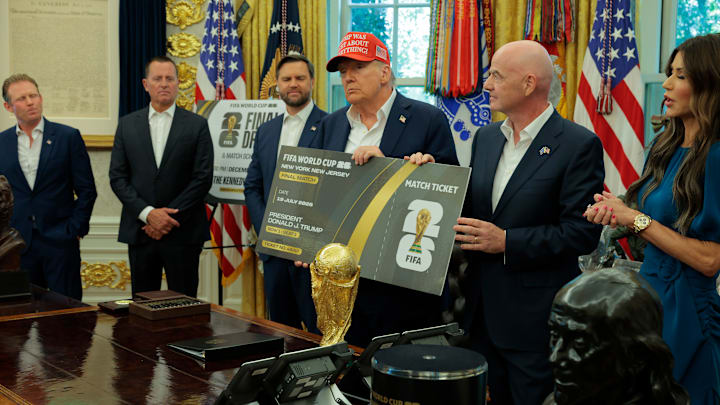
As many as four tickets for a regular seat in the stands of MetLife Stadium for the 2026 World Cup final have been listed at almost $2.3 million each on FIFA’s official resale website.
This extravagant purchase would secure a ‘Category One’ spot, i.e. the seats closest to the pitch in that section, to the right-hand side of one of the goals. Aside from a near pitch-level view—which puts fans close to the players but in no position to see how the game’s tactics play out—there is no demonstrative difference to thousands of other seats in the same stadium.
This multi-million dollar outlay, listed by Sky News specifically at $2,299,998.85, doesn’t come with any private box, catering benefits or a meet-and-greet with the finalists. It is simply the extreme consequence of FIFA’s controversial approach to monetizing the globe’s love of the beautiful game.

There is surely no soccer fan on the planet desperate enough for a ticket to East Rutherford, N.J. to pay such an outrageous sum. That’s not the point. The fact that any tickets can be listed at this price on an official platform shows how FIFA’s warped strategy has been ruthlessly exploited.
The More Important Numbers Than $2.3 Million

For the first time in World Cup history, FIFA has actively embraced the resale market. Thanks to loose restrictions in the U.S. and Canada, two of the tournament’s three co-hosts where 91 of the 104 matches will be staged, fans can set any price they deem fit regardless of what they paid for the ticket in the first place. This is in the best interest of world soccer’s governing body, who stand to bank 30% of every secondary transaction.
This takes the form of 15% from the seller and another 15% from the buyer. So, in the event that a misguided fan actually buys the $2.3 million ticket, FIFA will earn almost $690,000 from that single transaction.
As the Football Supporters Europe (FSE) quipped at the end of last year: “The fact that scalping is legal doesn’t mean FIFA must become the scalper.”
No one is likely going to spend the equivalent of Mohamed Salah’s monthly salary on a normal World Cup ticket, but the cheapest seat in the same section was still worth more than $16,000. While that may not seem like a lot in comparison to the aforementioned seven-digit figure, it is the equivalent of three months’ salary for the average New Jersey citizen. The average Category One ticket for the 2022 World Cup final amounted to around $1,600, a 10th of this year’s offering.
Pep Guardiola Pleads With FIFA Over World Cup Ticket Prices

As one of the best-paid managers in the world, Pep Guardiola is part of the select group of individuals who could actually afford to attend multiple World Cup games this summer. However, the Manchester City boss expressed his disdain for FIFA’s pricing strategy, imploring a return to the traditional values which inspired the tournament’s inception in the first place.
“Before I remember the World Cup—years, years, years ago—was like a celebration of the joy of football for the nations going there,” Guardiola reminisced to assembled media shortly after the latest round of eye-watering prices were unveiled.
“Everyone traveled all around the globe, from the other continents, to see your country, to play there. And it was affordable.
“Now, [it’s] modern times, right?
“It’s so expensive,” Guardiola lamented, “but I’m not there. So I don’t know the reason why. Hopefully they can think about it.”
“Football is for the fans.”
“Of course, you have to think about the sponsors. You have to think about all this kind of stuff, because otherwise it will not be sustainable. Everybody knows it. But fans are the key. The key for this business [to] go on.”
FIFA’s Hollow Defense of Controversial Strategy

In response to this repeated backlash, FIFA have pedaled the same reasoning: They didn’t create this system which everyone else is exploiting, so why shouldn’t they cash in themselves?
“FIFA has established a ticket sales and secondary market model that reflects standard ticket market practices for major sporting and entertainment events across the host countries,” a spokesperson for world soccer’s governing body told Sky News.
“The applicable resale facilitation fees are aligned with industry standards across North American sports and entertainment sectors.
“FIFA’s variable pricing ticketing approach aligns with industry trends across various sports and entertainment sectors, where price adaptations are made to optimize sales and attendance and ensure a fair market value for events.”
It all feels jarringly removed from the original ideal of international unity set out by the FIFA president Jules Rimet. The affable French diplomat created the World Cup in 1930 after experiencing the horrors of the First World War. “Loss of money,” he reasoned, “is never fatal.”
READ THE LATEST WORLD CUP NEWS, ANALYSIS AND INSIGHT FROM SI FC
 Add us as a preferred source on Google
Grey Whitebloom is an Associate Editor for SI FC. He has more than half a decade of experience in sports media across all its various guises, from the fast-paced demands of news articles and match reports to in-depth research required for features. Whitebloom graduated with a First Class Honours from University College London and found himself named on the Dean’s List—which, despite his initial fears, was a form of praise rather than a punishment. He specialises in the Premier League and Champions League, while also boasting an extensive track record of La Liga coverage.