%20%20--%3E%0A%3Csvg%20version%3D%221.1%22%20id%3D%22Layer_1%22%20xmlns%3D%22http%3A%2F%2Fwww.w3.org%2F2000%2Fsvg%22%20xmlns%3Axlink%3D%22http%3A%2F%2Fwww.w3.org%2F1999%2Fxlink%22%20x%3D%220px%22%20y%3D%220px%22%0A%09%20width%3D%2239px%22%20height%3D%2240px%22%20viewBox%3D%220%200%2039%2040%22%20enable-background%3D%22new%200%200%2039%2040%22%20xml%3Aspace%3D%22preserve%22%3E%0A%3Cpath%20fill%3D%22%23FFFFFF%22%20d%3D%22M38.5%2C7H28.2v26h10.3V7z%22%2F%3E%0A%3Cpath%20fill-rule%3D%22evenodd%22%20clip-rule%3D%22evenodd%22%20fill%3D%22%23FFFFFF%22%20d%3D%22M26.1%2C25.5c0%2C5.8-4.1%2C7.5-12.9%2C7.5C3.9%2C33%2C0%2C31.2%2C0%2C25.2v-1.1h11.6%0A%09v2.4c0%2C0.7%2C0.1%2C1.4%2C1.2%2C1.4c1%2C0%2C1.2-0.4%2C1.2-1.3v-0.9c0-1.6-0.9-1.6-3.5-2.2C2.2%2C21.7%2C0%2C19.7%2C0%2C15.3v-0.9C0%2C9.3%2C5.5%2C7%2C12.9%2C7%0A%09c10.2%2C0%2C12.8%2C2.6%2C12.8%2C7.4v1.8h-11v-2.9c0-0.6-0.4-1.1-1.2-1.1c-0.6%2C0-1.2%2C0.4-1.2%2C1.1v0.9c0%2C1.5%2C0.9%2C2%2C3.3%2C2.5%0A%09c8%2C1.6%2C10.5%2C3.3%2C10.5%2C7.5V25.5z%22%2F%3E%0A%3C%2Fsvg%3E%0A)
There’s Pressure, and Then There’s Olympic Pressure. Malinin and Shiffrin Can Attest
CORTINA d’AMPEZZO, Italy — The most famous quote from the most decorated Olympian of all time is one word, and it seems especially pertinent right now, amid the mental wreckage of the Milan Cortina Games.
Throughout his career, when swimmer Michael Phelps was asked what he thinks about when he gets on the starting block for a race, his standard answer was, “Nothing.”
What a gift, to shut off the brain at the moment of peak pressure. To shut out the nerves. To ignore the negative scenarios. To simply go. To transfer hundreds of hours of training into execution, relying on instinct and muscle memory, falling back on rote repetition. To perform as expected, hoped and dreamed.
Phelps’s blank mind helped him win 28 Olympic medals, 23 of them gold. Here’s hoping the busy minds of alpine skier Mikaela Shiffrin and figure skater Ilia Malinin can become similarly blank the next time they need it to happen.
For Shiffrin, that’s soon—she competes in the giant slalom Sunday, and the slalom Wednesday. For Malinin, he’ll have to wait a while longer now that his 2026 Olympics are over.
These two American athletes are great at what they do. Shiffrin has won a record 108 World Cup races, and three Olympic medals (one in 2014, two in ’18). Malinin has redefined what’s athletically possible in skating, saying in the lead-up to these Games: “I broke physics.”
Friday, Olympic pressure broke him. Three days earlier, Olympic pressure weighed down Shiffrin. It’s real and it’s brutal, and even the most talented competitors can succumb to it.
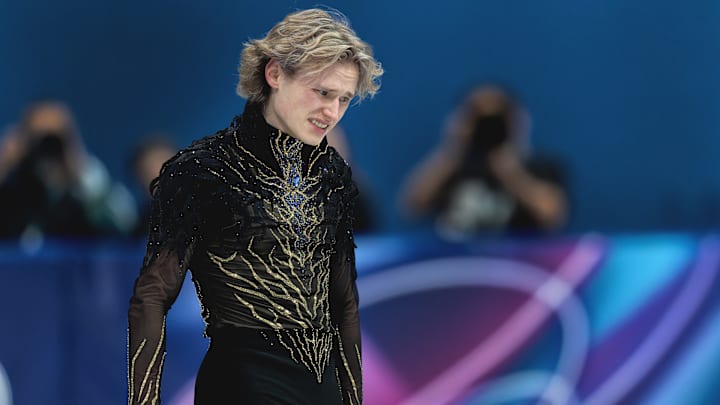
The 21-year-old Malinin was the heavy favorite to win gold in men’s figure skating. He carried a five-point lead into the free skate Friday night, and when his primary competitors did not perform well, it looked like a walkover. Then he stumbled his way through a nightmare performance, finishing eighth.
“All the traumatic moments of my life really just started flooding my head,” he said, describing the antithesis of Phelps’s non-mindset.
Shiffrin was in a similar situation in the women’s alpine team combined event Tuesday. Her partner, Breezy Johnson, had staked the tandem to a lead in the downhill portion. Shiffrin simply had to be Shiffrin—the greatest slalom skier who ever lived—to wrap up a gold medal. Instead, she placed 15th—her worst finish since 2012—and they missed the podium. (This was American-on-American crime, finishing .06 behind behind teammates Jackie Wiles and Paula Moltzan for the bronze.)

“I think we always do better with more information,” Shiffrin said after her run. “And I got a lot of information today.”
Both athletes stood tall in low moments, addressing their performances with a legion of strangers sticking recording devices in front of them. That speaks to their character. But it doesn’t alter the results.
In the case of Malinin, this was a welcome-to-the-klieg-lights meltdown in his first Olympics. In the case of Shiffrin, this was the return of the ghost of Olympics past, specifically Beijing in 2022, when she shockingly failed to medal in all six of her events.
They are both examples of the fleeting, fickle nature of excellence. It can disappear in an eye blink, chased away by doubt. It’s a cruel fact that greatness built over a span of years can be undercut in a matter of seconds.
And in individual sports, there is nowhere to hide. There are no teammates to bail you out, no substitutes, no coach who can call timeout to regroup. That’s especially true in the condensed nature of their events—a four and a half minute skate program for Malinin, a 45-second slalom run for Shiffrin. These aren’t four-round golf tournaments or three-hour tennis matches.
We all have moments where we underperform in an undertaking where we badly want to excel. We panic. We choke. We fall. It’s very much part of the human condition. Fortunately for the vast majority of us, those failures are barely noticed by the public at large.

For an Olympian? No such luck. The price of admission to this elite club is greatness under extreme pressure. That’s the expectation.
That’s why this pinnacle event is not particularly fair. The huge-but-casual audience tuning in for two weeks misses the accomplishments an athlete piles up during the other three years and 50 weeks before each Olympics. Most know little about the sports they’re watching, but that doesn’t stop them from sweeping judgments. It’s a frustrating dynamic for those who don’t perform well during these rare mainstream moments.
Shiffrin articulated as much on social media this week.
“The Olympics ask us to take a real risk on the world stage,” Shiffrin wrote. “One that requires courage and vulnerability to erroneous judgment and narratives built on a limited understanding of what this sport truly demands. … I’m grateful to be here, motivated and excited for what’s next, and proud to be part of this American team. May we all champion one another, tread lightly on what we don’t truly comprehend, and have the fortitude to keep showing up.”
Olympic Reflections Incoming⬇️
— Mikaela Shiffrin ⛷️ (@MikaelaShiffrin) February 13, 2026
Over the past few days, some incredible things have happened…just to name a few:
•I had a really productive slalom training session, working through some of the variables I found challenging during team combined (always learning 🥴)
…cont. below pic.twitter.com/2pGnndSrIc
Those are wise, carefully chosen words from a thoughtful speaker. Maybe the thoughtful part is the problem.
Even the skiing know-nothings among us can recognize an athlete who uncharacteristically underperforms on the biggest stage. And when that happens over the course of seven straight Olympic competitions, as it has with Shiffrin, it’s not a manufactured narrative—it’s a real thing.
She’s been dominant throughout the current World Cup season. She did not transfer that dominance to her first Olympic run, against the same competition she has been beating all year. Fortunately for her, she has two more chances to do so, and to flip the lengthening script on her five-ring lapses.
Taking a blank mind up the mountain and into the start house Sunday on the Olympia delle Tofane slopes might be the best thing Mikaela Shiffrin can do for herself.
More Winter Olympics on Sports Illustrated
 Add us as a preferred source on Google
Pat Forde is a senior writer for Sports Illustrated who covers college football and college basketball as well as the Olympics and horse racing. He cohosts the Others Receiving Votes podcast for SI and is a regular contributor to the Tony Kornheiser Show podcast. He previously worked for Yahoo Sports, ESPN and The (Louisville) Courier-Journal. Forde has won 28 Associated Press Sports Editors writing contest awards, has been published three times in the Best American Sports Writing book series, and was nominated for the 1990 Pulitzer Prize. A past president of the U.S. Basketball Writers Association and member of the Football Writers Association of America, he lives in Louisville with his wife. They have three children, all of whom were collegiate swimmers.
Follow ByPatForde