
Why This Shota Imanaga Prediction Would Work for Giants
In this story:
Hot stove season is a time for predictions in free agency.
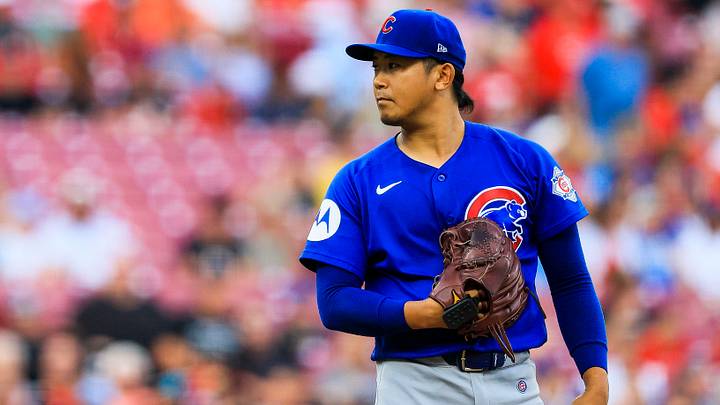
On the Nov. 6 episode of ESPN’s Baseball Tonight with Buster Olney, Paul Hembekides predicted Shota Imanaga would sign with the San Francisco Giants. That was a landing-spot forecast, rather than a report of negotiations.
The fit is worth taking seriously because San Francisco needs another established starter. Imanaga would bring a substantial recent workload and a different pitching style to a rotation led by Logan Webb and Landen Roupp.
The Giants should pursue that idea on a two-year deal around the separately projected $40 million price. A longer commitment would require more confidence in his ability to limit home runs.
Imanaga Would Fill a Specific Rotation Opening

The Giants’ offseason rotation plan includes Webb, Roupp, and Adrian Houser, with an outside addition and an internal competition filling the remaining jobs. Imanaga could take that fourth established spot without requiring San Francisco to abandon its younger starters.
He made 32 starts for the Chicago Cubs in 2026, posting a 3.77 ERA with 174 strikeouts and 37 walks over 174.1 innings. For a Giants staff that has endured extensive injuries, that workload is a meaningful part of his appeal.
Imanaga also would give San Francisco a left-handed starter alongside three right-handers. His ability to throw strikes would offer a useful foundation, although changing the rotation’s handedness alone would not justify the investment.
The concern is clear: He allowed 35 home runs in 2026 after surrendering 31 in 2025. His command helped limit baserunners, but mistakes still produced considerable damage.
Oracle Park offers a reason to consider that risk manageable. Statcast’s 2026 home run park factor for the venue was 79, with 100 representing average, supporting the idea that San Francisco could provide a more favorable home environment.
That is a fit argument, not a forecast that his home run problem would disappear. Imanaga would still pitch on the road, and the Giants would need a plan for limiting damaging contact rather than relying entirely on their ballpark.
The Financial Case Works Better Over Two Years

Hembekides’ destination prediction should remain separate from the contract estimate. In his Nov. 3 free-agent rankings, ESPN’s Kiley McDaniel projected two years and $40 million for Imanaga, an average of $20 million annually.
That projection is a useful benchmark, not an offer or asking price. It also would limit the Giants’ exposure to two seasons for a pitcher entering his age-33 campaign.
McDaniel listed Imanaga as ineligible for a qualifying offer. That would keep draft compensation out of the acquisition cost, preserving another resource for San Francisco.
Giants On SI’s Nick Martinez contract analysis recommended a two-year, $36 million ceiling. Imanaga’s projected deal would add $4 million to the total commitment, or $2 million annually, while acquiring a pitcher three years younger.
Imanaga’s strikeout ability and younger age strengthen the case for that additional spending, while his home run problem remains the main objection. San Francisco should evaluate those alternatives together rather than treating either veteran as an automatic answer.
Even after adding Imanaga, the Giants would retain significant bullpen needs. The rotation investment would need to leave a workable path to improving late-inning relief.
At roughly two years and $40 million, Hembekides’ prediction makes sense for this roster. If the price climbs into a substantial third guaranteed year, the Giants should redirect their search rather than assume Oracle Park can carry the extra risk.
 Add us as a preferred source on Google

Alvin Garcia is a Puerto Rico-born sportswriter and U.S. Army veteran. He has covered Major League Baseball since 2022, producing breaking news, game coverage, analysis, roster stories and player features for national and team-focused publications. His previous work has appeared at Heavy, The Sporting News, Athlon Sports, Yardbarker, and FanSided. Garcia brings a data-informed, fan-focused approach to his coverage.