
Mariners’ Cole Young Could Benefit From AL Gold Glove Voting System
In this story:
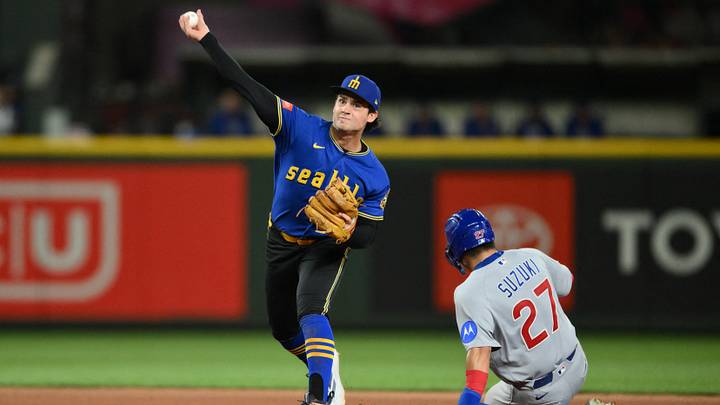
Outs Above Average doesn’t get its own Gold Glove ballot. And for Cole Young, that could be a good thing. If the award went to whichever AL second baseman owned the best stats on Statcast, the Mariners wouldn’t have much reason to make room in Young’s trophy case. He finished 2026 with -5 OAA at second base, tying him for 35th among 42 qualifying players at the position.
It’s not a good number. But what’s interesting is that it only represents one piece of a voting process designed to consider more than one defensive model. Young’s candidacy lives in everything OAA doesn’t settle, and the actual Gold Glove voting structure may give his full résumé a better hearing than a quick look at the leaderboard.
Gold Glove Voting Gives Cole Young a Real Chance
Managers and as many as six coaches from each MLB team account for 75 percent of the selection process. They vote only within their league and cannot select their own players. The remaining 25 percent comes from the SABR Defensive Index.
That means Mariners personnel cannot stuff the ballot box for Young. His human support has to come from opposing managers and coaches who saw him handle second base across an entire season. Lucky for Young, he gave them plenty to see.
He led AL second basemen in games played at the keystone with 157 and defensive innings with 1,350 1/3. He also paced the position with 223 putouts, 397 assists and a .990 fielding percentage. Defensive Runs Saved credited him with 16 runs saved, the highest mark among AL second basemen.
The volume and reliability are the big sells here. We can roll our eyes at fielding percentage because it lacks the sophistication of modern range metrics, but converting routine plays for six months remains part of the job.
There is value in being there every day and giving the Mariners one of the fewest reasons to hold their breath this season.
Michael Massey owns the strongest OAA case among the three finalists at +11. Chase Meidroth led AL second basemen with +10 Fielding Run Value. Young doesn’t exactly beat out either competitor. But that’s also where human voting comes in.
Cole Young’s Gold Glove Case Is Bigger Than One Statcast Ranking
The SABR Defensive Index doesn’t have a simple formula. It aggregates information from Statcast, Sports Info Solutions and STATS Perform, combining location-based data with play-by-play evaluation.
In other words, Young’s poor OAA ranking doesn’t control the entire quarter of the vote. His excellent DRS showing is part of the conversation. Which is why the Mariners second baseman became a finalist despite the obvious concern about his range. One model saw a below-average defender. Another credited him with the most runs saved by any AL second baseman. The voting system was built to weigh a case precisely like this because it can get a bit messy.
Human voters could also appreciate details that become flattened when we reduce an entire defensive season to a number. Young played nearly every day. He handled more chances than his competitors. He made the expected play with remarkable consistency. Opposing staffs had five months to decide whether that steadiness looked valuable from the other dugout.
None of this means he’s a lock for the award. Massey and Meidroth have serious cases, and Young’s Statcast numbers give voters a legitimate reason to choose either of them over him. But young still has a path.
75 percent of the decision belongs to baseball people rather than one defensive metric. The other 25 comes from an index broad enough to include the system that graded Young far more favorably. His durability, sure-handedness and league-leading DRS will receive more weight than OAA alone would allow.
That may be the best news for the Mariners as they wait for the winner.
 Add us as a preferred source on Google

Tremayne Person is the Publisher for Mariners On SI and the Site Expert at Friars on Base, with additional bylines across FanSided’s MLB division. He founded the Keep It Electric podcast in 2023 and covers baseball with a blend of analysis, context, and a little well-timed side-eye just to keep things honest. Tremayne grew up a Mariners fan in Richmond, Va., and that passion ultimately led him to move to Seattle to cover the team closely and become a regular at home games. Through his writing, he connects with fans who want a deeper, more personal understanding of the game. When he’s not at T-Mobile Park, he’s with his dog, gaming, or finding the next storyline worth digging into.
Follow TremaynePerson