
The Tigers’ Most Disappointing Signing Is Becoming a Bigger Problem
In this story:
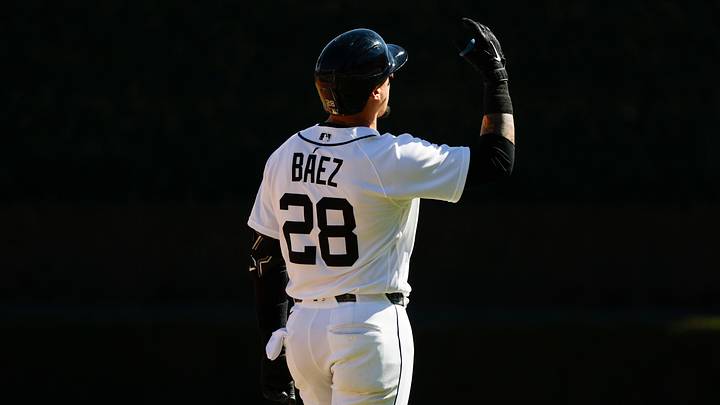
The Detroit Tigers continue to pay heavily for the gap between Javier Baez’s contract and his production. The greater danger entering 2027 involves allowing that investment to dictate decisions beyond his roster spot.
The Tigers signed Baez to a six-year, $140 million agreement in December 2021. Detroit still owes him $24 million for the final guaranteed year, a commitment detailed in its offseason payroll outlook.
Baez finished 2026 with a .241/.270/.364 slash line across 58 games. His reduced availability and limited offensive contribution leave the club with an expensive player whose best remaining fit appears to be a supporting role.
That creates a difficult evaluation. Detroit needs to judge what Baez can contribute next year without allowing the size of his paycheck to determine the answer.
The Contract Cannot Set the Lineup

The infield picture has changed substantially since Baez arrived as a shortstop. Kevin McGonigle, Colt Keith, and Hao-Yu Lee give the Tigers younger options whose development matters well beyond the expiration of one veteran’s contract.
Detroit’s projected 2027 lineup reflects those possibilities. The exact defensive arrangement remains unsettled, but the organization has reason to prioritize meaningful opportunities for that group.
Paying Baez more than those players does not make him the better choice for their at-bats.
The strongest argument for retaining him involves the work he can still do. His 2025 All-Star appearance serves as a reminder that his Detroit tenure includes useful stretches. His ability to cover infield and outfield positions also provides a practical reason to consider him for the bench.
A smaller assignment could help the Tigers handle injuries and give regulars days off. That role needs to depend on his health and performance.
A trade could require Detroit to absorb salary to make the arrangement attractive to another club. Releasing him would create a roster opening while leaving the guaranteed financial obligation largely intact.
Neither outcome offers an easy way to recover the original investment. The relevant comparison involves his expected contribution against that of the player who would take his place.
One Disappointing Deal Could Distort the Next Decision

The broader concern extends into free agency.
In an October discussion covered by Tigers On SI, Ken Rosenthal described how the Baez agreement could leave the organization more cautious about future commitments.
That assessment does not establish that President of baseball operations, Scott Harris, has adopted a policy against major signings.
The distinction matters. Detroit can learn from the risks exposed by the contract while continuing to evaluate outside players individually.
Avoiding every substantial commitment carries its own cost if it leaves an important roster weakness unaddressed. Another player’s age, skills, medical outlook and asking price require a separate evaluation.
The same principle applies to Baez’s remaining role. Detroit already owes him his salary; the next lineup choice still belongs to the Tigers.
Detroit can bring Baez to spring training as a reserve, then retain him only if he offers more value than the alternatives. If a better roster emerges without him, the organization needs to accept that conclusion.
The contract already represents a disappointment. Allowing it to consume opportunities or discourage a worthwhile upgrade would extend the damage into another year.
 Add us as a preferred source on Google

Alvin Garcia is a Puerto Rico-born sportswriter and U.S. Army veteran. He has covered Major League Baseball since 2022, producing breaking news, game coverage, analysis, roster stories and player features for national and team-focused publications. His previous work has appeared at Heavy, The Sporting News, Athlon Sports, Yardbarker, and FanSided. Garcia brings a data-informed, fan-focused approach to his coverage.