%20%20--%3E%0A%3Csvg%20version%3D%221.1%22%20id%3D%22Layer_1%22%20xmlns%3D%22http%3A%2F%2Fwww.w3.org%2F2000%2Fsvg%22%20xmlns%3Axlink%3D%22http%3A%2F%2Fwww.w3.org%2F1999%2Fxlink%22%20x%3D%220px%22%20y%3D%220px%22%0A%09%20width%3D%2239px%22%20height%3D%2240px%22%20viewBox%3D%220%200%2039%2040%22%20enable-background%3D%22new%200%200%2039%2040%22%20xml%3Aspace%3D%22preserve%22%3E%0A%3Cpath%20fill%3D%22%23FFFFFF%22%20d%3D%22M38.5%2C7H28.2v26h10.3V7z%22%2F%3E%0A%3Cpath%20fill-rule%3D%22evenodd%22%20clip-rule%3D%22evenodd%22%20fill%3D%22%23FFFFFF%22%20d%3D%22M26.1%2C25.5c0%2C5.8-4.1%2C7.5-12.9%2C7.5C3.9%2C33%2C0%2C31.2%2C0%2C25.2v-1.1h11.6%0A%09v2.4c0%2C0.7%2C0.1%2C1.4%2C1.2%2C1.4c1%2C0%2C1.2-0.4%2C1.2-1.3v-0.9c0-1.6-0.9-1.6-3.5-2.2C2.2%2C21.7%2C0%2C19.7%2C0%2C15.3v-0.9C0%2C9.3%2C5.5%2C7%2C12.9%2C7%0A%09c10.2%2C0%2C12.8%2C2.6%2C12.8%2C7.4v1.8h-11v-2.9c0-0.6-0.4-1.1-1.2-1.1c-0.6%2C0-1.2%2C0.4-1.2%2C1.1v0.9c0%2C1.5%2C0.9%2C2%2C3.3%2C2.5%0A%09c8%2C1.6%2C10.5%2C3.3%2C10.5%2C7.5V25.5z%22%2F%3E%0A%3C%2Fsvg%3E%0A)
The Four Stats That Will Define the 2026–27 NBA Season—and the Teams That Do Them Best
In this story:
Every NBA season brings with it a new sample size of statistics to break down. It doesn’t tell us everything we need to know about how the game is played nowadays—but it offers hints. Hints at what good teams value and what bad teams fail to grasp. Hints at what success really is made of in the modern game.
Most valuable for those who do not work for NBA teams? The data hints at what we can expect from the future.
In an effort to portend how the league will unfold this season, I dug into the four stats I believe will help define the coming year. These stats reflect certain styles of play that are becoming popular, as well as big-picture trends that (when placed in a historical context) are signs of what’s to come.
I previously attempted this exercise ahead of the 2026 playoffs and was ... mildly successful. I accurately identified Victor Wembanyama’s stamina and the Nuggets’ porous defense as fatal flaws, while I read too much into the Pistons’ offensive success without Cade Cunningham and Jayson Tatum’s poor make percentage from deep. Which is really the story of any stat when it comes to basketball. It tells part of the story—but not the whole thing. You have to draw conclusions based on what you’re seeing in tandem with the stats.
At the risk of being more wrong than before, I wanted to try again before the new campaign. Thus, here are the four stats that I think will define the 2026–27 NBA season.
Offensive rebounds per game

Offensive boards are back on the menu.
The three-point revolution brought on by the Steph Curry Warriors around 10 years ago also came with a notable decline in offensive rebounding. As more players started hanging out behind the three-point line, crashing the offensive glass came with a greater cost to transition defense, and most teams wound up abandoning it entirely as a schematic focus. If the ball bounced their way, great, but otherwise offensive rebounds were just a way for less talented teams to even the odds against better opponents. It was not a critical aspect of winning games at a high level, and as a result the average offensive rebounds per game hovered around 10 for the last decade.
But no more! Offensive rebounding is becoming more popular again. It’s a renaissance for glass-crashers everywhere.
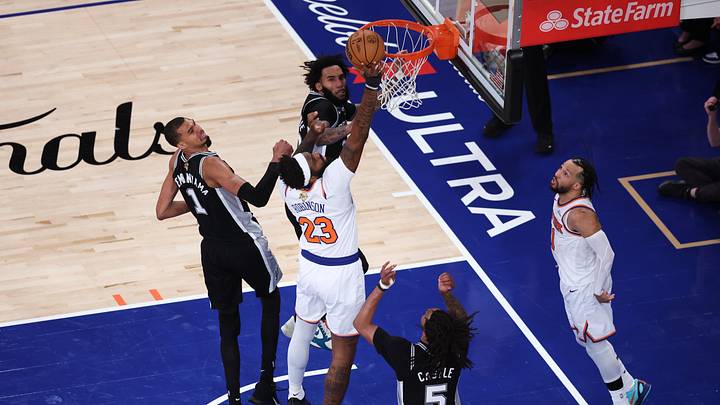
Last year there were 11.4 offensive rebounds snatched per game across the NBA—the highest mark since 2012! It marked the third consecutive year-over-year increase of offensive boards per game and, notably, racking up those rebounds was a hallmark of good and/or overperforming teams. Check out the top five:
Team | ORB per game | Wins |
|---|---|---|
Rockets | 15.0 | 52 |
Trail Blazers | 14.1 | 42 |
Pistons | 13.1 | 60 |
Suns | 13.0 | 45 |
Hornets | 12.8 | 44 |
It’s not an automatic path to success and there are many ways to win games beyond racking up offensive rebounds. But with more shots being taken every game than ever before, nabbing your own missed shots is becoming a more valuable way to offset a bad shooting night and win games.
Three-point shots per game
The rise of the three-point shot has been a source of frustration for many NBA fans this decade. What was once a stylistic preference of a few choice teams with good shooters was embraced as a universal truth in basketball. Prioritizing shots beyond the arc is a more sound strategy than going to the rim because three points are worth more than two. The big-picture statistics reflect this trend; the number of three-point attempts per game in the NBA has steadily climbed over the last 14 seasons and increased sharply from 2018 to 2025.
But the advantage diminishes when everybody is doing it. A plateau was inevitable. Last season NBA teams appeared to hit that plateau.
For only the second time since 2010, the league-wide average for three-point shots per game was down year-over-year, dropping from 37.6 to 37.0. What’s more, being a good three-point shooting team did not automatically mean better production. Of the teams who finished in the top five for three-point attempts per game, not a single one also finished in the top five for offensive rating.
Team | 3PA rank | Offensive rating rank |
|---|---|---|
Warriors | 1 | 22 |
Hornets | 2 | 8 |
Trail Blazers | 3 | 15 |
Celtics | 4 | 14 |
Suns | 5 | 19 |
Good outside shooting is a prerequisite to compete in today’s game. But from a shots per game standpoint, the numbers suggest the three-pointer has been maximized. Conclusion: we’ll still see plenty of threes, but the total number won’t creep up the way we’ve consistently seen in the modern NBA.
Fouls per game

Down the stretch in 2025, the referees tightened their whistle to a notable degree. It was celebrated by fans, analysts and players alike. Then the 2025–26 campaign started and everything had changed, apparently. Officials last year were fast and loose with foul calls, resulting in a significant year-over-year jump that may require an overcorrection this season.
There were 19.9 personal fouls called per game last season, 1.3 more than the previous season. That’s the biggest change year-to-year since foul calls dropped from 20 per game to 18.7 from ‘23 to ‘24. It’s the biggest increase in over 20 years; the ‘04–‘05 season saw 1.4 more fouls per game than the previous year.
Nobody wants more fouls called and the NBA is aware they slow down the game to the extent it displeases viewers. What’s more, looking at the year-by-year numbers for fouls per game, every time there’s a notable change the following season results in a regression one way or the other. Should the pattern continue we’ll see fewer fouls called over the course of the coming year. It won’t be a massive change but it’ll be noticeable.
Extra possessions per game
Talent rules supreme in the NBA. It always has and always will. But the league is also more talented than ever, which means finding ways to win on the margins is more important than ever. The team with the best player will still win the day quite often. But if the other team is winning in all the little ways with talent nearly as good, they have a fighting chance. Those little ways can serve as equalizers to overcome a talent deficit—or emphasize one.
To identify what those equalizers are in the modern NBA, you have to look at the areas of focus for good teams. What are the smartest minds in basketball behind the winningest organizations directing their players to do?
For our money, it’s three areas: offensive rebounding, forcing turnovers, and limiting their own turnovers.
Without getting into the stats, it lines up that good teams are prioritizing those areas. Grabbing boards and racking up steals generates extra possessions outside of the standard make-or-miss factor that comes with each shot attempt. They are controllable variables, in other words; no coach can guarantee his players will make every shot, but through scheme he can maximize how many chances his players have to make a shot. It’s a particularly important trait for a championship hopeful to have if they don’t employ one of the very best players in the NBA whose shot-making prowess is so much better than average that the margins don’t matter as much.
The stats seem to back up that theory. The Pistons led the NBA in extra possessions generated per game (offensive rebounds per game plus forced turnovers per game minus turnovers per game) with 14.9 while winning 60 games. The eventual champion Knicks ranked fifth in this stat. On the opposite end, the Bucks trailed 29 teams with only 6.8 extra possessions generated per game. Exceptions are teams like the Nuggets, who enjoy the talents of a singular offensive force in Nikola Jokić and so can overlook the margins in pursuit of supporting their elite talent. The full ranking can be found at the bottom of this piece.
Like all stats, there isn’t a direct through line from extra possessions generated to winning games. But it’s a common trait among the best teams in the league. Consistently winning the possession battle against opponents usually leads to good things. Generating extra possessions leads to more chances to win.
Every season brings a big-picture trend that the smart basketball minds are focused on. Consider this my own swing at anticipating what that’ll look like this upcoming season.
Extra possessions generated per game, 2025–26 (ORB + forced TOs - TOs)
Team | Extra possessions generated | Wins |
|---|---|---|
Pistons | 14.9 | 60 |
Suns | 14.8 | 45 |
Thunder | 13.7 | 64 |
76ers | 13.6 | 45 |
Knicks | 13.5 | 53 |
Raptors | 13.3 | 46 |
Rockets | 13.1 | 52 |
Heat | 13.1 | 43 |
Hawks | 12.9 | 46 |
Cavaliers | 12.7 | 52 |
Celtics | 12.5 | 56 |
Pelicans | 12.5 | 26 |
Trail Blazers | 12.4 | 42 |
Magic | 11.7 | 45 |
Warriors | 11.6 | 37 |
Grizzlies | 11.6 | 25 |
Timberwolves | 11.3 | 49 |
Kings | 11.2 | 22 |
Jazz | 11.1 | 22 |
Spurs | 10.9 | 62 |
Hornets | 10.1 | 44 |
Clippers | 9.6 | 42 |
Lakers | 9.5 | 53 |
Mavericks | 9.4 | 26 |
Wizards | 9.1 | 17 |
Nets | 9.0 | 20 |
Pacers | 8.8 | 19 |
Nuggets | 8.7 | 54 |
Bulls | 8.1 | 31 |
Bucks | 6.8 | 32 |
Listen to SI’s NBA podcast, Open Floor, below or on Apple and Spotify. Watch the show on SI’s YouTube channel.
 Add us as a preferred source on Google
Liam McKeone is a senior news writer for the NBA team at Sports Illustrated. He has been in the industry covering the NBA and other sports as a content creator starting in 2017. Prior to joining SI, McKeone worked for NBC Sports Boston and The Big Lead. In addition to his work as a writer, he has hosted the Press Pass Podcast covering sports media and The Big Stream covering pop culture. A graduate of Fordham University, he is always up for a good debate and enjoys loudly arguing about sports, rap music, books and video games. McKeone has been a member of the National Sports Media Association since 2020.
Follow liam_mckeone