
Darryn Peterson's Early ROTY Push Raises Concerns Regarding AJ Dybantsa's Wizards Fit
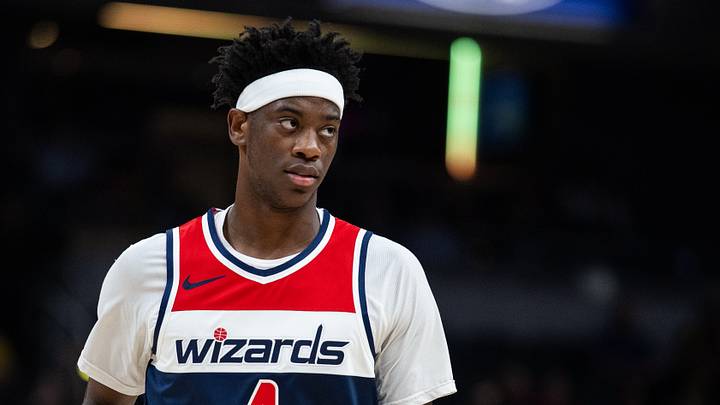
In this story:
Darryn Peterson's beginning to run loose as the newest lead option for the Utah Jazz, and their devoted fans are loving it. They didn't draft the star scorer second-overall in the 2026 NBA Draft to sit in the corner alongside more presently-decorated starters, but injuries to Lauri Markkanen, Jaren Jackson Jr. and Keyonte George have cleared the way for Peterson to flourish on-ball like he did en route to last night's impressive career-high 28-point performance.
Darryn Peterson tonight vs Houston:
— Basketball Performances (@NBAPerformances) November 14, 2026
28 PTS | 7 REB | 2 STL | 9/20 FG | 4 3s | 61 TS% pic.twitter.com/RwGLOeaIxr
Naturally, the Jazzman's rise has already opened the window for comparisons with AJ Dybantsa, the lone prospect who went ahead of Peterson in that past draft.
There was little room for either side to debate much success over the season's opening few games, with Peterson struggling to locate his role while the bruised Dybantsa waited a week before debuting, but those early warts seem to have done the guard some good in acclimating to the league. He's patient and comfortable getting to his shots all on his own with the passing game to warrant the surge in point-of-attack touches, posting exactly the stat-lines that his stockholders hoped he'd be producing this early within an otherwise-messy Utah situation.

That's not to diminish Dybantsa's own talent, even if his on-paper production has lagged behind his rival draft classmate since the November slate hiked up. While Peterson's obstacle field has been cleared due to a near-immediate slew of major injuries, the Wizards' own future frontman's yet to enjoy such wide-open luxuries, still confined to a limiting context.
Dybantsa and the Disadvantages of "Depth"
Trae Young's been as readily-available as usual (excluding the strange trade-related saga that leaked into his Wizards initiation last winter), while the brittle Anthony Davis continues chugging along as Washington's energized go-to scorer. Throw in other intriguing tertiary scorers such as Kyshawn George and Alex Sarr, and Dybantsa's left with a cramped starting lineup that's doomed to leave a few capable creators looking underutilized.
Lets compare usage rates over everyone's last five outings, a sequence that almost-completely includes Washington's active six-game losing streak and the adjustment-demanding matchups they encountered. Dybantsa's usage clip of 21.4 over that range ranks 111th league-wide behind every starter not named Sarr, as well as Peterson at 29.2 ahead of every Wizard.
Critically, handing the ball to the hotshot scorer has actually worked out in facilitating the Jazz guard's scoring boom, as he's averaged over 24 points on 47.3% shooting over that specific five-game sample.

Everyone who saw the respective collegiate superstars go to work as the Big 12's dueling one-and-done studs knew that they were both capable of eventually-supporting high-powered NBA offenses as go-to bucket-getters. And while, yes, deferring more to Dybantsa would theoretically yield more exciting box score numbers from those maintaining an eye on the future, that's not likely to happen anytime soon given Washington's timeline, nor is he surrounded by the stylistically-friendly roster to unlock those same results.
Washington's Greater Worries
Games like the Wizards' tight, double-overtime defeat to the Detroit Pistons served as the host of Young's first great Wizards moment, with his double-pump chuck to beat the buzzer in regulation opening the door for five extra minutes to try and topple Cade Cunningham and friends. Though they wouldn't ultimately prevail, it stamped Young's place as this Washington corps' experienced closer.
Trae Young, like Wizards HC Keefe, is willing to use this as a learning experience on clutch-time execution despite the loss. He made it sound as if there was little confusion as to the on-ball hierarchy in the final seconds: “Everyone in the huddle wanted me to get the ball.” pic.twitter.com/jI9sSH6nnh
— All Wizards Talk (@AllWizardsTalk) November 13, 2026
The lesson that the prospects are reportedly soaking in from these late-game endeavors will do the group good in the long term, but this just served as the latest reminder of the fact that the rigid, handsomely-paid Young will continue controlling the offense through the near future. He'll be dining off of his freshly-signed $212 million contract through the decade's remainder, years that could be better spent by watching what his younger, more promising teammate is capable of accomplishing as the scheme's headliner.
The rookie, too, is happy to dissect defenses from the top of the key, and has already learned to draw in some of Young's gravity by his own means. While he lacks Young's pull-up ambition and volume from beyond the arc, Dybantsa is already the best athlete on the court in just about any matchup, with that acclaimed first step of his having caused numerous weak-side stoppers to panic and collapse on the kicking driver.
The value of AJ’s pace-pushing. Even though the Hornets technically have numbers here in transition, all five defenders loading up on his half of the court means that any other Wizards doing anything to run into empty space will produce plenty of looks like this Bub three. pic.twitter.com/yPdVH2TvZe
— All Wizards Talk (@AllWizardsTalk) October 31, 2026
Those downhill trips are where he's encountered the glaring downside of the Wizards' touted length: the dreaded double-big look polluting the squad's regularly-deployed lineups.
Davis, Sarr and Deandre Ayton have yet to coexist between their varying levels of floor-spacing upside and the lack of supplementary rebounders and passers to best-utilize the bigs in the open court. Davis is on the ball more than anyone, regularly slowing the offense down in favor of getting his face-up buckets at the high-post, where he's traded shared minutes with the streakily-shooting, corner-camping Sarr and the rim-rolling Ayton. In short: zero threatening motivators to coax any interior defenders from ever abandoning the paint.

Dybantsa isn't Peterson, just like how Peterson isn't Dybantsa, something Washington's management weighed heavily when determining the draft's leadoff spot. Peterson fills the archetype of the three-level generator with muscle and poise beyond his years, someone who doesn't need open space down low as much as he requires an island with which to go to work on the perimeter.
Dybantsa, meanwhile, needs certain luxuries on the fast break. He can get to his own pull-up middy, having done so in the buzzer-beater that followed Young's in that Pistons loss, and he wasted no time advertising the free throw-drawing techniques of much more experienced grifters. It won't be until he's allowed more usage and the open runway to freely slash when the secondary elements of his scoring game can develop, and unless Washington finds itself suddenly-stricken with the same injury bug that's ravaged the Jazz, he may have to keep waiting for breakout opportunities.
 Add us as a preferred source on Google

Henry covers the Washington Wizards with prior experience as a sports reporter with The Baltimore Sun, the Capital Gazette and The Lead. A Bowie, MD native, he earned his Journalism degree at the University of Maryland.
Follow henryjbr_sports