
Colts Trade Deadline Proves to Be Massive Disaster After Daniel Jones Release
In this story:
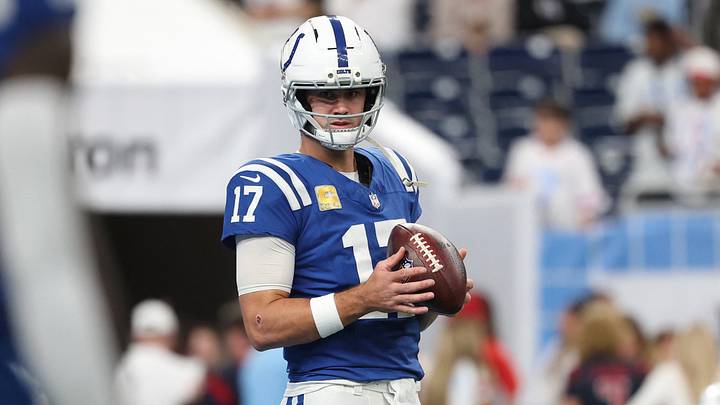
The Indianapolis Colts' decision to release Daniel Jones has brought an abrupt end to one of the more disappointing quarterback investments in recent franchise history.
Jones' struggles made a benching the most likely outcome, especially following a putrid offensive performance on Thursday Night Football. An eventual departure in the offseason seemed like a more realistic outcome.
Now, Indianapolis finds itself facing questions about how it has handled its broader roster situation since the trade deadline.
Passing on Trading Daniel Jones at the Deadline

The Colts had an opportunity to move on from Jones before the NFL trade deadline two weeks ago, with multiple teams reportedly contacting Indianapolis about the veteran quarterback.
The Baltimore Ravens were among the teams that expressed interest before eventually acquiring Jacoby Brissett from the Arizona Cardinals. The Minnesota Vikings were also mentioned as a potential landing spot for Jones, given their uncertainty at quarterback. They opted for a reunion with Kirk Cousins instead.
Despite the interest, Indianapolis ultimately informed Jones that he would not be traded before the deadline, believing they had already paid out too much in signing bonuses to Jones. They wanted to see their investment through and leave the decision on Jones’ future in the hands of their next general manager.
Sources: The #Colts opted not to trade QB Daniel Jones despite receiving interest, believing they had already paid too much in signing bonus money.
— Jordan Schultz (@Schultz_Report) November 20, 2026
But they continued stripping the rest of the roster. Now, shortly after, they release him and get nothing back.
None of it made… https://t.co/Pwsih7pv41 pic.twitter.com/KBBtxWQRsC
At the time, that decision was understandable given the organization was entering a transitional period. Allowing the next person in charge to evaluate the roster and determine which players fit into the team's future was a reasonable approach.
But now, with the Colts choosing to release Jones so soon after receiving trade interest, their entire operation now looks completely dysfunctional. While there's no concrete evidence that the Colts rejected a specific trade proposal for Jones, multiple teams at least had interest.
Just 10 days after the trade deadline, rather than allowing the next general manager to determine whether Jones deserved another opportunity in 2027, the organization made the decision itself.
In a season that has seen the Colts move several significant pieces, including captains Quenton Nelson and DeForest Buckner, the decision to retain Jones only to release him shortly afterward is particularly difficult to overlook.
Colts' Investment in Daniel Jones Goes Horribly Wrong

The decision to release Jones is even more significant when considering the financial commitment Indianapolis made to keep him around.
After joining the Colts last offseason, Jones enjoyed a career resurgence in Shane Steichen's offense---throwing for 3,101 yards, 19 touchdowns and eight interceptions in 13 games---helping Indianapolis get off to a 7-1 start before suffering a season-ending Achilles injury.
Despite the injury, the Colts believed enough in Jones to bring him back on a two-year, $88 million contract in March. The agreement included more than $60 million in reported guaranteed money and represented a significant investment in a quarterback who had experienced considerable ups and downs throughout his career.
The Colts made a hefty investment. But Jones was unable to live up to his end of the bargain.
Through 11 starts in 2026, Jones threw for 1,974 yards, seven touchdowns and 13 interceptions. He also lost three fumbles, bringing his total turnovers to 16, the most in the NFL this season.
The Colts entered 2026 believing they had found some stability at quarterback, at least for the next few years. Instead, they are now releasing Jones less than a year after making one of the most significant financial commitments in franchise history.
It is difficult to envision a much worse outcome for an organization that was hoping to build on its early success from last season.
The Next General Manager Inherits a Quarterback Problem

Perhaps the biggest consequence of the decision is what it means for Indianapolis moving forward.
The Colts initially wanted to preserve the opportunity for their next general manager to decide what to do at the quarterback position. Now, that individual will inherit a franchise that's made no progress towards finding a franchise quarterback since Andrew Luck's retirement.
Anthony Richardson Sr. is expected to take over as the starter, giving the former fourth-overall pick an opportunity to redeem himself and show that he can be a long-term option.
But given that Richardson showed to be highly volatile and inconsistent during his first stint at the helm, plus the fact that he's a free agent at the end of the season, the Colts are no closer to finding an answer under center.
The next general manager will have to evaluate the existing quarterback options, determine whether Richardson deserves another opportunity and potentially explore the draft or free agency for a more permanent solution.
Ultimately, the Colts' decision to retain Jones at the trade deadline was intended to give their next general manager more control over the direction of the franchise. Instead, they have released him for nothing, and created another major question for the incoming front office to answer.
 Add us as a preferred source on Google
