%22%3E%0A%3Cpath%20d%3D%22M0%208.83838H6.17001L13.1878%2017.5423V8.83838H19.7252V28.5542H13.866L6.53739%2019.4546V28.5542H0V8.83838Z%22%20fill%3D%22white%22%2F%3E%0A%3Cpath%20d%3D%22M21.4489%2020.9618V20.9052C21.4489%2016.3178%2024.7458%2012.823%2029.3616%2012.823C34.8251%2012.823%2037.359%2016.6286%2037.359%2021.3009C37.359%2021.64%2037.359%2022.0356%2037.3308%2022.3747H27.4399C27.8921%2023.7218%2028.9659%2024.4283%2030.3412%2024.4283C31.4999%2024.4283%2032.4513%2023.8913%2033.4686%2022.8457L36.9069%2025.5775C35.3809%2027.5463%2033.2143%2028.931%2029.8891%2028.931C24.8494%2028.931%2021.4395%2025.7471%2021.4395%2020.9618H21.4489ZM31.5281%2019.5488C31.3868%2018.0887%2030.5108%2017.2409%2029.3898%2017.2409C28.2689%2017.2409%2027.5624%2018.1452%2027.3646%2019.5488H31.5376H31.5281Z%22%20fill%3D%22white%22%2F%3E%0A%3Cpath%20d%3D%22M37.2559%2013.181H43.3694L44.9519%2019.3793L46.8076%2013.1245H51.9038L53.7877%2019.4358L55.4174%2013.181H61.4461L56.7456%2028.6767H51.3951L49.3416%2022.0828L47.2315%2028.6767H41.9093L37.2653%2013.181H37.2559Z%22%20fill%3D%22white%22%2F%3E%0A%3Cpath%20d%3D%22M75.8489%2021.574L68.4072%208.83838H75.7924L79.1741%2015.3192L82.5841%208.83838H89.8845L82.4428%2021.4893V28.5636H75.8489V21.574Z%22%20fill%3D%22white%22%2F%3E%0A%3Cpath%20d%3D%22M86.9268%2020.924V20.8675C86.9268%2016.5343%2090.5346%2012.8135%2095.6025%2012.8135C100.67%2012.8135%20104.222%2016.4778%20104.222%2020.8109V20.8675C104.222%2025.21%20100.614%2028.9309%2095.5459%2028.9309C90.4781%2028.9309%2086.9268%2025.2665%2086.9268%2020.9334V20.924ZM98.0799%2020.924V20.8675C98.0799%2019.3414%2096.9495%2018.1357%2095.5459%2018.1357C94.1424%2018.1357%2093.0685%2019.3509%2093.0685%2020.8109V20.8675C93.0685%2022.3935%2094.1989%2023.5992%2095.6025%2023.5992C97.006%2023.5992%2098.0799%2022.3841%2098.0799%2020.924Z%22%20fill%3D%22white%22%2F%3E%0A%3Cpath%20d%3D%22M105.776%2013.1809H112.172V16.28C113.048%2014.1982%20114.452%2012.8418%20116.986%2012.9548V19.7465H116.307C113.604%2019.7465%20112.163%2021.2443%20112.163%2024.6449V28.5635H105.767V13.1809H105.776Z%22%20fill%3D%22white%22%2F%3E%0A%3Cpath%20d%3D%22M118.201%208H124.597V17.9191L127.894%2013.1809H134.856L130.042%2019.4357L134.94%2028.5636H128.092L125.869%2024.3341L124.597%2025.9731V28.5636H118.201V8Z%22%20fill%3D%22white%22%2F%3E%0A%3Cpath%20d%3D%22M141.751%2025.2949L146.065%2021.6588C146.828%2022.7327%20147.563%2023.3732%20148.627%2023.3732C149.692%2023.3732%20150.455%2022.4689%20150.455%2021.0936V8.83838H156.879V20.9806C156.879%2023.5711%20156.286%2025.3514%20154.826%2026.8115C153.469%2028.168%20151.501%2028.9498%20149.136%2028.9498C145.359%2028.9498%20143.192%2027.4238%20141.751%2025.2855V25.2949Z%22%20fill%3D%22white%22%2F%3E%0A%3Cpath%20d%3D%22M158.405%2020.9618V20.9052C158.405%2016.3178%20161.702%2012.823%20166.318%2012.823C171.781%2012.823%20174.315%2016.6286%20174.315%2021.3009C174.315%2021.64%20174.315%2022.0356%20174.287%2022.3747H164.396C164.848%2023.7218%20165.922%2024.4283%20167.297%2024.4283C168.456%2024.4283%20169.407%2023.8913%20170.425%2022.8457L173.863%2025.5775C172.337%2027.5463%20170.17%2028.931%20166.845%2028.931C161.805%2028.931%20158.396%2025.7471%20158.396%2020.9618H158.405ZM168.494%2019.5488C168.352%2018.0887%20167.476%2017.2409%20166.355%2017.2409C165.234%2017.2409%20164.528%2018.1452%20164.33%2019.5488H168.503H168.494Z%22%20fill%3D%22white%22%2F%3E%0A%3Cpath%20d%3D%22M177.028%2023.411V18.117H175.229V13.181H177.028V9.31885H183.424V13.181H186.975V18.117H183.424V22.0074C183.424%2023.1661%20183.961%2023.5805%20184.978%2023.5805C185.572%2023.5805%20186.25%2023.411%20186.919%2023.1001V28.0361C185.901%2028.5731%20184.385%2028.9122%20182.83%2028.9122C179.053%2028.9122%20177.028%2027.1695%20177.028%2023.4204V23.411Z%22%20fill%3D%22white%22%2F%3E%0A%3Cpath%20d%3D%22M187.428%2026.6985L189.594%2023.0624C191.45%2024.2211%20193.541%2024.7769%20195.284%2024.7769C195.906%2024.7769%20196.216%2024.6356%20196.216%2024.2682V24.2117C196.216%2023.9008%20195.934%2023.703%20194.389%2023.3074C190.499%2022.3465%20188.106%2021.3103%20188.106%2018.1264V18.0699C188.106%2014.6882%20190.809%2012.8042%20194.813%2012.8042C197.347%2012.8042%20199.853%2013.4542%20201.718%2014.5751L199.692%2018.3808C198.053%2017.4765%20196.085%2016.9395%20194.794%2016.9395C194.172%2016.9395%20193.89%2017.1091%20193.89%2017.4199V17.4765C193.89%2017.7873%20194.229%2017.9851%20195.774%2018.3808C199.664%2019.3416%20202%2020.406%20202%2023.5617V23.6182C202%2026.9717%20199.495%2028.9122%20195.322%2028.9122C192.335%2028.9122%20189.632%2028.1492%20187.437%2026.6891L187.428%2026.6985Z%22%20fill%3D%22white%22%2F%3E%0A%3Cpath%20fill-rule%3D%22evenodd%22%20clip-rule%3D%22evenodd%22%20d%3D%22M211.368%204.36764C217.191%20-1.45588%20226.632%20-1.45588%20232.456%204.36764C238.279%2010.1912%20238.279%2019.6324%20232.456%2025.4559L221.912%2036L211.368%2025.4559C205.544%2019.6324%20205.544%2010.1912%20211.368%204.36764ZM214.009%207.55761C213.948%207.86849%20213.916%208.39718%20213.916%209.14566V10.4189C213.916%2011.1832%20213.948%2011.7198%20214.013%2012.0267C214.078%2012.3317%20214.278%2012.6168%20214.617%2012.8762C214.956%2013.1376%20215.403%2013.3316%20215.958%2013.4623C216.512%2013.593%20217.1%2013.6584%20217.837%2013.6584C218.573%2013.6584%20219.217%2013.591%20219.769%2013.4524C220.322%2013.3158%20220.761%2013.1178%20221.086%2012.8604C221.411%2012.6029%20221.605%2012.3178%20221.666%2012.0069C221.728%2011.6961%20221.759%2011.1674%20221.759%2010.4189V9.14566C221.759%208.38134%20221.728%207.84473%20221.662%207.53781C221.597%207.23287%20221.397%206.94971%20221.058%206.68834C220.72%206.42696%20220.272%206.23291%20219.718%206.10223C219.163%205.97154%20218.536%205.90619%20217.839%205.90619C217.102%205.90619%20216.459%205.97352%20215.906%206.11213C215.352%206.24875%20214.914%206.44677%20214.589%206.70418C214.265%206.9616%20214.071%207.24673%20214.009%207.55761ZM219.276%2024.8638C222.876%2024.8638%20224.557%2024.2064%20224.557%2021.862V21.858V21.3155C224.557%2019.6581%20223.516%2018.971%20220.252%2018.3136C219.278%2018.1136%20218.908%2017.9136%20218.908%2017.3136V16.9414C218.908%2016.6543%20219.177%2016.5117%20219.413%2016.5117C219.749%2016.5117%20219.918%2016.7137%20219.918%2016.9414V18.1136H224.391V17.3988C224.391%2015.4563%20223.347%2014.4266%20219.177%2014.4266C216.15%2014.4266%20213.896%2015.3414%20213.896%2017.3711V17.7433C213.896%2019.5155%20214.805%2020.3155%20218.201%2021.0303C218.28%2021.0472%20218.355%2021.063%20218.427%2021.0781C219.329%2021.2674%20219.647%2021.3341%20219.647%2021.9174V22.2897C219.647%2022.6619%20219.546%2022.8045%20219.142%2022.8045C218.67%2022.8045%20218.637%2022.5471%20218.637%2022.262V21.2897H213.894V21.7471C213.894%2024.149%20215.476%2024.8638%20219.276%2024.8638ZM225.424%2024.5569H229.925V14.7355H225.424V24.5569ZM226.955%2013.5019H229.925V6.06064H227.092V9.411L225.193%206.06064H222.359V13.5019H225.193V10.1199L226.955%2013.5019ZM218.269%2012.152C218.204%2012.2688%20218.055%2012.3262%20217.825%2012.3262L217.827%2012.3282C217.604%2012.3282%20217.459%2012.2767%20217.398%2012.1758C217.336%2012.0748%20217.305%2011.8074%20217.305%2011.3758V7.90068C217.305%207.51852%20217.352%207.28684%20217.445%207.20962C217.538%207.13239%20217.675%207.09279%20217.851%207.09279C218.059%207.09279%20218.198%207.14031%20218.265%207.23734C218.332%207.33239%20218.366%207.55416%20218.366%207.90068V11.3203C218.366%2011.7579%20218.334%2012.0352%20218.269%2012.152Z%22%20fill%3D%22white%22%2F%3E%0A%3C%2Fg%3E%0A%3Cdefs%3E%0A%3CclipPath%20id%3D%22clip0_15232_2543%22%3E%0A%3Crect%20width%3D%22237%22%20height%3D%2236%22%20fill%3D%22white%22%2F%3E%0A%3C%2FclipPath%3E%0A%3C%2Fdefs%3E%0A%3C%2Fsvg%3E%0A)
Ranking and Grading Every Jets Draft Pick, Worst to Best
In this story:
With the 2026 NFL Draft officially in the rearview mirror, it's a good time to do a debrief on how the New York Jets did this past week during the NFL’s three-day extravaganza.
After finishing the 2025 season with a 3-14 record and making several additions in free agency, fans wanted to see what general manager Darren Mougey and head coach Aaron Glenn would do with the litany of draft picks at their disposal.
To everyone’s surprise, the Jets didn’t fumble this draft opportunity and instead addressed their needs on both sides of the ball in Days 1 and 2, giving the fanbase hope that the future is bright in the Big Apple. New York even found a couple of potential defensive contributors on the last day of the draft, which they needed desperately.
With all that being said, we’ll break down the worst picks the Jets made and also shed light on the best picks. Now, that’s not to say these prospects won’t have good careers or play well in their rookie year, but the Jets could’ve picked someone else at that spot.
8. Cade Klubnik, QB (Round 4, Pick 110)

The Jets had such a good draft class that we’ll be splitting hairs on the best selections later in this story. That being said, if there was a pick that wasn’t the greatest, it was Cade Klubnik in the fourth round.
The Jets moved up in the fourth round to take the former Clemson quarterback, trading Nos. 128 and 140 to the Cincinnati Bengals. New York also received the No. 199 overall pick from the Bengals.
Throughout the draft process, there was a thought that the Jets could take a QB as they were linked to Drew Allar and Garrett Nussmeier. However, Allar went to the Pittsburgh Steelers in the third round, while Nussmeier was a seventh-round selection. In fact, some within the Jets’ fanbase preferred Nussmeier.
In the fourth round, no other QBs were taken ahead of Klubnik, making the trade up a bit shocking.
Klubnik was considered a first-round prospect ahead of last season, but his stock tumbled as his play and the Tigers’ performance were not good in 2025. Klubnik completed 66 percent of his passes for 2,943 yards, 16 touchdowns, and six interceptions. He also had only 94 rushing yards and four touchdowns on the ground.
During that excellent 2024 season, Klubnik showcased his dual-threat ability, throwing for 3,639 yards, 36 touchdowns, and six interceptions, while adding 463 rushing yards and seven TDs. GM Darren Mougey could have waited another round on QB, given that the next one wasn’t taken until the fifth round (Cole Payton). And maybe he could've been looking at a higher-upside option in Taylen Green.
Nonetheless, Klubnik has some traits, such as his mobility and ability to make throws in the short and quick passing game, that Frank Reich can work with. He’s also an upgrade over Brady Cook and Bailey Zappe, which is good for the Jets.
Grade: C
7. Darrell Jackson Jr., DT (Round 4, Pick 103)

To kick off Day 3 of the 2026 NFL Draft, the Jets bolstered their DT group by selecting Darrell Jackson Jr.
The 6-foot-5, 315-pound defensive tackle should be an immediate rotation piece in the middle of the Jets’ defensive line. While he’s still a raw prospect in terms of technique and could get stronger, Jackson should be able to help New York as a run stopper.
Last year, the Jets allowed the fourth-most rushing yards per game( 139.5) and gave up 20 rushing touchdowns, which is not a recipe for success. Enter Jackson, who can get off the ball and shed blocks to make a stop in the running game. According to Pro Football Focus, he recorded 79 run stops throughout his five-year collegiate career, including 24 last year for the Florida State Seminoles.
Jackson likely won’t get a huge workload to start with the Jets already having T’Vondre Sweat and Harrison Phillips in the middle. That said, with Phillips being a free agent after the 2026 season, the fourth-round pick has a potential path to start in 2027.
Grade: B-
6. Anez Cooper, OG (Round 6, Pick 188)

The Jets moved up 11 spots in the sixth round to take Cooper, thanks to a trade with the Seattle Seahawks. The former Miami Hurricanes right guard enters the league as a backup behind Joe Tippmann.
However, there’s a world where Cooper could start as a rookie if injuries occurred either at right guard or center. The 6-foot-5, 334-pound lineman is coming off a solid collegiate career with the Hurricanes, where he made 45 starts at right guard.
Cooper didn’t allow a single sack on 816 pass-blocking snaps in 2025, according to Pro Football Focus, helping him earn All-ACC honors again. Cooper was projected to go in the fifth round, per NFL.com, so the fact that the Jets got him a round later is great for them, as they need talented depth on that offensive line.
The Jets likely have no plans for Cooper to play much in 2026. But as with Jackson, he has a path to compete for a starting job in 2027, especially if Tippmann signs elsewhere in free agency.
Grade: B-
5. VJ Payne, DB (Round 7, Pick 228)
It’s rare to see a fanbase get excited about a seventh-round pick, but VJ Payne isn’t just your ordinary last-round selection. The 6-foot-3, 206-pound safety was a multi-year starter at Kansas State who was projected to be picked in rounds 4-5, but somehow fell into the Jets’ lap.
He’s super athletic, running a 4.40 40-yard dash at the NFL Scouting Combine, which is unheard of for a safety his size, and he can line up in the box, over the slot, and split safety. That speed and versatility could help Payne make the 53-man roster out of preseason.
During his four-year career at Kansas State, he recorded 207 combined tackles, 10.5 tackles for loss, 10 pass deflections, four forced fumbles, four interceptions, a sack, and a fumble recovery. Simply put, if there’s a play to be made on defense, Payne is likely somewhere near.
The Jets already have Minkah Fitzpatrick starting at strong safety, with Dane Belton scheduled to be his backup. However, Belton is on a one-year deal. Therefore, if Payne balls out in training camp and preseason on defense and special teams, the Jets might have a Year 1 contributor.
Grade: B
4. Kenyon Sadiq, TE (Round 1, Pick 16)

This is where things get harder, as the Jets’ brass hit a home run on their first four picks. Not even Hollywood could write a better script, even if they tried.
After taking David Bailey with the No. 2 overall pick, the Jets, with their second first-round pick, went best player available and took tight end Kenyon Sadiq. In our 25 best draft fits, we had the former Oregon tight end as a first-round option for the Jets, but didn’t think it would happen like this.
At No. 16 overall, the belief was that New York would go wide receiver, especially with USC’s Makai Lemon still on the board. However, they took one of the best offensive prospects in this year’s class, giving them a dynamic tight end duo with Mason Taylor.
Sadiq can do it all at tight end as he’s a matchup nightmare for opposing defenses with his speed and athleticism. Even though the Jets have Garrett Wilson and now Omar Cooper Jr., they will find a way to get Sadiq involved.
The Jets were ranked dead last in passing yards per game (140.3) last season. We should not expect the same story this upcoming season with Geno Smith under center and the additions of Sadiq.
Grade: A-
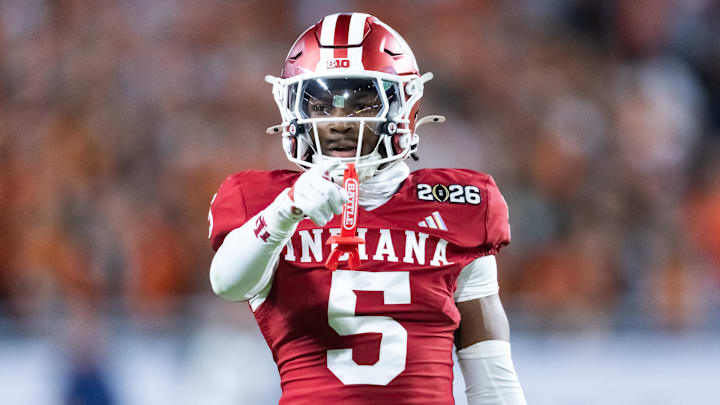
3. D’Angelo Ponds, CB (Round 2, Pick 50)
For some fans, it might be sacrilegious putting Ponds higher than Sadiq in our rankings, as the latter is one of the best overall prospects in this class. However, the Jets needed another CB more than a TE, and they got a guy who plays the game just like his new head coach, Aaron Glenn.
Despite being 5-foot-8 and 182 pounds, Ponds quietly emerged as one of the better cover CBs in the country, and it was on full display during Indiana’s College Football Playoff run.
Ponds was named the defensive MVP of the Peach Bowl and Rose Bowl. He’s an aggressive cornerback who can hold his own on the outside despite his stature. He’s not afraid to stick his helmet into the action to make a tackle and can be used as a blitzer. Last season, he racked up 10 pass breakups, four tackles for loss, and two interceptions (one returned for a TD).
With Brandon Stephens and Nahshon Wright set on the outside, Ponds should be penciled in to start at nickel, which should give this secondary a boost after a poor 2025 season.
Grade: A
2. Omar Cooper Jr., WR (Round 1, Pick 30)
The Jets traded back into the first round Thursday night to address the WR position, selecting Omar Cooper Jr. We had Cooper being taken at No. 16 overall in our three-round mock draft, as he would be the perfect complement to Garrett Wilson.
Cooper, who draws comparisons to Deebo Samuel, can play inside the slot and on the outside. At 6-foot and 199 pounds, the former Indiana pass catcher will likely make his money in the NFL lining up in the slot.
As for the Jets, they have a guy who isn’t afraid to make the tough catches and has exceptional run-after-the-catch skills. Cooper was a go-to target for Fernando Mendoza last season, racking up 69 receptions for 937 yards and 13 touchdowns.
A wide receiver corps that features Wilson, Cooper, and Adonai Mitchell looks much better on paper than the Jets had last season. New York could’ve waited until the second round to take Cooper, as they initially had the No. 33 overall pick, but they wanted their guy. If Geno Smith looks better than he did in 2025 with the Raiders, Cooper could end up as one of the better wide receivers in this class.
Grade: A
1. David Bailey, EDGE (Round 1, Pick 2)
At the top of the NFL draft, the Jets got the best pure pass rusher in this year’s class in David Bailey. There was a thought that New York would take Ohio State’s Arvell Reese and put him at SAM linebacker.
However, the Jets went with Bailey, giving them a dynamic pass rusher group that features Will McDonald IV, Joseph Ossai, and Kingsley Enagbare. The 6-foot-3, 251-pound Bailey is a game wrecker on passing downs and in the run game. Last season at Texas Tech, he produced 19.5 tackles for loss and 14.5 sacks in 14 games.
New York will be looking for immediate production from Bailey, as they struggled to get after the quarterback in 2025. New York had the second-fewest sacks in the league with 26 and was tied with two other teams for the fewest quarterback hits (58).
The Jets hope Bailey can be a building block for this defense that lost Quinnen Williams, Sauce Gardner, and Jermaine Johnson II all through trades. If that happens, New York should be vastly improved in 2026.
Grade: A
 Add us as a preferred source on Google
Jovan has over 13 years of experience in sports media, including stops at The Philadelphia Tribune, SB Nation, FanSided and Hoops Habit. Most recently joining OnSI, his teams covered include the New York Jets, New York Yankees and New York Knicks.