%20%20--%3E%0A%3Csvg%20version%3D%221.1%22%20id%3D%22Layer_1%22%20xmlns%3D%22http%3A%2F%2Fwww.w3.org%2F2000%2Fsvg%22%20xmlns%3Axlink%3D%22http%3A%2F%2Fwww.w3.org%2F1999%2Fxlink%22%20x%3D%220px%22%20y%3D%220px%22%0A%09%20width%3D%2239px%22%20height%3D%2240px%22%20viewBox%3D%220%200%2039%2040%22%20enable-background%3D%22new%200%200%2039%2040%22%20xml%3Aspace%3D%22preserve%22%3E%0A%3Cpath%20fill%3D%22%23FFFFFF%22%20d%3D%22M38.5%2C7H28.2v26h10.3V7z%22%2F%3E%0A%3Cpath%20fill-rule%3D%22evenodd%22%20clip-rule%3D%22evenodd%22%20fill%3D%22%23FFFFFF%22%20d%3D%22M26.1%2C25.5c0%2C5.8-4.1%2C7.5-12.9%2C7.5C3.9%2C33%2C0%2C31.2%2C0%2C25.2v-1.1h11.6%0A%09v2.4c0%2C0.7%2C0.1%2C1.4%2C1.2%2C1.4c1%2C0%2C1.2-0.4%2C1.2-1.3v-0.9c0-1.6-0.9-1.6-3.5-2.2C2.2%2C21.7%2C0%2C19.7%2C0%2C15.3v-0.9C0%2C9.3%2C5.5%2C7%2C12.9%2C7%0A%09c10.2%2C0%2C12.8%2C2.6%2C12.8%2C7.4v1.8h-11v-2.9c0-0.6-0.4-1.1-1.2-1.1c-0.6%2C0-1.2%2C0.4-1.2%2C1.1v0.9c0%2C1.5%2C0.9%2C2%2C3.3%2C2.5%0A%09c8%2C1.6%2C10.5%2C3.3%2C10.5%2C7.5V25.5z%22%2F%3E%0A%3C%2Fsvg%3E%0A)
The Sliding Doors of Wayne Rooney’s Proposed Transfer From Man Utd to Barcelona
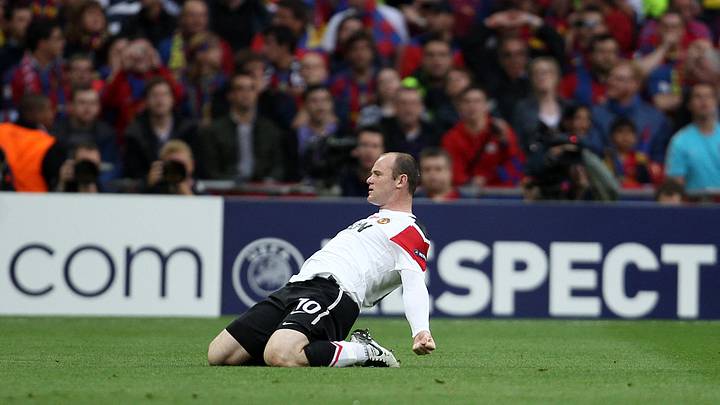
Manchester United’s all-time leading scorer Wayne Rooney has admitted that there was “a possibility” of him joining Pep Guardiola’s legendary Barcelona team during his prime playing years, offering up the prospect of a completely different history of modern soccer.
At the start of the 2010–11 season, a 24-year-old Rooney put in a public demand to leave Manchester United. The revered England international had just watched a free-spending Chelsea win the Premier League and was unimpressed by the personnel purchased to replace a slew of high-profile departures at Old Trafford.
After seeing Cristiano Ronaldo and Carlos Tevez leave in successive summers, Rooney took the misguided approach of sitting United’s legendary manager Sir Alex Ferguson down to ask about the club’s transfer strategy in August 2010. Unsurprisingly, he was told to leave his office.
In the October of that year, Rooney went public with his transfer request, inspiring offers from Chelsea, Manchester City, Real Madrid and Barcelona.
“It was a little bit [of a possibility],” Rooney revealed on the United Stand podcast, “but financially it was difficult for them as well.”
The striker was very much onboard with the proposed move. “I would’ve love to have played for Barcelona,” Rooney gushed. But whether it would have led to the success he was hoping to achieve is another question.
How Rooney Would Have Fit in at Barcelona

Barcelona were not short of star quality at the start of the previous decade. Rooney would have been eyeing up a move away from Manchester United in January 2011, the same month that Lionel Messi, Andrés Iniesta and Xavi Hernández all took to the podium in the Ballon d’Or, the vote for the world’s best soccer player of the year.
However, in the eyes of Rooney, he would have still had a lot to offer the Catalans.
“The team beat us in the [2009 and 2011 Champions League] finals. They didn’t actually have a regular No. 9, if you like,” he recalled. “Obviously it’d be easy to play in that team, but I think it would have suited me, because the way they played.”
Rooney is right that Pep Guardiola didn’t operate with a traditional center forward. He had tried that approach after signing Zlatan Ibrahimović in 2009 at great expense but it became clear during his solitary season in Spain that the Swedish striker was not versatile enough to make room for Messi, who increasingly craved a central role.
As a roaming player himself, Rooney would not have run into the same constrictions as Ibrahimović. After five years of playing alongside Ronaldo, the selfless center forward also had experience of molding his game to the demands of a superstar of Messi’s caliber.

The issue for Rooney was that Barcelona had already replaced Ibrahimović with the perfect mobile foil for Messi; snapping up David Villa in the summer of 2010. Pedro completed Guardiola’s frontline—who all scored against Rooney’s United in the Champions League final that season—while the youthful trio of Bojan, Jeffrén and Nolito served as very sporadic understudies. Rooney could feasibly have elbowed his way in front of Pedro, but that could very well have created a sense of disharmony which Guardiola always sought to eradicate from his locker rooms.
Rejuvenating the attack was clearly a topic on Guardiola’s mind at the time. The following summer, Barcelona jettisoned Bojan and Jeffrén to add Cesc Fàbregas and Alexis Sánchez. In the scenario of Rooney’s move to La Liga six months earlier, at least one of those marquee transfers surely wouldn’t have been required.
Rooney was a tactically astute player with a burning admiration for Guardiola’s Barcelona. The proud Scouser admitted to leaping off his couch and applauding certain moves during his frequent viewing of that team’s matches. The affection was mutual. Xavi hailed Rooney as “a player I have admired for a long time. He is an extraordinary player with extraordinary capabilities.”
How Man Utd Would Have Coped Without Rooney

Rooney was ultimately convinced to remain at Manchester United, but Ferguson didn’t bolster his frontline until the summer of 2012 with the acquisition of Robin van Persie. Between 2010–12, Rooney was the undisputed focal point of every attacking phase of play the Red Devils put together.
Across those two seasons, the well-rounded striker led the team for starts, minutes and goals, rattling in 47 across the Premier League and Champions League—no one else could crack 30. Rooney also chipped in with 18 assists, a tally only Nani and Ryan Giggs could better.
Had Barcelona stumped up the cash and prised the talismanic forward away from Old Trafford, Ferguson would surely have been forced to act in January 2011. That window was notable for Chelsea’s staggering acquisition of Fernando Torres from Liverpool for a record-breaking $80 million (£50 million at the time of the agreement).
“This is the target for every footballer,” the freshly crowned World Cup winner declared at his unveiling, “to try to play for one of the top clubs in the world.” United certainly fit that brief, although crossing the divide from Merseyside to Manchester would have been a hotly controversial decision.

Torres ultimately failed to live up to his lofty price tag at Chelsea and was upstaged by the man who replaced him at Anfield, Luis Suárez. The prolific Uruguayan, who would shine at Liverpool and Barcelona, had been repeatedly linked with a move to Manchester United while he was still at Ajax in 2010.
Suárez would become a villain at Old Trafford following his alleged racial abuse of United fullback Patrice Evra, but there is a conceivable alternative reality in which the pair were teammates rather than rivals.
Based upon the staggering form of his final season at Anfield—Liverpool’s beloved No. 7 rattled in 31 Premier League goals in 33 appearances—Suárez would have been able to come close to Rooney’s stellar output. Whether his own combustible demeanor would have suited a club run under Ferguson’s iron rule is a trickier hypothetical to answer.
 Add us as a preferred source on Google
Grey Whitebloom is an Associate Editor for SI FC. He has more than half a decade of experience in sports media across all its various guises, from the fast-paced demands of news articles and match reports to in-depth research required for features. Whitebloom graduated with a First Class Honours from University College London and found himself named on the Dean’s List—which, despite his initial fears, was a form of praise rather than a punishment. He specialises in the Premier League and Champions League, while also boasting an extensive track record of La Liga coverage.