%20%20--%3E%0A%3Csvg%20version%3D%221.1%22%20id%3D%22Layer_1%22%20xmlns%3D%22http%3A%2F%2Fwww.w3.org%2F2000%2Fsvg%22%20xmlns%3Axlink%3D%22http%3A%2F%2Fwww.w3.org%2F1999%2Fxlink%22%20x%3D%220px%22%20y%3D%220px%22%0A%09%20width%3D%2239px%22%20height%3D%2240px%22%20viewBox%3D%220%200%2039%2040%22%20enable-background%3D%22new%200%200%2039%2040%22%20xml%3Aspace%3D%22preserve%22%3E%0A%3Cpath%20fill%3D%22%23FFFFFF%22%20d%3D%22M38.5%2C7H28.2v26h10.3V7z%22%2F%3E%0A%3Cpath%20fill-rule%3D%22evenodd%22%20clip-rule%3D%22evenodd%22%20fill%3D%22%23FFFFFF%22%20d%3D%22M26.1%2C25.5c0%2C5.8-4.1%2C7.5-12.9%2C7.5C3.9%2C33%2C0%2C31.2%2C0%2C25.2v-1.1h11.6%0A%09v2.4c0%2C0.7%2C0.1%2C1.4%2C1.2%2C1.4c1%2C0%2C1.2-0.4%2C1.2-1.3v-0.9c0-1.6-0.9-1.6-3.5-2.2C2.2%2C21.7%2C0%2C19.7%2C0%2C15.3v-0.9C0%2C9.3%2C5.5%2C7%2C12.9%2C7%0A%09c10.2%2C0%2C12.8%2C2.6%2C12.8%2C7.4v1.8h-11v-2.9c0-0.6-0.4-1.1-1.2-1.1c-0.6%2C0-1.2%2C0.4-1.2%2C1.1v0.9c0%2C1.5%2C0.9%2C2%2C3.3%2C2.5%0A%09c8%2C1.6%2C10.5%2C3.3%2C10.5%2C7.5V25.5z%22%2F%3E%0A%3C%2Fsvg%3E%0A)
The Ultimate 2026–27 Men’s College Basketball Rankings, From Worst to First
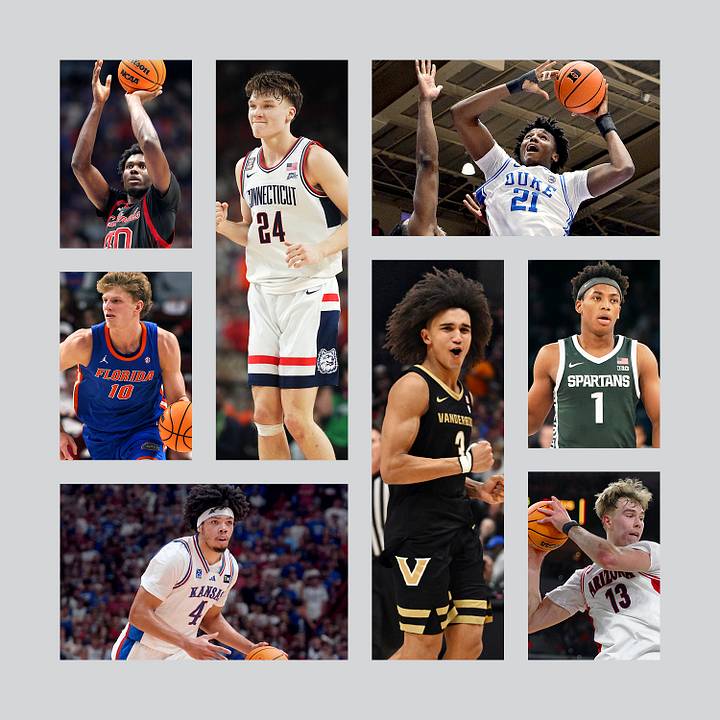
College basketball is officially here! That means it’s time for Sports Illustrated’s annual ambitious push to rank every team in the sport.
If you thought the last few years of rankings were a crapshoot due to the transfer portal’s explosion, just wait until you sift through the uncertainty that permeates these rankings. With dozens of key players (including potential All-Americans and conference players of the year) hovering in eligibility limbo as age-based eligibility lawsuits trickle through the legal system, it has never been more difficult to prognosticate the college hoops season ahead.
But we’re not going down without a fight. All summer, SI pored over roster moves, studied new coaching staffs and dived into the analytics to provide the most comprehensive look possible at the sport from top to bottom. Predictive metrics like KenPom’s national rankings are the gold standard, but with players coming from all over the basketball world (international pros, non–Division I players and more), adding a human touch makes these rankings one of a kind.
So use these rankings as a quick guide to the five-month journey to crowning a champion in Detroit that will begin in just a few days. Whether your team is spending $20 million on its roster with hopes of winning it all or trying to scrape together a competitive year in a mid-major league, we have you covered with rankings, insights and other musings throughout the sport’s landscape.

Complete Division I men’s college basketball 2026–27 preseason team rankings
365. Mississippi Valley State (No. 12 in SWAC)
364. Delaware State (No. 8 in MEAC)
363. Coppin State (No. 7 in MEAC)
362. Chicago State (No. 9 in NEC)
361. Arkansas-Pine Bluff (No. 11 in SWAC)
360. Western Illinois (No. 9 in Ohio Valley)
359. New Haven (No. 8 in NEC)
358. Fairleigh Dickinson (No. 7 in NEC)
357. Maryland Eastern Shore (No. 6 in MEAC)
356. Alcorn State (No. 10 in SWAC)
355. Canisius (No. 13 in Metro)
354. Texas Southern (No. 9 in SWAC)
353. Gardner-Webb (No. 9 in Big South)
352. New Hampshire (No. 9 in America East)
351. Jackson State (No. 8 in SWAC)
Mississippi Valley State (No. 365) has been the worst team in Division I three years running, per KenPom. New coach Mike Davis is accomplished, though, having taken three schools to the NCAA tournament and Indiana to the 2002 national title game. If anyone can get the Delta Devils out of the cellar, it’s him. Davis was once the head coach at Texas Southern (No. 354) which had perhaps the strangest coaching search of the cycle. It eventually settled on Seton Hall assistant Corey Lowery, but not before protests broke out on campus to derail the choice. And elsewhere in the SWAC, Jackson State (No. 351) could outperform this ranking if electric scoring guard Daeshun Ruffin stays eligible. He rejoined the team this summer after winning a lawsuit against the NCAA and stands to be the sport’s top scorer to return to the same school as last season.

350. Alabama A&M (No. 7 in SWAC)
349. NC Central (No. 5 in MEAC)
348. Stonehill (No. 6 in NEC)
347. SC State (No. 4 in MEAC)
346. Rider (No. 12 in Metro)
345. Florida A&M (No. 6 in SWAC)
344. West Florida (No. 8 in Atlantic Sun)
343. Army (No. 10 in Patriot League)
342. Binghamton (No. 8 in America East)
341. Southeastern Louisiana (No. 12 in Southland)
340. Eastern Illinois (No. 8 in Ohio Valley)
339. Loyola Maryland (No. 9 in Patriot League)
338. Wagner (No. 5 in NEC)
337. Grambling State (No. 5 in SWAC)
336. NJIT (No. 7 in America East)
335. Manhattan (No. 11 in Metro)
334. Holy Cross (No. 8 in Patriot League)
333. Alabama State (No. 4 in SWAC)
332. Le Moyne (No. 4 in NEC)
331. Lafayette (No. 7 in Patriot League)
330. Morgan State (No. 3 in MEAC)
329. Louisiana-Monroe (No. 14 in Sun Belt)
328. Kansas City (No. 8 in Summit League)
327. Houston Christian (No. 11 in Southland)
326. Niagara (No. 10 in Metro)
NC Central (No. 349) hopes its elite size will help it climb the MEAC hierarchy. The Eagles have a 7-footer, a 6'11" guy and two more big men standing 6'10". On the opposite end of that spectrum is D-I newbie West Florida (No. 344), which has just one player over 6'7". Eastern Illinois (No. 340) has its first 7-footer since 1986 in Aussie Tanner Vogel, who transfers in from NAIA Faulkner State with prior stops at Western New Mexico and Cochise Junior College.
The 25-year-old Liam McChesney enters his seventh year of college basketball at Manhattan (No. 335) after stops at Utah State, Illinois State, High Point and Creighton. Utah State is on its fifth head coach since McChesney started his college career there! Meanwhile, Kansas City (No. 328) is skewing younger, with nine freshmen on Mark Turgeon’s first roster with the Roos. And if you’re looking to feel old, former Duke point guard (and Syracuse QB) Greg Paulus turned 40 this summer. He’s already entering his eighth year as head coach at Niagara (No. 326).

325. Southern Indiana (No. 7 in Ohio Valley)
324. VMI (No. 11 in SoCon)
323. The Citadel (No. 10 in SoCon)
322. West Georgia (No. 9 in UAC)
321. NC A&T (No. 13 in CAA)
320. Northern Arizona (No. 11 in Big Sky)
319. Maine (No. 6 in America East)
318. USC Upstate (No. 8 in Big South)
317. Bellarmine (No. 7 in Atlantic Sun)
316. LSU New Orleans (No. 10 in Southland)
315. Bryant (No. 5 in America East)
314. Radford (No. 7 in Big South)
313. North Florida (No. 6 in Atlantic Sun)
312. Dartmouth (No. 8 in Ivy League)
311. Cleveland State (No. 12 in Horizon League)
310. Lindenwood (No. 6 in Ohio Valley)
309. Mercyhurst (No. 3 in NEC)
308. Southern (No. 3 in SWAC)
307. Stetson (No. 5 in Atlantic Sun)
306. Bucknell (No. 6 in Patriot League)
305. Sacred Heart (No. 9 in Metro)
304. UMass Lowell (No. 4 in America East)
303. Air Force (No. 10 in Mountain West)
302. Incarnate Word (No. 9 in Southland)
301. North Dakota (No. 7 in Summit League)
Rickey Bradley Jr. led VMI (No. 324) to a massive bounce back in 2024–25, winning 15 games after just four victories the previous year. After missing last season due to injury, he’ll attempt to lead the Keydets to another huge turnaround in 2026–27. Maine (No. 319) is in need of a bounce back after an anemic offense led it to an 8–24 campaign. Coach Chris Markwood is a proven winner, though. LSU New Orleans (No. 316) was one of the sport’s big overachievers last season, beating its preseason KenPom rank by 103 spots. It won’t be easy replicating that after losing its top five scorers from a season ago.
Dartmouth (No. 312) hasn’t finished over .500 in a season since 1999. It might take some time, but don’t be surprised if new coach Brett MacConnell eventually ends that streak. He knows what success in the Ivy looks like from his time as Princeton’s top assistant. Stetson (No. 307) reeled in a potential star freshman in Mason Fuentes, the No. 24 point guard in the country per 247Sports. He’ll try to help the Hatters bounce back from back-to-back 20-loss seasons. Sacred Heart (No. 305) went the D-II route to reload, adding Jojo Wallace (24.8 ppg at Southern New Hampshire) and Kedrick Curtis (16.5 ppg at Seton Hill). And while Air Force (No. 303) has struggled mightily in recent years, the Falcons might be more fun to watch this year under new head coach Joe Crispin. Crispin is known for high-scoring offenses, averaging 90-plus points per game in his final two seasons at D-III Rowan in New Jersey.
300. Boston University (No. 5 in Patriot League)
299. Brown (No. 7 in Ivy League)
298. Prairie View A&M (No. 2 in SWAC)
297. Norfolk State (No. 2 in MEAC)
296. Long Beach State (No. 12 in Big West)
295. Old Dominion (No. 13 in Sun Belt)
294. Southern Utah (No. 10 in Big Sky)
293. UNC Greensboro (No. 9 in SoCon)
292. Northeastern (No. 12 in CAA)
291. Coastal Carolina (No. 12 in Sun Belt)
290. Morehead State (No. 5 in Ohio Valley)
289. IU Indy (No. 11 in Horizon League)
288. North Alabama (No. 8 in UAC)
287. Florida Gulf Coast (No. 4 in Atlantic Sun)
286. Navy (No. 4 in Patriot League)
285. Albany (No. 3 in America East)
284. Mount St. Mary's (No. 8 in Metro)
283. Charleston Southern (No. 6 in Big South)
282. UC Riverside (No. 11 in Big West)
281. Campbell (No. 11 in CAA)
280. East Texas A&M (No. 8 in Southland)
279. Central Connecticut (No. 2 in NEC)
278. SEMO (No. 4 in Ohio Valley)
277. Oral Roberts (No. 6 in Summit League)
276. Idaho State (No. 9 in Big Sky)
Norfolk State (No. 297) head coach Robert Jones has long been a sharp talent evaluator. Don’t be surprised if many are wondering out loud by February how freshman guard Jordan Skyers didn’t end up at a higher level out of high school. Speaking of dynamic freshman guards, 5'9" Dionte Neal was a must-watch in AAU. He should be electric for UNC Greensboro (No. 293). And while Trey Perry was blocked by other top guards at Miami (Ohio) in 2025–26, we expect he’ll shine at Coastal Carolina (No. 291) as a sophomore.
IU Indy (No. 289) played at the breakneck pace Ben Howlett brought with him from D-II West Liberty. The Jaguars have more depth and talent this year to find more success in the win column playing track meets in his second year. The latest coach to make the jump from D-II to D-I is Jimmie Williams at Campbell (No. 281); he brought four players with him from Anderson University and has several others with D-II backgrounds on the roster. East Texas A&M (No. 280) is in its first year eligible for the NCAA tournament after a four-year transition from D-II. It went all-in on international recruiting with eight players from Europe on the roster, including four from France.

275. Nicholls (No. 7 in Southland)
274. Fairfield (No. 7 in Metro)
273. Evansville (No. 11 in Missouri Valley)
272. Southern Miss (No. 11 in Sun Belt)
271. Hampton (No. 10 in CAA)
270. Milwaukee (No. 10 in Horizon League)
269. SIUE (No. 3 in Ohio Valley)
268. Omaha (No. 5 in Summit League)
267. Northwestern State (No. 6 in Southland)
266. Georgia Southern (No. 10 in Sun Belt)
265. Drexel (No. 9 in CAA)
264. Detroit Mercy (No. 9 in Horizon League)
263. South Dakota (No. 4 in Summit League)
262. Northern Kentucky (No. 8 in Horizon League)
261. Idaho (No. 8 in Big Sky)
260. Utah Tech (No. 7 in Big Sky)
259. Denver (No. 10 in WCC)
258. Missouri State (No. 10 in Conference USA)
257. Cal State Bakersfield (No. 10 in Big West)
256. UMBC (No. 2 in America East)
255. Abilene Christian (No. 7 in UAC)
254. Fort Wayne (No. 7 in Horizon League)
253. Louisiana (No. 9 in Sun Belt)
252. Stony Brook (No. 8 in CAA)
251. Mercer (No. 8 in SoCon)
Fairfield (No. 274) lost rebounding machine Brandon Benjamin to Boston College, but kept another talented freshman in Declan Wucherpfennig. He’ll look to lead the Stags to victories in their final year in the Metro before moving to the CAA next year. Milwaukee (No. 270) didn’t have to look far to find its portal reinforcements. It added a pair of former Marquette players this spring in Tre Norman and Al Amadou. A sleeper in the Ohio Valley could be SIUE (No. 269). The Cougars were elite defensively last season, but struggled to score. A breakout year from Tyler King could neutralize those concerns and lead Brian Barone’s bunch to the NCAA tournament.
Detroit Mercy (No. 264) experienced March heartbreak last season after blowing an 11-point lead with under 10 minutes to play in the Horizon title game. That would’ve completed a remarkable turnaround from 1–31 in 2023–24 to the Big Dance in 2026, but it wasn’t to be. Idaho (No. 261) ended a long NCAA tournament drought last year with its first trip since 1990. The roster turns over, but retaining coach Alex Pribble was a big win. This range of the rankings includes a handful of former March Cinderellas: UMBC (No. 256), Abilene Christian (No. 255) and Mercer (No. 251). UMBC is among the favorites in the America East, while Abilene and Mercer have bigger uphill climbs in their respective conferences.
250. Buffalo (No. 12 in MAC)
249. Colgate (No. 3 in Patriot League)
248. UTRGV (No. 5 in Southland)
247. Green Bay (No. 6 in Horizon League)
246. American (No. 2 in Patriot League)
245. Eastern Washington (No. 6 in Big Sky)
244. Eastern Kentucky (No. 6 in UAC)
243. Tennessee State (No. 2 in Ohio Valley)
242. Northern Illinois (No. 5 in Horizon League)
241. Cal State Fullerton (No. 9 in Big West)
240. Quinnipiac (No. 6 in Metro)
239. Lehigh (No. 1 in Patriot League)
238. Marist (No. 5 in Metro)
237. Longwood (No. 5 in Big South)
236. Weber State (No. 5 in Big Sky)
235. Louisiana Tech (No. 8 in Sun Belt)
234. Sacramento State (No. 8 in Big West)
233. Rice (No. 13 in American)
232. Jacksonville State (No. 9 in Conference USA)
231. Tennessee Tech (No. 7 in SoCon)
230. Elon (No. 7 in CAA)
229. UT Arlington (No. 5 in UAC)
228. Bethune-Cookman (No. 1 in SWAC)
227. Saint Peter's (No. 4 in Metro)
226. Portland State (No. 4 in Big Sky)
The summer roster chaos created by the dozens of eligibility lawsuits have led to some strange player/team marriages. For instance, JJ Starling is set to suit up at Buffalo (No. 250), a level he likely never envisioned playing at after scoring over 1,500 points at Notre Dame and Syracuse. Green Bay (No. 247) made a couple of fifth-year splashes with Orlando Lovejoy (15.8 ppg at Detroit Mercy) and Aidan Hadaway (14.4 ppg at Ohio) after losing a pair of projected starters to summer injuries.
But don’t forget about the young guys! Madden Collins, a 6'5" guard, is a rising star at just 20 years old, and he’s back for a second year at American (No. 246). They’re not the favorites in the Patriot League though; that honor belongs to Lehigh (No. 239) because star big Hank Alvey elected to return despite plenty of interest from higher-level suitors.
Kaleb Canales was an assistant for the Trail Blazers in Damian Lillard’s first season as a pro. That connection led to Lillard leading the charge to hire Canales, a longtime NBA assistant who spent last year on staff at Troy, as head coach at Weber State (No. 236). Lillard is very involved with the program; he holds the general manager title and is actively involved in recruiting, roster management and more. Mike Bibby is the head coach at Sacramento State (No. 234) these days, with Shaquille O’Neal as his GM (he’s far less involved than Lillard, though). And former NBA All-Star and onetime Sacramento Kings head coach Reggie Theus is both the athletic director and head coach at Bethune-Cookman (No. 228), which has a loaded roster by SWAC standards.

225. Samford (No. 6 in SoCon)
224. Marshall (No. 7 in Sun Belt)
223. Ball State (No. 11 in MAC)
222. UC Davis (No. 9 in Mountain West)
221. Youngstown State (No. 4 in Horizon League)
220. UT Martin (No. 1 in Ohio Valley)
219. Presbyterian (No. 4 in Big South)
218. Jacksonville (No. 3 in Atlantic Sun)
217. Northern Colorado (No. 3 in Big Sky)
216. William & Mary (No. 6 in CAA)
215. Chattanooga (No. 5 in SoCon)
214. Delaware (No. 8 in Conference USA)
213. Central Michigan (No. 10 in MAC)
212. UTSA (No. 12 in American)
211. UNC Asheville (No. 3 in Big South)
210. LIU (No. 1 in NEC)
209. Texas A&M-CC (No. 4 in Southland)
208. Cal State Northridge (No. 7 in Big West)
207. Siena (No. 3 in Metro)
206. San José State (No. 8 in Mountain West)
205. Georgia State (No. 6 in Sun Belt)
204. Winthrop (No. 2 in Big South)
203. Cornell (No. 6 in Ivy League)
202. Oakland (No. 3 in Horizon League)
201. Tarleton State (No. 4 in UAC)
More and more college hoops rosters look like the United Nations as recruiting goes global. UC Davis (No. 222) went that route for its first season in the Mountain West, with eight players from abroad including two from Austria. UT Martin (No. 220) head coach Jeremy Shulman has been deep in European recruiting since his time as a juco coach; this year’s roster has 11 countries and four continents represented. Lithuanian big man Arminas Vilkas said he was most excited to visit Walmart upon arriving in Tennessee because “we don’t have stores like that [in Lithuania].”
The hardest league to handicap this year might be the Big Sky because so many key players are relying on lawsuits for eligibility. That’s certainly the case for Northern Colorado (No. 217), as Langston Reynolds returned to the program while fighting for a fifth year of eligibility following a one-year pit stop at Minnesota. He’s arguably the best player in the conference if cleared, but you could build an entire all-conference team with Big Sky players in eligibility limbo right now.
The best way for many mid-majors to combat their portal losses has been to backfill with D-II stars. Chattanooga (No. 215) had Jordan Frison from Pittsburgh State last year, but he played so well he transferred up again to Wichita State. The Mocs replaced him with Tre Powell, who starred at Goldey-Beacom. Central Michigan (No. 213) added 7'2" behemoth Conrad Luczynski, whose defensive exploits helped Lenoir-Rhyne to 25 wins a season ago. D-II national champion Gannon lost three players to D-I, headlined by star guard Pace Prosser. Prosser could be one of the Metro’s best players at Siena (No. 207) under new coach Nevada Smith.
200. Vermont (No. 1 in America East)
199. Columbia (No. 5 in Ivy League)
198. Montana (No. 2 in Big Sky)
197. Lamar (No. 3 in Southland)
196. Princeton (No. 4 in Ivy League)
195. Western Carolina (No. 4 in SoCon)
194. Monmouth (No. 5 in CAA)
193. Cal Poly (No. 6 in Big West)
192. Iona (No. 2 in Metro)
191. East Carolina (No. 11 in American)
190. UMass (No. 9 in MAC)
189. California Baptist (No. 5 in Big West)
188. Middle Tennessee (No. 7 in Conference USA)
187. Merrimack (No. 1 in Metro)
186. Montana State (No. 1 in Big Sky)
185. Hofstra (No. 4 in CAA)
184. Furman (No. 3 in SoCon)
183. Appalachian State (No. 5 in Sun Belt)
182. Eastern Michigan (No. 8 in MAC)
181. Portland (No. 9 in WCC)
180. New Mexico State (No. 6 in Conference USA)
179. Lipscomb (No. 2 in Atlantic Sun)
178. Tulane (No. 10 in American)
177. Troy (No. 4 in Sun Belt)
176. Bowling Green (No. 7 in MAC)
Vermont (No. 200) star Gus Yalden went to four high schools, played for three AAU teams, then made stops at three schools in his first three seasons of college hoops. Good for him (and for the Catamounts) that he’s finally staying somewhere for a second straight season. He’s the clear favorite for America East Player of the Year. Another mid-major retention winner: Cal Poly (No. 193) which got back Hamad Mousa (20.3 ppg) and Cayden Ward (14.3 ppg). And UMass (No. 190) was thrilled to keep flashy PG Danny Carbuccia for his sophomore year after he led the MAC in assists during league play.
Joe Gallo has long been a point guard whisperer at Merrimack (No. 187), landing the likes of Budd Clark (now at Ole Miss) and Kevair Kennedy (now Wake Forest) of late. His next find: 5'10" freshman Ayden Johnson, another potential star. Speedy Claxton was a star guard himself, so it’s no surprise that big-time scorers have flocked to him as head coach at Hofstra (No. 185). The key pieces this year are a pair of Loyola Chicago transfers: Justin Moore and Deywilk Tavarez. Bob Richey’s Furman (No. 184) teams have also long had excellent guards (including Alex Wilkins, who transferred to Kentucky this offseason); sophomore Abijah Franklin looks like he’s next.

175. Indiana State (No. 10 in Missouri Valley)
174. Sam Houston State (No. 5 in Conference USA)
173. FIU (No. 4 in Conference USA)
172. Southern Illinois (No. 9 in Missouri Valley)
171. Central Arkansas (No. 3 in UAC)
170. Howard (No. 1 in MEAC)
169. Robert Morris (No. 2 in Horizon League)
168. South Dakota State (No. 3 in Summit League)
167. Queens (No. 1 in Atlantic Sun)
166. Wofford (No. 2 in SoCon)
165. Towson (No. 3 in CAA)
164. South Alabama (No. 3 in Sun Belt)
163. Loyola Marymount (No. 8 in WCC)
162. UTEP (No. 7 in Mountain West)
161. La Salle (No. 14 in Atlantic 10)
160. Little Rock (No. 2 in UAC)
159. East Tennessee State (No. 1 in SoCon)
158. Western Michigan (No. 6 in MAC)
157. St. Thomas (No. 2 in Summit League)
156. Valparaiso (No. 8 in Missouri Valley)
155. Temple (No. 9 in American)
154. Toledo (No. 5 in MAC)
153. Fresno State (No. 9 in Pac-12)
152. Austin Peay (No. 1 in UAC)
151. Arkansas State (No. 2 in Sun Belt)
Among the first-year coaches worth tracking closely is Joey Cantens at FIU (No. 173). This has been a dead-end job for many, but Cantens is a Miami native with a sterling track record as a juco coach. There’s talent on this roster, including dynamic freshman Trey Beamer and veterans like Tijan Saine Jr. (Weber State). No job is impossible to win at: Just ask John Shulman, who did miraculous work at Central Arkansas (No. 171) a year ago. Its No. 151 finish on KenPom was the best in program history by a long shot. Another guy winning at a traditionally tough gig is Kenny Blakeney at Howard (No. 170), which had two NCAA tournament berths in program history before he arrived and has now made the Big Dance in three of the last four seasons. This roster is by far the best in the MEAC with star wing Cedric Taylor returning.
College coaches spent a shocking amount of time watching NAIA Northwestern College (that’s in Orange City, Iowa, for those wondering) film during the transfer portal window because the Red Raiders had two stars with mind-bending numbers. South Dakota State (No. 168) landed one of them in Jesse Van Kalsbeek, who averaged 27.8 points and 12.4 rebounds. The other was Jalen Langsy, who headed to South Alabama (No. 164) after averaging 27.3 points per game and making a ridiculous 152 threes. South Alabama has dominated the non–D-I transfer pipeline of late, so it’s worth buying stock in Langsy now.
Plenty of mid-major coaches are willing to concede that keeping a top talent their whole careers is unrealistic. The goal for many is to keep a promising freshman for their sophomore year, help them solidify themselves as high-major priorities, and then help them move up after Year 2 or 3. Valparaiso (No. 156) was thrilled to do that with a pair of studs in JT Pettigrew and Rakim Chaney, who could help the Beacons climb the Valley standings. Austin Peay (No. 152) is the favorite in the newly branded UAC thanks to Zyree Collins, the electrifying PG who started 30 games as a freshman for the Governors.
150. Western Kentucky (No. 3 in Conference USA)
149. North Texas (No. 8 in American)
148. Drake (No. 7 in Missouri Valley)
147. Yale (No. 3 in Ivy League)
146. North Dakota State (No. 1 in Summit League)
145. Pacific (No. 7 in WCC)
144. Northern Iowa (No. 6 in Missouri Valley)
143. Harvard (No. 2 in Ivy League)
142. Utah Valley (No. 4 in Big West)
141. Kennesaw State (No. 2 in Conference USA)
140. St. Bonaventure (No. 13 in Atlantic 10)
139. Bradley (No. 5 in Missouri Valley)
138. San Diego (No. 6 in WCC)
137. Penn (No. 1 in Ivy League)
136. Wright State (No. 1 in Horizon League)
135. UC San Diego (No. 3 in Big West)
134. Akron (No. 4 in MAC)
133. Rhode Island (No. 12 in Atlantic 10)
132. Texas State (No. 8 in Pac-12)
131. Hawai‘i (No. 6 in Mountain West)
130. Pepperdine (No. 5 in WCC)
129. Charleston (No. 2 in CAA)
128. Ohio (No. 3 in MAC)
127. James Madison (No. 1 in Sun Belt)
126. Seattle (No. 4 in WCC)
From Grant McCasland to Ross Hodge to now Daniyal Robinson, North Texas (No. 149) has established an elite defensive culture. The Mean Green will once again need to rely on getting stops to climb the AAC ladder this year. Northern Iowa (No. 144) was a top-25 defense nationally per KenPom last year; they might look a lot different stylistically on that end this season with new head coach Kyle Green, whose pressure defenses helped Iowa State to elite defenses in recent years. Green’s not the only Iowa State assistant who got a head gig this cycle: JR Blount is taking over at San Diego (No. 138), a program some believe to be a sleeping giant of sorts.
Akron (No. 134) and Charleston (No. 129) are inextricably linked this season after Akron HC John Groce left for sunnier pastures in the Palmetto State. Akron promoted top assistant Dustin Ford, who did a nice job quickly reloading a roster that was set to lose a ton to graduation anyway. Initially, Groce didn’t bring any players with him from Akron, but eventually added potential CAA Player of the Year Tavari Johnson this summer. Johnson is part of one of the many ongoing five-for-five lawsuits; monitor his status closely.
And while going all-in on high-major bounce-back transfers can be risky at a place like James Madison (No. 127), the pieces here are intriguing. KJ Windham showed real flashes at Northwestern as a scorer, while former Notre Dame big Garrett Sundra’s skill level as a passer should pop at this level.

125. FAU (No. 7 in American)
124. Duquesne (No. 11 in Atlantic 10)
123. Stephen F. Austin (No. 2 in Southland)
122. Liberty (No. 1 in Conference USA)
121. Illinois State (No. 4 in Missouri Valley)
120. Davidson (No. 10 in Atlantic 10)
119. UC Santa Barbara (No. 2 in Big West)
118. UNC Wilmington (No. 1 in CAA)
117. Kent State (No. 2 in MAC)
116. Richmond (No. 9 in Atlantic 10)
115. Belmont (No. 3 in Missouri Valley)
114. Saint Joseph’s (No. 8 in Atlantic 10)
113. Penn State (No. 18 in Big Ten)
112. UAB (No. 6 in American)
111. Fordham (No. 7 in Atlantic 10)
110. Washington State (No. 7 in Pac-12)
109. Wyoming (No. 5 in Mountain West)
108. Northwestern (No. 17 in Big Ten)
107. San Francisco (No. 3 in WCC)
106. Colorado (No. 16 in Big 12)
105. Georgia Tech (No. 18 in ACC)
104. Cal (No. 17 in ACC)
103. Miami (Ohio) (No. 1 in MAC)
102. Pittsburgh (No. 16 in ACC)
101. Loyola Chicago (No. 6 in Atlantic 10)
Last season, Liberty (No. 122) was all about three-point shooting, ranking in the top 10 nationally shooting 39% from distance. Troy transfers and brothers Cooper and Cobi Campbell have a lot on their plate to help replicate that shooting success. Davidson (No. 120) was all about the three for much of the Bob McKillop era, but the Wildcats have slumped from distance in four years under his son Matt. They took steps forward there last season, but lost sharpshooters Roberts Blums and Parker Friedrichsen to the portal in the offseason. Belmont (No. 115) led the nation in shooting last year at 41%. While HC Casey Alexander departs and so do a few key shooters, Jack Smiley (44%) and Eoin Dillon (47%) seem primed to keep the Bruins at the top of the shooting charts. Meanwhile, Fordham (No. 111) was one of the nation’s biggest overachievers a year ago in spite of being one of the 10 worst shooting teams in the country, relying on dominance of the glass to grind out A-10 wins. The Rams kept their entire frontcourt rotation for another year and could be an A-10 sleeper.
Point guard play often shapes seasons, particularly for teams outside the power conferences. Washington State (No. 110) went the D-II route to find Lazerek Houston, a high-flying athlete who starred as a freshman at Central Missouri after being underrecruited in high school. San Francisco (No. 107) has to be thrilled with finding Dylan Bordón, an Argentine guard who developed the last few years in Spain. He was excellent in a preseason exhibition vs. Arizona. Miami (Ohio) (No. 103) doesn’t have just one great PG, it has two: Evan Ipsaro and Luke Skaljac. Skaljac replaced Ipsaro in the lineup when Ipsaro suffered a season-ending knee injury, and the RedHawks offense didn’t miss a beat. Loyola Chicago (No. 101) had Clayton Custer when it made the Final Four in 2017 and Braden Norris when it made the Sweet 16 in 2021. The Ramblers hope 22-year-old French PG Guillaume Grotzinger is the man to help them bounce back after a brutal 2025–26 season.
100. South Florida (No. 5 in American)
99. George Washington (No. 5 in Atlantic 10)
98. Oregon (No. 16 in Big Ten)
97. UIC (No. 2 in Missouri Valley)
96. UC Irvine (No. 1 in Big West)
95. Charlotte (No. 4 in American)
94. Utah (No. 15 in Big 12)
93. UNLV (No. 4 in Mountain West)
92. Butler (No. 11 in Big East)
91. UCF (No. 14 in Big 12)
90. Notre Dame (No. 15 in ACC)
89. McNeese State (No. 1 in Southland)
88. Washington (No. 15 in Big Ten)
87. Wake Forest (No. 14 in ACC)
86. Tulsa (No. 3 in American)
85. Oregon State (No. 6 in Pac-12)
84. Georgetown (No. 10 in Big East)
83. Memphis (No. 2 in American)
82. Nevada (No. 3 in Mountain West)
81. Murray State (No. 1 in Missouri Valley)
80. South Carolina (No. 16 in SEC)
79. Kansas State (No. 13 in Big 12)
78. Rutgers (No. 14 in Big Ten)
77. Boise State (No. 5 in Pac-12)
76. George Mason (No. 4 in Atlantic 10)
UIC (No. 97) went on a thrilling run to the MVC title game in 2026 and kept rising sophomores Andy Johnson and Rashund Washington Jr. Rob Ehsan is building something at a job many thought was close to impossible to win at. Charlotte (No. 95) had an outstanding run of success in the late 1990s and early 2000s, but is now more than 20 years removed from its last NCAA tournament appearance. The program made a big investment to bring in head coach Wes Miller this spring, and PG Keyshuan Tillery (who followed Miller from Cincinnati) could be a star. A similarly dormant former mid-major power is UNLV (No. 93), which last danced in 2013. There’s real talent on Josh Pastner’s second roster with the Runnin’ Rebels, headlined by athletic sophomore forward Tyrin Jones.
UCF (No. 91) was a major overachiever last year, going on a surprise run to the NCAA tournament with one of the lower high-major roster budgets. This group looks primed for a step back on paper, but the late return of Riley Kugel (assuming he remains eligible) gives the Knights more hope. Wake Forest (No. 87) is believed to be the lowest power-conference spender this season, making it even more difficult on Steve Forbes to make his first NCAA tournament with the Demon Deacons. Freshman forward Gavin Placide could quickly emerge as a star, though. And to keep up with the times financially, Memphis (No. 83) head coach Penny Hardaway committed $2.6 million (if he can’t raise that from donors first) to help round out his roster in a critical year for the program.
Rebounding machine Elijah Price headlines Nevada (No. 82) in Steve Alford’s final season before retirement. Keeping Price was a huge coup for the Wolf Pack. Another enormous retention win: Murray State (No. 81) keeping star French wing Roman Domon. Domon would’ve had his choice of dozens of high-major suitors, but is back for a second year with the Racers instead. And while his numbers may not have jumped off the page last year, Emmanuel Kanga is one of the best young big man prospects outside the power conferences. Expect a huge leap for him at George Mason (No. 76).

75. High Point (No. 1 in Big South)
74. Santa Clara (No. 2 in WCC)
73. Mississippi State (No. 15 in SEC)
72. Stanford (No. 13 in ACC)
71. Colorado State (No. 4 in Pac-12)
70. Seton Hall (No. 9 in Big East)
69. Saint Mary’s (No. 1 in WCC)
68. Dayton (No. 3 in Atlantic 10)
67. Wichita State (No. 1 in American)
66. Boston College (No. 12 in ACC)
65. Syracuse (No. 11 in ACC)
64. Arizona State (No. 12 in Big 12)
63. San Diego State (No. 3 in Pac-12)
62. NC State (No. 10 in ACC)
61. Oklahoma State (No. 11 in Big 12)
60. Clemson (No. 9 in ACC)
59. SMU (No. 8 in ACC)
58. Georgia (No. 14 in SEC)
57. New Mexico (No. 2 in Mountain West)
56. Virginia Tech (No. 7 in ACC)
55. DePaul (No. 8 in Big East)
54. Saint Louis (No. 2 in Atlantic 10)
53. Creighton (No. 7 in Big East)
52. Florida State (No. 6 in ACC)
51. Oklahoma (No. 13 in SEC)
Allen Graves became the latest NBA player developed by Herb Sendek at Santa Clara (No. 74) last year, joining Jalen Williams and Brandin Podziemski as recent draft picks out of the program. There’s plenty more talent in the pipeline, too. Being the lead guard in Kyle Smith’s attack has been lucrative for many, including surprise one-and-done superstar Ebuka Okorie last year for Stanford (No. 72). Smith may have found another sleeper sensation in Julius Price, who we expect will significantly outperform his No. 117 recruiting ranking. Colorado State (No. 71) has also been known for finding sleepers; junior forward Kyle Jorgensen was an elite find, and there’s tons of excitement about freshman Jaden Ghoreishi potentially being next.
The middle of the ACC has so many teams with wide ranges of potential outcomes. Three first-year coaches come in short order in these rankings with Luke Murray leading Boston College (No. 66), Gerry McNamara leading his alma mater Syracuse (No. 65) and Justin Gainey also in charge as an alum at NC State (No. 62). BC’s roster is a far cry from the ones Murray coached at UConn, but Montana transfer Money Williams could be a star in the backcourt and Murray is sharp tactically. McNamara brings plenty of faces from Siena with him to Syracuse, including star wing Gavin Doty and electric freshman PG Ryan Moesch. Gainey will try to instill the Tennessee defensive culture he helped build as an assistant there in Raleigh, but the personnel might not fit that with small, dynamic scoring guards and an elite shooter in Paul McNeil Jr.
The Mountain West losing a significant chunk of its schools to the rebuilt Pac-12 is a shame for the likes of New Mexico (No. 57), but the MWC should still have multiple at-large contenders including the Lobos. HC Eric Olen is phenomenal, as is sophomore sharpshooter Jake Hall. It has been since 2004 that DePaul (No. 55) has made the NCAA tournament. With an improved roster via the portal, fans in Lincoln Park can dare to dream for the first time in awhile. Florida State (No. 52) is five years removed from its last NCAA tournament, but that’s a program clearly on the right track under former NBA assistant Luke Loucks. Freshman center Marcis Ponder (nicknamed Baby Shaq) put on a show in the Seminoles’ exhibition game vs. Auburn earlier this month and could be an x-factor.
50. Grand Canyon (No. 1 in Mountain West)
49. Minnesota (No. 13 in Big Ten)
48. Providence (No. 6 in Big East)
47. Maryland (No. 12 in Big Ten)
46. West Virginia (No. 10 in Big 12)
45. VCU (No. 1 in Atlantic 10)
44. Ole Miss (No. 12 in SEC)
43. TCU (No. 9 in Big 12)
42. Texas A&M (No. 11 in SEC)
41. Utah State (No. 2 in Pac-12)
40. Xavier (No. 5 in Big East)
39. Wisconsin (No. 11 in Big Ten)
38. Cincinnati (No. 8 in Big 12)
37. Ohio State (No. 10 in Big Ten)
36. North Carolina (No. 5 in ACC)
35. Auburn (No. 10 in SEC)
34. Baylor (No. 7 in Big 12)
33. USC (No. 9 in Big Ten)
32. LSU (No. 9 in SEC)
31. Purdue (No. 8 in Big Ten)
30. Marquette (No. 4 in Big East)
29. Iowa (No. 7 in Big Ten)
28. BYU (No. 6 in Big 12)
27. Villanova (No. 3 in Big East)
26. Missouri (No. 8 in SEC)
Providence (No. 48) was dealt a blow when former G Leaguer Dink Pate was ruled ineligible by the NCAA, but the Friars have plenty of talent to work with in Bryan Hodgson’s first season. Making the NCAA tournament in Year 1 is certainly on the table. West Virginia (No. 46) has a whopping five players from one high school (Arizona prep powerhouse Bella Vista), headlined by elite freshman point guard Miles Sadler. He could be one of the top floor generals in the nation sooner rather than later. Even with star scoring guard Terrence Hill Jr. off to Tennessee, VCU (No. 45) has a backcourt that measures up with just about anyone in college hoops with former top recruit Nyk Lewis and defensive ace Brandon Jennings. And while guard play struggles plagued Ole Miss (No. 44) last year, that shouldn’t be a problem in 2026–27. Ilias Kamardine returns, Budd Clark joins after a big year at Seton Hall and Australian Ben Henshall should also be a strong contributor.
Xavier (No. 40) was behind in the NIL/revenue share world when Richard Pitino arrived, contributing to a poor first season. That has changed, and the Musketeers’ roster is much improved. Between them and all the excitement at Cincinnati (No. 38) with new coach Jerrod Calhoun, this year’s Crosstown Shootout could be a ton of fun.
USC (No. 33) has the talent to far exceed this ranking, especially if Alijah Arenas lives up to the hype in his first healthy college season. But an offseason injury to center Eric Reibe and concerns about too many ball-dominant guys have us hedging on the Trojans. Another high-variance squad: LSU (No. 32), which has had a whirlwind offseason of eligibility battles. Should Donovan Dent and Skyy Clark remain eligible, there’s a lot to like with this group after getting former Cavaliers draft pick Saliou Niang cleared. Missouri (No. 26) is another high-ceiling, low-floor team; that’s partially due to the eligibility fight for star forward Mark Mitchell and partially due to their reliance on freshmen, namely five-star PG Jason Crowe Jr.

Sports Illustrated’s preseason college basketball Top 25
25. Indiana (No. 6 in Big Ten)
The Hoosiers beefed up their front line after getting pummeled in the paint in Darian DeVries’s first season. Alabama transfer Aiden Sherrell headlines a loaded portal class that should help the Hoosiers get back to relevance.
24. Nebraska (No. 5 in Big Ten)
It was a dream 2025–26 season for Nebraska, winning an NCAA tournament game for the first time ever en route to a Sweet 16 appearance. Star sharpshooters Pryce Sandfort and Braden Frager give the Huskers a chance to get back there, though departures like Rienk Mast and Sam Hoiberg will be felt heavily.

23. Texas Tech (No. 5 in Big 12)
If fully healthy and fully eligible, the Red Raiders are a Final Four contender. But with three key cogs (Donovan Atwell, Darrion Williams and Jamichael Stillwell) not out of the woods yet with their five-year eligibility lawsuits and JT Toppin’s timeline to return from ACL surgery unknown, it’s hard to be all-in on Tech just yet. But come January, don’t be shocked if this group is near the top of the polls.
22. Kentucky (No. 7 in SEC)
Kentucky’s whirlwind offseason included some contentious recruiting misses, but the final product of a roster is compelling. Milan Momcilovic headlines the Wildcats’ portal class as one of the best shooters in recent college hoops history, while returning center Malachi Moreno could explode as a sophomore. If the Cats get good enough guard play, watch out.
21. UCLA (No. 4 in Big Ten)
Mick Cronin loves his retooled Bruins roster, which features a nice mix of retention (starting guard Trent Perry, forward Eric Dailey Jr. and center Xavier Booker) and talented new faces. The Bruins are particularly high on Texas Tech transfer Jaylen Petty, who has looked like a high-level Big Ten guard this summer and fall. If 17-year-old sensation Nikola Kusturica is ready for the physicality of college hoops, watch out.

20. Iowa State (No. 4 in Big 12)
Tamin Lipsey’s return (if he remains eligible) could make this ranking look too low. He’s among the nation’s best players and the ultimate T.J. Otzelberger player. Iowa State could struggle to score at times with Momcilovic and Joshua Jefferson departing, but Northwestern transfer forward Tre Singleton could bring some of Jefferson’s point forward abilities to the table.
19. Kansas (No. 3 in Big 12)
Kansas spent much of the offseason engineering a youth movement around projected No. 1 NBA draft pick Tyran Stokes, then got old in a hurry late with the lawsuit-aided additions of Melvin Council Jr., Tre White and Trey Kaufman-Renn. How it all fits together is still an open question, particularly with limited practice time to make it work. But the Jayhawks are bigger and more physical than they’ve been in awhile.
18. Tennessee (No. 6 in SEC)
The Vols went heavy on scoring talent this offseason after riding their defense-first ways to three straight Elite Eights. Gelling all that together seems to be a work in progress, based on some ugly exhibition results. But after being outgunned in those three Elite Eight games, having Juke Harris (21.4 ppg at Wake Forest) and Terrence Hill Jr. (15.0 ppg at VCU) will certainly be a breath of fresh air.

17. Alabama (No. 5 in SEC)
Alabama’s backcourt looks elite, with a potential lottery pick in Amari Allen back for a second year in the system and Aden Holloway more than capable as his running mate. The Tide’s ceiling in recent years has been capped by their poor defense, so getting bigger was a point of emphasis this offseason with Brandon Garrison (Kentucky), Drew Fielder (Boise State) and Cole Cloer (NC State).
16. St. John’s (No. 2 in Big East)
Rick Pitino has revitalized the St. John’s program, but has even bigger success on his mind with this group. Former EuroLeague starter, 23-year-old Quinn Ellis leads the way at the point, and there’s plenty of scoring weaponry around him with Tounde Yessoufou (17.8 ppg at Baylor), Keyshawn Hall (19.3 ppg at Auburn) and Ian Jackson (9.4 ppg at St. John’s last season).
15. Miami (No. 4 in ACC)
This year’s Hurricanes squad could be a wrecking ball of physicality. Seven players stand 6'8" or taller, including elite scorer Malik Reneau, dominant rebounder Somto Cyril (Georgia) and potential one-and-done freshman Caleb Gaskins. Add in 6'6", 239-pound bruiser Shelton Henderson, and teams will need a stop in the ice tub after playing the Canes in 2026–27.
14. Michigan (No. 3 in Big Ten)
The defending champs have more questions to answer than most looking to repeat after Dusty May left for the Dallas Mavericks and all three stars in the Wolverines’ frontcourt turned pro. But Mike Boynton should feel great about his backcourt, which features Final Four Most Outstanding Player Elliot Cadeau as well as breakout sophomore Trey McKenney.

13. Virginia (No. 3 in ACC)
Ryan Odom engineered a 30-win first season, and brought back several key pieces from that team headlined by star forward Thijs De Ridder. That said, the Cavs’ ceiling lies in a breakout campaign from sophomore PG Chance Mallory, who shined at times behind Dallin Hall a season ago.
12. Arkansas (No. 4 in SEC)
The Hogs are freakishly athletic this season, from projected top-10 draft pick Jordan Smith Jr. at PG to Billy Richmond, JJ Andrews and Abdou Toure on the wings. There are some question marks up front, but Smith is the ultimate winner and should elevate everyone around him.
11. Vanderbilt (No. 3 in SEC)
Tyler Tanner’s return gives Vanderbilt one of the best players in the country and reason to believe it could be a special season in Nashville. Early on, it will be worth monitoring how the Commodores’ bigger lineups look after emphasizing more size and physicality in the transfer portal.
10. Louisville (No. 2 in ACC)
Louisville pushed the chips to the center of the table during the portal, adding proven high-major studs Flory Bidunga (Kansas), Jackson Shelstad (Oregon) and Seth Trimble (North Carolina). Pat Kelsey has dominated the teams he’s supposed to beat in two years at Louisville; he’s 45–4 against teams that finished outside KenPom’s top 40. The next step is winning the big ones, where he’s just 6–15 against top-40 foes so far.
9. Texas (No. 2 in SEC)
The talent here is undeniable. Texas kept star big man Matas Vokietaitis and surrounded him with two elite freshmen (Austin Goosby and Marcus Spears Jr.) and several touted transfers. Keep an eye on high-level scorer Isaiah Johnson, who was criminally underrated out of high school and starred last year at Colorado.

8. Houston (No. 2 in Big 12)
For as long as Kelvin Sampson is Houston’s head coach, they’ll have a spot in the top 10. The Cougars’ floor is as high as anyone’s because of how they defend and rebound. LSU transfer Dedan Thomas Jr. should solidify the point guard spot, and Kent State transfer Delrecco Gillespie gives Sampson the physical post presence the Cougars lacked last season.
7. Gonzaga (No. 1 in Pac-12)
Returning star forward Braden Huff gives the Bulldogs a chance to be one of the best teams in the country yet again, and pairing him with 7-footer Massamba Diop (Arizona State) means this frontcourt won’t skip a beat. If some combo of Frenchman Nathan De Sousa and Florida transfer Xaivian Lee (if eligible) stabilize the point guard spot, watch out.
6. Michigan State (No. 2 in Big Ten)
Jeremy Fears Jr. has led Michigan State to 57 wins and a pair of trips to the NCAA tournament’s second weekend in his first two seasons as the Spartans’ starting point guard. The sky is the limit for Year 3, especially if the improvements he showed as a scorer late last season continue into 2026–27.
5. Arizona (No. 1 in Big 12)
Tommy Lloyd broke through to his first Final Four in 2025–26, and has a roster capable of a second straight trip this year. The return of Motiejus Krivas and Ivan Kharchenkov creates arguably the best defensive nucleus in the sport, and Kharchenkov’s offensive game looks primed to explode after a big summer.

4. Illinois (No. 1 in Big Ten)
The Illini will miss Keaton Wagler, but should still have perhaps the best offense in the sport this season with David Mirković leading the way. And while the Wagler comparisons will be unfair to fellow late stock riser Quentin Coleman, don’t be surprised if the Missouri native is the Illini’s next one-and-done lottery pick.
3. UConn (No. 1 in Big East)
Dan Hurley has taken UConn to three of the last four national championship games and a pair of titles. With star PG Silas Demary Jr. and sharpshooter Braylon Mullins returning from last year’s runner-up, the Huskies should be right there in March yet again. If Seton Hall transfer center Najai Hines is as advertised as a two-way force at the rim, the Huskies are strong contenders to win it all.
2. Duke (No. 1 in ACC)
The depth of talent is overwhelming, with a second unit that’d rival some Top 25 teams’ starting group. The comparison that will pop up increasingly throughout the season is Kentucky’s 38–1 team in 2015, though time will tell if there are multiple future all-stars on this team the way the 2015 Wildcats had. Teenager Joaquim Boumtje Boumtje continues to impress, which only adds to this group’s ceiling.
1. Florida (No. 1 in SEC)
The Gators have the highest preseason floor of any team in recent history; assuming they stay healthy, the amount of roster retention from consecutive No. 1 seeds means there’s basically no world where Florida flops. Its frontcourt is incredible, and Todd Golden’s style of play lends itself to two-way rim dominance. But in a sport where point guard play is king, is Boogie Fland the man to lead the Gators to a title?
PODCAST: Listen to Sports Illustrated’s college sports podcast, Others Receiving Votes, hosted by Pat Forde, on Apple and Spotify. Watch the show on SI’s college YouTube channel or on SI TV.
 Add us as a preferred source on Google

Kevin Sweeney is a staff writer at Sports Illustrated covering college basketball and the NBA draft. He joined the SI staff in July 2021 and also serves host and analyst for The Field of 68. Sweeney is a Naismith Trophy voter and ia member of the U.S. Basketball Writers Association. He is a graduate of Northwestern University’s Medill School of Journalism.
Follow CBB_Central