%20%20--%3E%0A%3Csvg%20version%3D%221.1%22%20id%3D%22Layer_1%22%20xmlns%3D%22http%3A%2F%2Fwww.w3.org%2F2000%2Fsvg%22%20xmlns%3Axlink%3D%22http%3A%2F%2Fwww.w3.org%2F1999%2Fxlink%22%20x%3D%220px%22%20y%3D%220px%22%0A%09%20width%3D%2239px%22%20height%3D%2240px%22%20viewBox%3D%220%200%2039%2040%22%20enable-background%3D%22new%200%200%2039%2040%22%20xml%3Aspace%3D%22preserve%22%3E%0A%3Cpath%20fill%3D%22%23FFFFFF%22%20d%3D%22M38.5%2C7H28.2v26h10.3V7z%22%2F%3E%0A%3Cpath%20fill-rule%3D%22evenodd%22%20clip-rule%3D%22evenodd%22%20fill%3D%22%23FFFFFF%22%20d%3D%22M26.1%2C25.5c0%2C5.8-4.1%2C7.5-12.9%2C7.5C3.9%2C33%2C0%2C31.2%2C0%2C25.2v-1.1h11.6%0A%09v2.4c0%2C0.7%2C0.1%2C1.4%2C1.2%2C1.4c1%2C0%2C1.2-0.4%2C1.2-1.3v-0.9c0-1.6-0.9-1.6-3.5-2.2C2.2%2C21.7%2C0%2C19.7%2C0%2C15.3v-0.9C0%2C9.3%2C5.5%2C7%2C12.9%2C7%0A%09c10.2%2C0%2C12.8%2C2.6%2C12.8%2C7.4v1.8h-11v-2.9c0-0.6-0.4-1.1-1.2-1.1c-0.6%2C0-1.2%2C0.4-1.2%2C1.1v0.9c0%2C1.5%2C0.9%2C2%2C3.3%2C2.5%0A%09c8%2C1.6%2C10.5%2C3.3%2C10.5%2C7.5V25.5z%22%2F%3E%0A%3C%2Fsvg%3E%0A)
SI:AM | Greed Wins Again With College Football Playoff Expansion
Good morning, I’m Dan Gartland. I know the Dodgers’ getting swept isn’t going to stop MLB owners from pushing for a salary cap, but it’ll at least make it easier to laugh at their proposals.
In today’s SI:AM:
🏆 CFP expansion coming (again)
😬 Seahawks in trouble after TNF loss
👋 Dodgers sent packing
If you’re reading this on SI.com, click here to subscribe and receive SI:AM directly in your inbox each morning.
Nobody asked for this
The College Football Playoff is about to find out if it’s possible to have too much of a good thing.
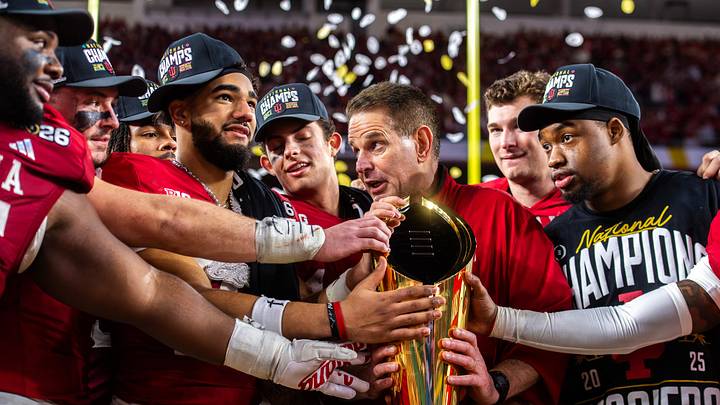
The introduction of the original four-team CFP in 2014 was a welcome development. It replaced the opaque and limited BCS with what fans had been clamoring for: an opportunity for the sport’s truly elite teams to earn a championship in head-to-head competition. But the four-team field tripled to 12 teams in 2024, and now it’s reportedly set to balloon to a whopping 24 teams.
The CFP and ESPN are nearing a deal to move to a 24-team model next season, according to multiple reports. The Athletic reported that the deal is “95% done” and is worth at least $300 million more annually than the current arrangement. Details are still being finalized, but the 24-team tournament is expected to include guaranteed spots for the four power-conference champions and the CFP committee’s highest-ranked Group of 6 team, plus 19 at-large bids. The top eight seeds would get first-round byes and home games in the second round. The first-round games would also be played on campus.
But the bigger story is the impact this change will have on the sport’s regular season. Along with the previously approved move to shift the start of the season forward by one week, during what is now known as Week Zero, adding another round of playoff games also means that the conference championship games in early December will have to be eliminated. And that’s on top of the knock-on effects that the expanding field will have on the stakes of regular-season games. Obviously, adding spots in the playoff is going to make regular-season losses less catastrophic for would-be championship contenders. The CFP decisionmakers’ counterargument is that teams will still be incentivized to do well in the regular season to secure a bye or a home game in the first round.
To me, the expected elimination of conference championship games is the most disappointing part of this. Conference championship appearances used to be meaningful accomplishments. Teams that fell short of a national title could at least walk away from a season feeling good about themselves if they earned a coveted conference championship, often by beating a hated rival. In the early days of the CFP, back before conference realignment completely lost the plot, the four spots would (usually) go to the champions of four regionally contained conferences. It was a national tournament for a regional sport. (It was stupid to have only four spots when there were five power conferences, but still.)
But between conference realignment and the elimination of the championship games, college football is losing what made it unique. If conferences don’t matter, and if mediocre teams can still sneak their way into the postseason, what is there that makes college football different from just a less-talented version of the NFL?
The one thing I keep going back to as I think about the expanded CFP and how it will change college football is the 2023 Ohio State-Michigan game. The Buckeyes entered the game ranked second, the Wolverines third. It was the final year of the four-team CFP and the final year where the Big Ten used divisions to determine conference championship berths. The winner would earn a spot in the Big Ten championship game, where another victory would likely secure a playoff berth. The loser would be all but eliminated from championship contention. The game was a classic—two of the sport’s biggest rivals, meeting with enormous stakes. Michigan won, 30–24, and went on to win the national championship.
Expanding the CFP to 12 teams made it exceedingly unlikely that we’d ever see a rivalry game as important as that again. The push to 24 makes it impossible. In fact, if you want to be really cynical, it’s not completely out of the question that you might one day see Ohio State or Alabama or Tennessee or some other championship contender rest its starters in its annual regular-season finale rivalry game.
The CFP expansion isn’t anything new. Leagues and TV networks are constantly chasing increased broadcast revenues by simply coming up with more games to sell, whether that’s a 17th NFL regular-season game, expanded MLB playoffs or a 76-team NCAA tournament. But by sacrificing conference championships and throwing a lifeline to three- and four-loss teams, the forthcoming changes to college football are going to be more detrimental to the sport than any of those other money grabs.
The best of Sports Illustrated

- Albert Breer: ‘It Is F---ing Chaos’: How NFL Teams Prepare for Clock-Management Situations
- Matt Verderame: The Seahawks Are in Real Trouble, and It Can Be Traced to a Decision in March
- Ryan Phillips: The Dodgers’ Pursuit of History Ended in Stunning Failure
- Karl Rasmussen: Guardians Pitchers Have Stifled the Rays’ Big Three, and Tampa’s Offense Is Floundering
- Gilberto Manzano: 2027 NFL Draft: Scout’s Take on Arch Manning, Plus Will Echoles Critiques His EA Sports Portrayal
- Clare Brennan: No One Knows the WNBA Playoffs Like DeWanna Bonner
- Bryan Fischer, Pat Forde: College Football’s Coaching Carousel Is Quiet at Midseason. Here’s What We’re Hearing.
- SI Staff: Bold Predictions for the Second Half of the 2026 College Football Season
- Zach Koons: The 24 Worst Teams That Would Have Made the College Football Playoff in New 24-Team Format
The top five…

… things I saw last night:
5. Dodgers infielder Miguel Rojas’s tearful retirement announcement in the clubhouse after the Brewers completed the sweep.
4. David Hamilton’s homer in the ninth to increase Milwaukee’s lead. He’s only hit 18 homers in 325 career regular-season games.
3. Broncos cornerback Ja’Quan McMillian’s interception in overtime to help Denver beat the Seahawks. Sam Darnold threw two picks on the night. The Broncos won despite getting outgained by 185 yards. They’re the only team in the NFL this season to win a game with a yardage disparity that wide—and they’ve done it twice.
2. Steven Stamkos’s game-tying goal with less than one second remaining. (Stamkos and the Predators went on to lose to the Sharks in a shootout.)
1. Petey Halpin’s massive bat flip after his go-ahead homer for the Guardians.
📺 What we’re watching today …
MLB
Rays at Guardians, 8 p.m. ET, TBS
Game 3 was moved up due to bad weather, but rain is expected to linger throughout the day. If the game is played today, the Guardians will have a chance to push the Rays to the brink of elimination.
College Football
Memphis at Tulane, 7:30 p.m. ET, ESPN
The Green Wave (2–3) have appeared in four straight American title games, but they've struggled so far this season under new coach Will Hall. The Tigers (5–1) are rolling, ranking No. 7 in total offense nationally.
Washington at Purdue, 8 p.m. ET, Fox
The Huskies are looking to snap a three-game conference losing streak, while Purdue comes in riding a two-game winning streak.
 Add us as a preferred source on Google
Dan Gartland writes Sports Illustrated’s flagship daily newsletter, SI:AM, and is the host of the “Stadium Wonders” video series. He joined the SI staff in 2014, having previously been published on Deadspin and Slate. Gartland, a graduate of Fordham University, is a former Sports Jeopardy! champion (Season 1, Episode 5).
Follow Dan_Gartland