%20%20--%3E%0A%3Csvg%20version%3D%221.1%22%20id%3D%22Layer_1%22%20xmlns%3D%22http%3A%2F%2Fwww.w3.org%2F2000%2Fsvg%22%20xmlns%3Axlink%3D%22http%3A%2F%2Fwww.w3.org%2F1999%2Fxlink%22%20x%3D%220px%22%20y%3D%220px%22%0A%09%20width%3D%2239px%22%20height%3D%2240px%22%20viewBox%3D%220%200%2039%2040%22%20enable-background%3D%22new%200%200%2039%2040%22%20xml%3Aspace%3D%22preserve%22%3E%0A%3Cpath%20fill%3D%22%23FFFFFF%22%20d%3D%22M38.5%2C7H28.2v26h10.3V7z%22%2F%3E%0A%3Cpath%20fill-rule%3D%22evenodd%22%20clip-rule%3D%22evenodd%22%20fill%3D%22%23FFFFFF%22%20d%3D%22M26.1%2C25.5c0%2C5.8-4.1%2C7.5-12.9%2C7.5C3.9%2C33%2C0%2C31.2%2C0%2C25.2v-1.1h11.6%0A%09v2.4c0%2C0.7%2C0.1%2C1.4%2C1.2%2C1.4c1%2C0%2C1.2-0.4%2C1.2-1.3v-0.9c0-1.6-0.9-1.6-3.5-2.2C2.2%2C21.7%2C0%2C19.7%2C0%2C15.3v-0.9C0%2C9.3%2C5.5%2C7%2C12.9%2C7%0A%09c10.2%2C0%2C12.8%2C2.6%2C12.8%2C7.4v1.8h-11v-2.9c0-0.6-0.4-1.1-1.2-1.1c-0.6%2C0-1.2%2C0.4-1.2%2C1.1v0.9c0%2C1.5%2C0.9%2C2%2C3.3%2C2.5%0A%09c8%2C1.6%2C10.5%2C3.3%2C10.5%2C7.5V25.5z%22%2F%3E%0A%3C%2Fsvg%3E%0A)
Campaign Slogans for the Baseball Hall of Fame Ballot’s 14 Newcomers
In this story:
The 2027 Baseball Hall of Fame ballot includes 14 first-time candidates. Just getting on a Hall ballot is a remarkable achievement, even though most of them will fall short of getting the 5% support needed to return for a second ballot. (Over the past five ballots, 78% of first timers are one-and-done.)
Among the 14 new candidates, one is likely to get elected (no first-timers were elected last year) while one or two (the usual result) will live to see another ballot. Each of the 14 is deserving of high praise. Here are your first-time candidates on the ballot, with a tagline synopsis of their career and an explanation on how they earned a place on the ballot.
Jake Arrieta: Changing history
Arrieta was a mess in Baltimore, where he posted a 5.46 ERA and clashed over how the team wanted to eliminate his crossfire delivery. The trade to the Cubs changed his career—and Cubs history. The Cubs encouraged Arrieta to return to his natural way of throwing across his body. It was a stressful method on his body, but Arrieta, like Roy Halladay, was known to be one of the hardest working pitchers in baseball. From 2014–17 with the Cubs, Arrieta went 64–29 with a 2.67 ERA, including the 2015 Cy Young Award in which he had one of the greatest second-half runs in history (12–1, 0.75 ERA in 15 starts). He started and won two road games in the 2016 World Series without allowing more than two runs—something done only nine times by a series winner.

Jay Bruce: A career changed by analytics
Like Brian McCann, Bruce was an unlucky lefty pull hitter because his prime fell during the short window when teams stationed three infielders on one side of the diamond. Two years after he retired, MLB did away with the extreme shifts. (No one misses all those groundouts and lineouts to short right field.) You can draw a distinct line in his career as the extreme shifts became more popular:
Jay Bruce | Games | BA | OPS | OPS+ | WAR |
|---|---|---|---|---|---|
Ages 21–26 | 829 | .257 | .812 | 115 | 16.4 |
Ages 27–34 | 821 | .231 | .749 | 100 | 3.3 |
Asdrubal Cabrera: Valuable chess piece
A switch hitter who played all four infield positions, Cabrera played eight years with Cleveland before spending the next seven years with seven teams, including the world champion 2019 Nationals. Cabrera started five of the seven World Series games for the Nats.
Starlin Castro: Unfulfilled promise
Castro was one of only 18 players in history with 529 hits and a .297 career average by age 22. But the stardom he hinted at never arrived. He played nine more seasons with the Cubs, Yankees, Marlins and Nationals, who ended his career by releasing him after he served a 30-game suspension for domestic violence. He finished with an OPS+ of 97 and still made $70 million.
Wade Davis: Brilliant for a short time
In December of 2017, the Rockies made Davis the most expensive reliever in history with a three-year, $52 million contract. That was affirmation of how dominant Davis had been in four seasons after converting to the pen: 23–6 with a 1.45 ERA and 79 saves. As most free agent pitcher signings work out in Denver, he went 4–13 with a 6.49 ERA.

Brett Gardner: Max effort
Gardner walked on at College of Charleston, was cut, got a second chance and made the team. The Yankees were criticized for drafting the 5'10" corner outfielder as early as the third round. But with speed, elite defense in left field and a knack for fouling off pitches in endless at-bats, Gardner stuck around for 14 years in pinstripes. He ranks third all-time in stolen bases for the franchise. He made just one All-Star team, never scored 100 runs and was a .256 career hitter, but he squeezed every ounce out of his long career.
Jon Lester: Lord of the Rings
Lester is one of only 20 pitchers to win 200 games with a winning percentage of .631. Only five of them are left-handed: Clayton Kershaw, Whitey Ford, Lefty Grove, Randy Johnson and Lester. Yes, he played on good teams, but Lester was at the forefront of making them good. He won World Series with the Red Sox (2007 and 2013) and Cubs (2016), twice pitching in clinchers. Telling as to his ace status, Lester started 12 Game 1s. Only Justin Verlander started more (14). He never led the league in a major pitching category, but he made five All-Star teams, finished in the top five in Cy Young voting three times and made 30 starts 12 times, sixth most in the wild card era.
Andrew Miller: Throwback weapon
Once he converted to a full-time relief role in 2012, Miller became a star pitcher even though he spent only one full season as closer. He redefined the role of fireman, most famously in the 2016 postseason. He pitched 16 years with seven teams. As a reliever, Miller posted a 2.95 ERA with 12.9 strikeouts per nine innings.
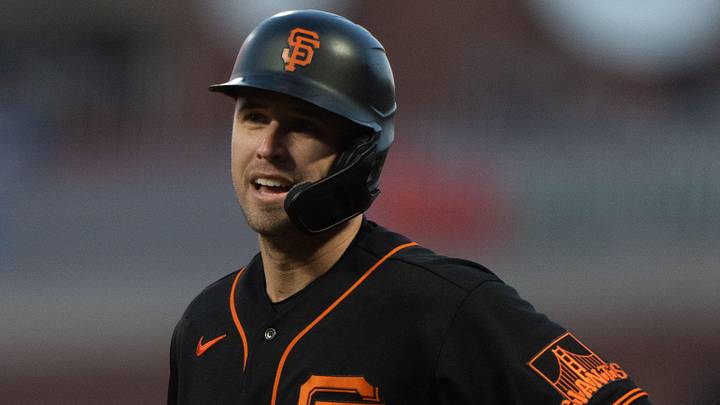
Buster Posey: A Hall of Famer
The special achievements made Posey one of the most famous players of his era: Rookie of the Year, MVP, batting champion, seven-time All-Star and three-time world champion. There have been 129 players who have caught 1,000 games in the majors. Only six of them are career .300 hitters: Hall of Famers Mickey Cochrane, Bill Dickey, Mike Piazza and Ernie Lombardi, as well as Virgil Davis and Posey. Piazza and Posey are the only catchers to hit .300 for their career in the past 80 years.
Pablo Sandoval: Fun while it lasted
A legend in seven years with the Giants, Sandoval won two World Series, hit three homers in a World Series game, made two All-Star teams, posted a 123 OPS+ and sold thousands of fuzzy panda hats. He was a gifted hitter who could barrel up most any pitch, even those well out of the strike zone. But his penchant for chasing and his thick body quickly caught up with him, especially after signing a five-year, $95 million contract with the Red Sox. In his post-Giants career, spanning only 511 games over seven years, Sandoval slashed .239/.294/.393 for an OPS+ of 83.
Ervin Santana: Valuable innings eater
He made two All-Star teams, threw a no-hitter and posted a winning record (151–129). He made 30 starts nine times, including five seasons in a row. His durability was impressive, but his career ERA+ (101) and postseason record (1–5, 6.57 ERA) fall short of greatness.
Kyle Seager: A good but largely anonymous career
In 2021 at age 33, Seager set career highs in home runs (35) and RBI (101). Once the Mariners, his original team, made it clear they did not want him back, he quit. Seager and David Ortiz are the only players to retire after hitting 35 homers and driving in 100. A $103 million career earner, he made one All-Star team, never played in the postseason and, playing in pitcher-friendly T-Mobile Park, hit .238 at home and .262 on the road.

Joakim Soria: Mexico’s greatest reliever
Soria pitched for nine teams over 14 seasons while appearing in more games (773, all but one in relief) and saving more games (229) than any pitcher born in Mexico. Oddity: he never took a plate appearance, falling 13 games short of the record held by Buddy Groom.
Ryan Zimmerman: Mr. National or Mr. Walk-off
You know you’ve made an imprint on the game when you take two nicknames into posterity. Zimmerman played all 16 seasons with the Nats while representing the franchise and game well, and while smashing 11 walk-off homers, including the game-winner to open Nationals Park in 2008. He was selected fourth overall in what looked like an historic 2005 draft, which also included Bruce, but in which none of the first rounders are bound for the Hall of Fame. Zimmerman ranks fourth in WAR among the first-round picks, behind Andrew McCutchen, Ryan Braun and Troy Tulowitzki.
 Add us as a preferred source on Google

Tom Verducci is a senior writer for Sports Illustrated who has covered Major League Baseball since 1981. He also serves as an analyst for FOX Sports and the MLB Network; is a New York Times best-selling author; and cohosts The Book of Joe podcast with Joe Maddon. A five-time Emmy Award winner across three categories (studio analyst, reporter, short form writing) and nominated in a fourth (game analyst), he is a three-time National Sportswriter of the Year winner, two-time National Magazine Award finalist, and a Penn State Distinguished Alumnus Award recipient. Verducci is a member of the National Sports Media Hall of Fame, Baseball Writers Association of America (including past New York chapter chairman) and a Baseball Hall of Fame voter since 1993. He also is the only writer to be a game analyst for World Series telecasts. He lives in New Jersey with his wife, with whom he has two children.