
Hal Steinbrenner’s Support for Aaron Judge’s ‘All-In’ Demand Shows What Mariners Owed Cal Raleigh
In this story:
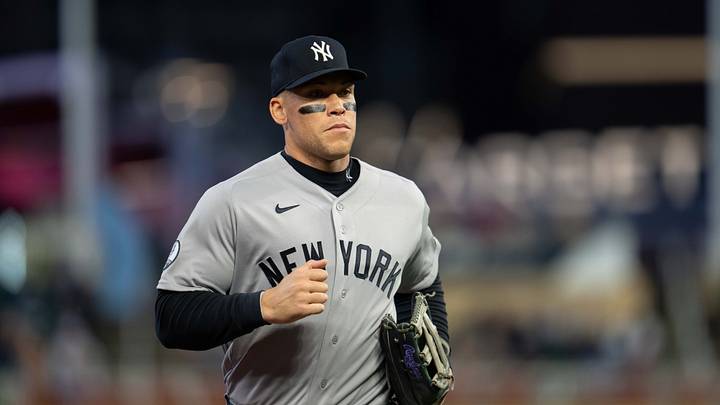
Hal Steinbrenner offered a pretty reasonable response to a superstar asking his organization for more. For Mariners fans, his handling of Aaron Judge’s challenge brought back an uncomfortable memory of Cal Raleigh’s own.
After Judge called for the Yankees to go all-in, Steinbrenner said he wasn’t upset. Players should expect ownership to do everything it can to assemble a championship contender, he acknowledged. He described expectations between players and ownership as a “two-way street.”
That’s fair. If a franchise expects its best player to spend every winter preparing to win a championship, that player should expect a similar commitment from the people building his team. Cal Raleigh deserved that same understanding in 2023.
Instead, part of Seattle’s conversation became whether its catcher had gone too far by saying the Mariners needed more established talent. Raleigh returned the following day to apologize for how his comments might have landed with teammates and coaches.
Three years later, Hal’s response gives us a useful example of how ownership can handle that moment. Accept the expectation. Explain your position. Take responsibility for your part. Then build a roster that makes the conversation worth something.
Cal Raleigh’s Apology Never Erased His Point About the Mariners
The context behind Raleigh’s comments matter. Seattle had broken its 21-year postseason drought in 2022. The next season carried the expectation that the organization would build on that breakthrough. When the Mariners were eliminated in 2023, Raleigh pointed toward a Rangers team that had aggressively acquired established players.
His argument was that Seattle needed more players with a record of succeeding in the majors to help the talent already in its clubhouse. We can understand why teammates might hear something uncomfortable in his statement. Asking for better players inevitably raises questions about the players already there. Surely, Raleigh cared enough about those relationships to clarify himself.
But look at what that follow-up contained. He apologized, reaffirmed his affection for his teammates and coaches, and accepted responsibility for the team falling short. He also maintained his commitment to bringing Seattle a World Series.
Ty France said he didn’t think anyone in the clubhouse had an issue with Raleigh’s comments. The Mariners manager at that time was Scott Servais, he characterized the episode as a learning experience for his catcher. Those details belong in the story because they show how much attention went toward managing the delivery of a fairly ordinary competitive demand.
One distinction matters in this case. MLB.com reported that Raleigh chose to apologize because he was worried about how teammates might interpret his comments. There’s no need to speculate about pressure behind the scenes. His call for more help deserved ownership’s public support either way.
The case for stronger ownership support stands on its own. Raleigh could take care of his clubhouse relationships while the people above him publicly accepted the substance of his challenge.
A player asking the organization to acquire more help has identified a responsibility that belongs to somebody else. Ownership should be comfortable acknowledging that.
Hal Steinbrenner Set an Ownership Standard John Stanton Should Embrace
Steinbrenner’s response deserves its full context, too.
He defended the Yankees’ investment and said he believed the organization had already gone all-in. He also pointed to his own expectations of players, including preparation and following the direction of coaches and training staff.
Hal wasn’t conceding that Judge’s assessment of the Yankees was correct in every respect. He was accepting Judge’s right to expect championship support from ownership.
That’s the useful standard for John Stanton.
We expect Raleigh to show up prepared, handle a demanding position, help guide a pitching staff, produce offensively and lead through the miserable parts of a season. When the team struggles, we expect him to stand in front of reporters and answer for it.
Ownership should answer for its decisions just as players answer for their performance. Stanton determines the financial support available to Seattle’s baseball operations department. Jerry Dipoto and Justin Hollander determine how effectively the Mariners use those resources. Each has a part in giving Raleigh and his teammates a credible chance to win.
Cal Raleigh’s end of the bargain is visible every night. Ownership’s should be visible every offseason.
Seattle and New York have different financial circumstances. We can keep those differences in mind while expecting both ownership groups to support the ambitions they sell to their players and fans. The standard is the effort they put in to solve the team’s problems.
The Mariners’ Progress Makes Sustained Contention the Next Test
As we discussed in our earlier Judge–Raleigh comparison, Seattle has made meaningful progress since Raleigh spoke in 2023. They acquired Randy Arozarena, extended Raleigh and won the AL West in 2025. They almost made the World Series. Then followed that effort with a 76-86 season in 2026 and another postseason spent watching from home.
The Raleigh extension kept Seattle’s catcher in place. The 2025 run showed how much this team could accomplish. This winter, Stanton, Dipoto and Hollander need to explain that drop through the problems they fix.
Start with Randy Arozarena. With his free agency approaching, Seattle needs to make a serious effort to retain him or acquire someone capable of replacing his production. Letting him leave would create another assignment for a front office that already has plenty. Michael Arroyo and Lazaro Montes deserve opportunities, but asking them to replace an established middle-of-the-order hitter would turn their development into the club’s insurance policy.
We should expect better seasons from Julio Rodríguez, Raleigh and Josh Naylor. Dipoto and Hollander still need to add enough offense that a slow start from those three doesn’t immediately become a teamwide emergency. Colt Emerson has his own adjustments to make after an uneven rookie season and wrist surgery. Seattle can give its young hitters room to grow by putting more dependable major-league bats around them.
The bench is a big part of that obligation. If Arroyo needs a favorable matchup or Emerson needs a day off, the next manager should have somebody to plug into the lineup that can make an impact. A player’s ability to stand at several positions only helps so much if every start weakens the offense. Seattle needs reserves the manager will actually want to use before an injury forces his hand.
The bullpen is also a problem. Matt Brash’s lat injury ended his season, and Andrés Muñoz finished with a 4.24 ERA. That should be enough to end any offseason plan that locks their names into the eighth and ninth innings and moves along.
Adrián Morejón, Raisel Iglesias and Jason Adam are examples of experienced relief options worth evaluating, with their availability and price determining the fit. Seattle needs another pitcher it can trust with enough support that Brash’s health doesn’t dictate the entire late-inning plan.
That’s what supporting not only Raleigh, but this team looks like in practice. It sounds like practical tests for the Mariners ownership group. We can judge the answers by looking at the roster and the workload each player is being asked to carry.
Hal’s response to Judge supplied a sensible starting point: players can have expectations of ownership, too. Raleigh had already earned that consideration when he spoke in 2023. Seattle’s responsibility now is to follow through with enough support to make contention last.
 Add us as a preferred source on Google

Tremayne Person is the Publisher for Mariners On SI and the Site Expert at Friars on Base, with additional bylines across FanSided’s MLB division. He founded the Keep It Electric podcast in 2023 and covers baseball with a blend of analysis, context, and a little well-timed side-eye just to keep things honest. Tremayne grew up a Mariners fan in Richmond, Va., and that passion ultimately led him to move to Seattle to cover the team closely and become a regular at home games. Through his writing, he connects with fans who want a deeper, more personal understanding of the game. When he’s not at T-Mobile Park, he’s with his dog, gaming, or finding the next storyline worth digging into.
Follow TremaynePerson