%20%20--%3E%0A%3Csvg%20version%3D%221.1%22%20id%3D%22Layer_1%22%20xmlns%3D%22http%3A%2F%2Fwww.w3.org%2F2000%2Fsvg%22%20xmlns%3Axlink%3D%22http%3A%2F%2Fwww.w3.org%2F1999%2Fxlink%22%20x%3D%220px%22%20y%3D%220px%22%0A%09%20width%3D%2239px%22%20height%3D%2240px%22%20viewBox%3D%220%200%2039%2040%22%20enable-background%3D%22new%200%200%2039%2040%22%20xml%3Aspace%3D%22preserve%22%3E%0A%3Cpath%20fill%3D%22%23FFFFFF%22%20d%3D%22M38.5%2C7H28.2v26h10.3V7z%22%2F%3E%0A%3Cpath%20fill-rule%3D%22evenodd%22%20clip-rule%3D%22evenodd%22%20fill%3D%22%23FFFFFF%22%20d%3D%22M26.1%2C25.5c0%2C5.8-4.1%2C7.5-12.9%2C7.5C3.9%2C33%2C0%2C31.2%2C0%2C25.2v-1.1h11.6%0A%09v2.4c0%2C0.7%2C0.1%2C1.4%2C1.2%2C1.4c1%2C0%2C1.2-0.4%2C1.2-1.3v-0.9c0-1.6-0.9-1.6-3.5-2.2C2.2%2C21.7%2C0%2C19.7%2C0%2C15.3v-0.9C0%2C9.3%2C5.5%2C7%2C12.9%2C7%0A%09c10.2%2C0%2C12.8%2C2.6%2C12.8%2C7.4v1.8h-11v-2.9c0-0.6-0.4-1.1-1.2-1.1c-0.6%2C0-1.2%2C0.4-1.2%2C1.1v0.9c0%2C1.5%2C0.9%2C2%2C3.3%2C2.5%0A%09c8%2C1.6%2C10.5%2C3.3%2C10.5%2C7.5V25.5z%22%2F%3E%0A%3C%2Fsvg%3E%0A)
The Five Most Likely 2026 NFL Draft Busts in the NFC
In this story:
First-round grades | Rounds 2-3 grades | Team grades | NFL draft takeaways | Best and worst | Way-too-early mock draft | Best picks of the draft
The time has come for my least favorite story of the year.
It’s extremely difficult to predict which NFL draft picks won’t pan out, especially one week after the draft, but we know not every selection will be considered a success.
This draft class lacked cornerstone potential, according to many scouts, coaches and draft experts. Injury history and lack of size mattered a lot more than in previous years because the talent and upside weren’t enough to outweigh some of the risks these 2026 draftees carried.
I’m sure I’ll look foolish about some of these players being on this list, but here we go: my top five most likely draft busts from the NFC.
5. Jordyn Tyson, WR, Saints
I believe Tyson has the most upside of the wide receivers in his draft class, and he might be the only one with superstar potential. One assistant GM told Sports Illustrated’s Albert Breer that Tyson has a skill set similar to that of Justin Jefferson. With that said, Tyson making this list is not about talent; it’s about his extensive injury history.
He sustained a significant injury in all three of his collegiate seasons and was forced to redshirt his second year due to a knee injury sustained as a freshman while at Colorado before transferring to Arizona State. As for a different concern, Tyson’s new teammate, Chris Olave, has dealt with injuries in the past, and if he’s not available at some point in 2026, that would thrust the rookie Tyson into the fire early as Tyler Shough’s No. 1 option. Shough also dealt with multiple injuries in college, giving this new trio in New Orleans plenty of boom-or-bust potential.
However, it’s difficult to fault the Saints for putting aside Tyson’s injuries and rolling the dice on him with the No. 8 pick. He has reliable hands, can make plays downfield and gets open in a hurry. Taking Tyson that high will likely pay off if he, Shough and Olave all stay healthy moving forward.
4. Ty Simpson, QB, Rams
With all the negativity surrounding this pick, let’s start with the positives from the Rams taking Simpson at No. 13. He’s an accurate pocket passer who processes quickly on the field. Additionally, he played under a pro-style offense while working with Alabama offensive coordinator Ryan Grubb. And he’ll get time to learn coach Sean McVay’s offense while serving as Matthew Stafford’s backup. It’s rare for first-round QBs to sit for an entire season, but the success rate seems to increase for those who wait, with Patrick Mahomes, Jordan Love and Aaron Rodgers being notable examples.
Now, for the cons of this highly scrutinized pick. Simpson started only 15 collegiate games, all in 2025, and hit a noticeable wall in the second half of that season. Whenever Simpson takes over in L.A., he’s going to need the team to accept his growing pains to make up for the lack of reps. Then again, Simpson’s accuracy and high football IQ could make him a quality game manager from the jump, similar to what Brock Purdy did for the 49ers at the start of his career.
But Simpson lacks athleticism and size as a 6' 1", 211-pound signal-caller. As for a bigger concern, if Simpson wasn’t McVay’s guy—a lot was made about his mannerisms with reporters following the shocking selection—there’s the chance the offensive guru leaves for the TV booth once Stafford retires.

3. Monroe Freeling, OT, Panthers
I say this often, but it bears repeating: It’s rarely a bad idea to select offensive linemen in the draft. However, in this case, the Panthers might have played it too safe with their No. 19 pick.
They already had enough depth at tackle after signing Rasheed Walker to possibly start for the injured left tackle, Ikem Ekwonu. On the right side, veteran Taylor Moton is coming off a strong year and is signed through the 2027 season (the team could cut him after this season with few consequences).
Unless more injuries occur at tackle, it seems Freeling is headed for the bench as a rookie, and it’s not a given he’ll get a starting job in Year 2. Perhaps Freeling outplays Walker and Moton in training camp and forces coach Dave Canales to find a starting spot for the Georgia product, who made 18 collegiate starts on the left side.
If that’s not the case, the Panthers likely won’t have an impactful player with their first pick in 2026. After winning the subpar NFC South last year, it’s time to make the most of the recent success under Canales.
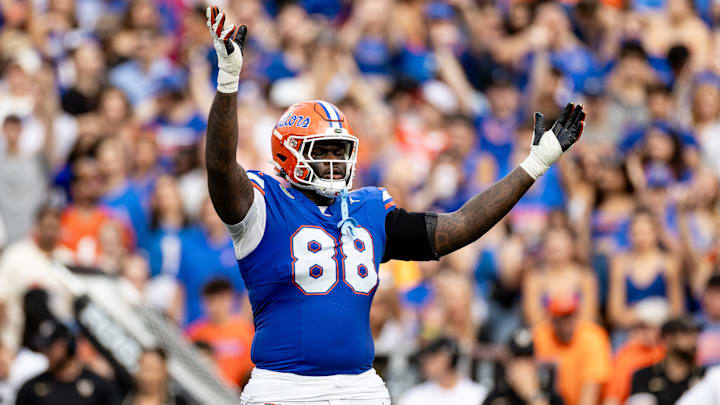
2. Caleb Banks, DT, Vikings
The Vikings may have taken the biggest gamble of the first round. They selected Banks at No. 18 despite him breaking his left foot twice in the past year, with the first injury limiting him to three games during his final year at Florida.
Minnesota’s decision-makers must have noted Banks’s high ceiling while he was at the Senior Bowl. However, it was later reported that he injured his foot again at the scouting combine, requiring surgery and knocking him out for most of the offseason. He’s on track to be available by training camp, but foot injuries are always tricky for players of his size.
If the 6' 6", 327-pound interior defender can’t stay healthy, the Vikings might have regrets about not going with Peter Woods, who was selected by the Chiefs later in the first round, or Kayden McDonald, who surprisingly was available for the Texans in the second round.
However, the Vikings did protect themselves by using a third-round pick on defensive tackle Domonique Orange, but he’s more of a run stopper and not as versatile as Banks. Minnesota has long coveted better options on the inside, and it didn’t work out last year with veterans Jonathan Allen and Javon Hargrave. This team really needs Banks to be available throughout his rookie season.
1. Rueben Bain Jr., edge, Buccaneers
It was difficult to list Bain for this story because he’s a relentless player who seems determined to prove the critics wrong. Still, it’s hard to ignore the data and chatter from coaches and scouts who believe Bain will have trouble in the NFL due to his 30 7/8-inch arms, well below the ideal length for edge rushers drafted in the first round.
As for comparison, David Bailey, the No. 2 pick, has 34-inch arms, and Arvell Reese, the No. 5 selection, has 32½-inch arms. So it’s not a surprise that Bain had to wait until pick No. 15 to hear his name called, even though his production at Miami last year was as good, if not better than the two edge rushers who went ahead of him.
But Bain landed in an ideal situation with a coaching staff that will likely know how to play around his limitations. The problem, though, is that Bain’s short arms could limit him to being a consistent, reliable starting-caliber player instead of one day developing into an All-Pro.
With that kind of high-floor, low-ceiling outlook, perhaps it would have been better for Tampa Bay to trade down with hopes of landing Bain in the back end of the first round. Akheem Mesidor, Malachi Lawrence and Keldric Faulk were the other edge players drafted in the first round, all of whom have ideal size for the position and were selected after pick No. 21.
More NFL from Sports Illustrated
 Add us as a preferred source on Google
Gilberto Manzano is a staff writer covering the NFL for Sports Illustrated. After starting off as a breaking news writer at NFL.com in 2014, he worked as the Raiders beat reporter for the Las Vegas Review-Journal and covered the Chargers and Rams for the Orange County Register and Los Angeles Daily News. During his time as a combat sports reporter, he was awarded best sports spot story of 2018 by the Nevada Press Association for his coverage of the Conor McGregor-Khabib Nurmagomedov post-fight brawl. Manzano, a first-generation Mexican-American with parents from Nayarit, Mexico, is the cohost of Compas on the Beat, a sports and culture show featuring Mexican-American journalists. He has been a member of the Pro Football Writers of America since 2017.
Follow gmanzano24