%20%20--%3E%0A%3Csvg%20version%3D%221.1%22%20id%3D%22Layer_1%22%20xmlns%3D%22http%3A%2F%2Fwww.w3.org%2F2000%2Fsvg%22%20xmlns%3Axlink%3D%22http%3A%2F%2Fwww.w3.org%2F1999%2Fxlink%22%20x%3D%220px%22%20y%3D%220px%22%0A%09%20width%3D%2239px%22%20height%3D%2240px%22%20viewBox%3D%220%200%2039%2040%22%20enable-background%3D%22new%200%200%2039%2040%22%20xml%3Aspace%3D%22preserve%22%3E%0A%3Cpath%20fill%3D%22%23FFFFFF%22%20d%3D%22M38.5%2C7H28.2v26h10.3V7z%22%2F%3E%0A%3Cpath%20fill-rule%3D%22evenodd%22%20clip-rule%3D%22evenodd%22%20fill%3D%22%23FFFFFF%22%20d%3D%22M26.1%2C25.5c0%2C5.8-4.1%2C7.5-12.9%2C7.5C3.9%2C33%2C0%2C31.2%2C0%2C25.2v-1.1h11.6%0A%09v2.4c0%2C0.7%2C0.1%2C1.4%2C1.2%2C1.4c1%2C0%2C1.2-0.4%2C1.2-1.3v-0.9c0-1.6-0.9-1.6-3.5-2.2C2.2%2C21.7%2C0%2C19.7%2C0%2C15.3v-0.9C0%2C9.3%2C5.5%2C7%2C12.9%2C7%0A%09c10.2%2C0%2C12.8%2C2.6%2C12.8%2C7.4v1.8h-11v-2.9c0-0.6-0.4-1.1-1.2-1.1c-0.6%2C0-1.2%2C0.4-1.2%2C1.1v0.9c0%2C1.5%2C0.9%2C2%2C3.3%2C2.5%0A%09c8%2C1.6%2C10.5%2C3.3%2C10.5%2C7.5V25.5z%22%2F%3E%0A%3C%2Fsvg%3E%0A)
Mauricio Pochettino Feels Like the Right Manager at the Right Time for Man Utd
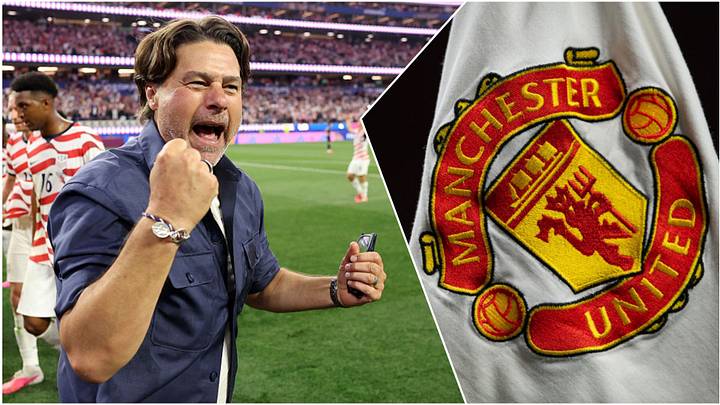
“United have always shown interest. But the ideal scenario to manage there has never quite materialized,” Mauricio Pochettino said in an interview with FourFourTwo magazine a few months ago.
Now, at least 10 years into the story, the stars have finally aligned.
Manchester United communicated the decision to fire Michael Carrick on Thursday. What became clear was the club’s gratitude for Carrick’s impact during his interim leadership last season, guiding the Red Devils to 12 wins from 17 games and back into the Champions League.
But of a review of the head coach’s position ultimately determined that, after a surprisingly poor start to 2026–27, a team with quality with far and above its 18th place in the Premier League standings needed fresh direction from an alternative candidate.
Pochettino was sounded out before the axe fell on Carrick, seemingly with the intent of ensuring that United are not left leaderless even for just a short period.
The Argentine punched up with Southampton when he first arrived in England, then led Tottenham Hotspur to three successive top three finishes—including the club’s best in 54 years and the only Champions League final in their history.
His time with Paris Saint-Germain was a challenge, unsuccessfully wrestling with the superstar culture that was later proven to be holding the club back, before butting heads with Chelsea’s sporting hierarchy during a frustrating season. That experience at Stamford Bridge will have to have been part of Pochettino’s though process when weighing up the United offer to ensure that he will walk into a structure that he believes he can work and thrive in. He’s clearly satisfied.
The United States men’s national team didn’t do as well at the summer’s home World Cup as Pochettino or the American public might have been hoping. But U.S. Soccer had seen enough in the 54-year-old since his appointment in 2024 to make his second contract go far deeper than simply coaching the senior men’s roster, instead asking him to influence and consult on strategy and long-term development of the wider sport across the country.
MORE ON MAURICIO POCHETTINO’S IMMINENT ARRIVAL AT MAN UTD
• Man Utd Agree Contract With Mauricio Pochettino Ahead of Appointment
• The Story of Man Utd’s 10-Year Interest in Mauricio Pochettino
• How Mauricio Pochettino’s Buyout Clause Compares to Alternatives
• Four USMNT Players Mauricio Pochettino Could Target for Man Utd
Common Ground With Man Utd’s Iconic Figurehead

It was 40 years ago this month that Alex Ferguson walked through the door at Old Trafford, the man tasked with restoring greatness to Manchester United.
When Ferguson was poached from Scotland’s Aberdeen in November 1986, United sat 19th (out of 22) in the league standings. You can’t ignore the similarities, as Pochettino now inherits a team that fell into the Premier League relegation zone prior to the international break.
He has come to personally know the legendary Scot, who had completely transformed the club within a few years and later masterminded 13 English championship triumphs. They dined together in 2016, around the first time that Pochettino was heavily linked with United—although it was “a meeting between colleagues” and little more—and Ferguson has shared his wisdom with the Argentine, who has never been shy about his admiration.
Interviewed in Guillem Balague’s 2017 book, Brave New World, Pochettino said, “[Ferguson] spoke to me about how he had to restructure everything when he arrived at United. He did so in keeping with his own philosophy, even though they finished 11th two years out of three, followed by 13th, sixth, second and only after that did he achieve league success.
“His Manchester United side were like the Tottenham team that I inherited when I took over and the chat reassured me about following my own path.”
Three years later, Pochettino spoke about the relationship to Sky Sports, discussing the man management that goes beyond on-field tactics which made Ferguson so successful.
“When you get to know him, you admire him more and realise why he was very successfully,” Pochettino, then in between jobs, said. “Not only in winning trophies but also in the way he managed people. He is a person who knows the human side is so important. For his strategy, to create an organization so capable of winning trophies and being so successful.”
A Style Match for the Man Utd Way

Manchester United demands a certain type of soccer and a certain type of person to understand that. Pochettino seems to ticks the box.
It is what gets classified as the ‘United Way,’ which ended up being the title of a documentary film released in 2021 that shone a light on the club’s history from the Busby Babes era of the 1950s up to the 1999 Champions League final that completed the treble.
Fans want to see intensity, speed and flair in equal measure. It requires immense physicality, stamina and determination, and has been a consistent theme of every successful period the club has had.
Pochettino counts compatriot Marcelo Bielsa, someone he played under for Newell’s Old Boys, Espanyol and Argentina’s national team, as perhaps his greatest coaching influence. Indeed, the 71-year-old is what he calls his “football father.”
Bielsa has managed teams all across Europe and Latin America over the past 30 years—including in the Premier League—but United fans will recall his Athletic Club side that blew Ferguson’s Red Devils away during an encounter at Old Trafford in 2012.
Athletic Club were described in one contemporary match report as “fearless” and praised for the “energetic and aggressive” approach to the game that left United floored. Only “several superb saves” from David de Gea prevented a more one-sided scoreline than 3–2.
The same philosophy that Bielsa preaches forms Pochettino’s core coaching, favoring attacking soccer built on pressing, quick transitions, width, overlaps and overloads. It feels very ‘Manchester United’ as outlined through history—all the way from Busby to Ferguson.
Commitment to Youth Development

This is another key pillar of what Manchester United stands for, dating back to 1937 when the club’s junior division was first created. Carrick, as an Old Trafford legend himself, bought into this and single-handedly resurrected Kobbie Mainoo’s career alongside giving chances to Shea Lacey, but it’s something that Pochettino is big on as well and that is important.
During this season’s first international break, Pochettino named 11 uncapped players aged 20 or younger on the USMNT roster—eight were teenagers. He is prepared to take a chance on those he thinks are good enough and refuses to pay tribute to reputation over performance.
“Everyone says, ‘Oh, that name needs to be here because of the past,’” he told reporters when explaining his youth-oriented fall selection. “No, no, now it’s a fresh start. It’s a new start. All [players] have the door open, but it’s not what [he] did in the past.”
United’s squad is full of young players with potential who need coaching and nurturing to unlock their full potential. The likes of Leny Yoro, Ayden Heaven, even the aforementioned Mainoo, remain raw, unpolished gems that could yet be the cornerstones of future success. Carlos Baleba is only 22 years old, so are Patrick Dorgu and Andrey Santos. Senne Lammens in 24, still young for a goalkeeper, and Amad Diallo is also yet to peak—25 next year.
Then, what could Pochettino do with a Kai Rooney? Harry Kane might know a thing or two …
What Pochettino’s Players Have Said About Him

The 2026 Ballon d’Or winner had played 26 games for Tottenham and scored five goals when Pochettino walked through the door in the summer of 2014. The new manager put his faith in the young striker about to celebrate his 21st birthday, finishing the season with 31 goals to repay it.
Kane exploded physically under Pochettino as much as anything else, fitter, stronger, quicker than he’d been before. “A lot of that has do with the manager,” Kane commented in a BBC Sport interview in March 2015, noting that Pochettino set him to work in the gym to achieve it.
That physical development went hand in hand with the extra confidence that Kane needed to unlock the full potential of his vast technical ability. “When you’ve got a manager that works on things that can improve you, you see it come together and it’s been working well.”
But it's not just the physical. Later that same year, Kane spoke about the positional guidance he’d also had from Pochettino. “He did a lot of work with me around the box, penalty area movement. He’s a [former] defender and knows what to come up against as a striker. Little tips.”
By 2021, discussing his career with Gary Neville in an interview for The Overlap, Kane summarized Pochettino as having been the “perfect” manager for him during those Spurs years.
Another former Tottenham star, Son Heung-min, credits Pochettino massively for what he has achieved in his own career, telling reporters last year: “He made me the player I am.”
Even Lionel Messi, although not made by Pochettino, values him as a manager, explaining that knowing he was there was “important in my decision making” to join PSG in 2021.
PSG captain Marquinhos called Pochettino an “exceptional coach” when the manager first arrived in Paris, while ex-Spurs fullback Kyle Walker spoke in 2016 about another side of the game, the man management skills Pochettino took from Ferguson’s example. “He knows what’s going on in your head if you’re not playing enough.”
 Add us as a preferred source on Google

Jamie Spencer is a writer and editor for SI FC. Jamie grew up in Manchester, England, in the 1990s and fell in love with the game at the same time as the Premier League was taking off. With more than a decade of experience behind him in sports media, he specializes in Manchester United and the overall Premier League, still living in England’s north-west soccer hotbed. Jamie is also an expert on the women’s game and enjoys old school nostalgia, telling stories from soccer’s rich history and culture.