%20%20--%3E%0A%3Csvg%20version%3D%221.1%22%20id%3D%22Layer_1%22%20xmlns%3D%22http%3A%2F%2Fwww.w3.org%2F2000%2Fsvg%22%20xmlns%3Axlink%3D%22http%3A%2F%2Fwww.w3.org%2F1999%2Fxlink%22%20x%3D%220px%22%20y%3D%220px%22%0A%09%20width%3D%2239px%22%20height%3D%2240px%22%20viewBox%3D%220%200%2039%2040%22%20enable-background%3D%22new%200%200%2039%2040%22%20xml%3Aspace%3D%22preserve%22%3E%0A%3Cpath%20fill%3D%22%23FFFFFF%22%20d%3D%22M38.5%2C7H28.2v26h10.3V7z%22%2F%3E%0A%3Cpath%20fill-rule%3D%22evenodd%22%20clip-rule%3D%22evenodd%22%20fill%3D%22%23FFFFFF%22%20d%3D%22M26.1%2C25.5c0%2C5.8-4.1%2C7.5-12.9%2C7.5C3.9%2C33%2C0%2C31.2%2C0%2C25.2v-1.1h11.6%0A%09v2.4c0%2C0.7%2C0.1%2C1.4%2C1.2%2C1.4c1%2C0%2C1.2-0.4%2C1.2-1.3v-0.9c0-1.6-0.9-1.6-3.5-2.2C2.2%2C21.7%2C0%2C19.7%2C0%2C15.3v-0.9C0%2C9.3%2C5.5%2C7%2C12.9%2C7%0A%09c10.2%2C0%2C12.8%2C2.6%2C12.8%2C7.4v1.8h-11v-2.9c0-0.6-0.4-1.1-1.2-1.1c-0.6%2C0-1.2%2C0.4-1.2%2C1.1v0.9c0%2C1.5%2C0.9%2C2%2C3.3%2C2.5%0A%09c8%2C1.6%2C10.5%2C3.3%2C10.5%2C7.5V25.5z%22%2F%3E%0A%3C%2Fsvg%3E%0A)
Soccer Fandom in U.S. Sees Unprecedented Surge Following 2026 World Cup
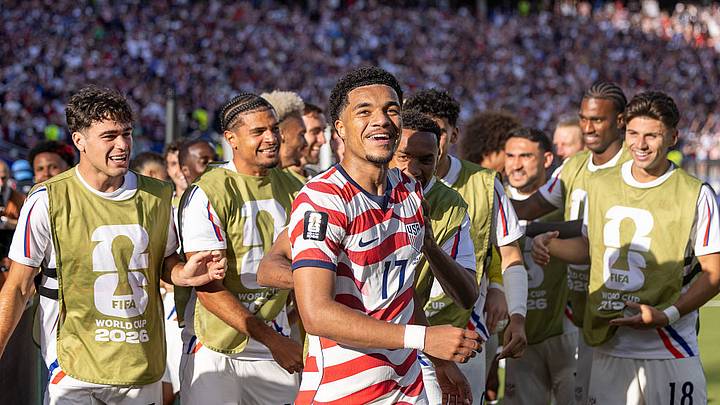
When the U.S. won the bid to co-host the 2026 World Cup, one of its main missions was to foster greater interest in soccer across the nation The outcome of that mission has been nothing short of a spectacular success, per a recently released report.
According to research insights group Nielsen, the number of soccer fans in the U.S. has grown by almost 10 million over the past year. Their report indicates that the number of U.S. people who identify as soccer fans rose from 66.8 million to 75.2 million from July 2025 to July 2026, representing a growth of 13%.
The U.S. men’s national team’s thrilling journey to the World Cup round of 16 on home soil no doubt helped ignite that flame of popularity.
“The FIFA World Cup 2026 has served as a powerful catalyst for soccer's explosive growth across North America,” Nielsen’s global head of sports Seth Ladetsky said, per The Athletic. “Our data shows that fandom is not only reaching record highs, but it is also expanding rapidly among younger, diverse audiences and carrying over into major domestic and international leagues.”
In a matter of four years between World Cups, there’s been a 27% increase in soccer fandom across the U.S., with soccer welcoming 16 million new fans. That surge is further evidenced by the unprecedented 2026 World Cup viewership numbers.
World Cup Viewership Reaches Record High in the U.S.

Prior to 2026, the most watched non-USMNT soccer match in U.S. history was Argentina’s win over France in the memorable 2022 World Cup final, with a viewership of 22.3 million. Fast forward four years, and that record was shattered in Spain’s victory against Argentina in the 2026 World Cup final, a game that registered a viewership of 62.8 million in the U.S., per Nielsen.
The 2026 World Cup final is the most watched soccer game in U.S. history, and February’s Super Bowl LX is the only 2026 broadcast with a higher U.S. viewership number this year (124.9 million).
The NFL remains king among sports leagues in the U.S.; however, to put soccer’s rising viewership numbers further into perspective, three 2026 World Cup games broke the previous record for the most-watched non-NFL sports broadcast in U.S. history. The record was previously owned by Game 7 of the 2016 World Series between the Chicago Cubs and the now-Cleveland Guardians, which had a record audience of 40 million.
The Five Most-Watched 2026 World Cup Games in the U.S.
Match | Round | Viewership Number |
|---|---|---|
Spain vs. Argentina | Final | 62.8 million |
USMNT vs. Belgium | Round of 16 | 45.9 million |
Mexico vs. England | Round of 16 | 44.9 million |
USMNT vs. Bosnia-Herzegovina | Round of 32 | 36.2 million |
England vs. Norway | Quarterfinal | 34.8 million |
How Soccer Can Continue to Grow in the U.S.

The challenge now is to progress soccer’s surging popularity in the U.S. over the next four years before the 2030 World Cup comes around. For now, this mission is trending in the right direction.
According to Nielsen’s report, MLS viewership on Fox and FS1“is up 55% among men 18–34 and 29% among adults 18–34 compared to before the tournament [2026 World Cup].”
Other league such as La Liga and the Premier League—the most watched soccer league in the U.S.—have enjoyed significant spikes in U.S. viewership since the start of the 2026–27 season, of no less than 30%.
“People ask us all the time: ‘How’s it going after the World Cup?’” MLS commissioner Don Garber said recently during the Front Office Sports summit. “But that was only a few months ago—leaders of businesses need to think generationally. We started working on our World Cup plan in 2018 when U.S. Soccer won the bid.

“I keep telling our owners,” Garber added. “‘This is not about tomorrow. It’s about weeks and years after the World Cup when we’ll really capture the opportunity’. That said, our attendances are up, ratings are up, social media is up, merchandise is up—it helps to have Leo Messi—but the future of soccer is super bright because of all the things our stakeholders have done and a World Cup that will be remembered as the best of all time.”
There’s reason to be optimistic about American soccer. The USMNT won its first four post–2026 World Cup matches, thanks in large part to a crop of young debutants—many of them teenagers—that should become key players for Mauricio Pochettino during the 2030 cycle.
The majority of these young talents, such as record-breaking attackers Cavan Sullivan and Julian Hall, play for MLS clubs, and the league has already started to market its young USMNT stars as a new strategy to maintain its growing audience and perhaps even reach more fans.
Soccer has never been better platformed to finally establish itself among the most popular, mainstream sports in the U.S.
 Add us as a preferred source on Google
Roberto Casillas is a writer for SI FC, focusing primarily on FC Barcelona, the Mexico National Team, Liga MX and all things Latin American football. Born and raised in Mexico City, he developed a deep passion for football from an early age and fell in love with Cruz Azul. The once future star of Mexican football still likes to showcase what’s left of his talent on the Sunday league pitch. He’s also a big fan of the New England Patriots—so much so he moved to the region for four years—, Chicago Cubs and is a life-long Formula 1 follower. When he takes a break from sports, he enjoys traveling the world, watching the latest great TV show, going to concerts and spending plenty of time with friends and family.