%20%20--%3E%0A%3Csvg%20version%3D%221.1%22%20id%3D%22Layer_1%22%20xmlns%3D%22http%3A%2F%2Fwww.w3.org%2F2000%2Fsvg%22%20xmlns%3Axlink%3D%22http%3A%2F%2Fwww.w3.org%2F1999%2Fxlink%22%20x%3D%220px%22%20y%3D%220px%22%0A%09%20width%3D%2239px%22%20height%3D%2240px%22%20viewBox%3D%220%200%2039%2040%22%20enable-background%3D%22new%200%200%2039%2040%22%20xml%3Aspace%3D%22preserve%22%3E%0A%3Cpath%20fill%3D%22%23FFFFFF%22%20d%3D%22M38.5%2C7H28.2v26h10.3V7z%22%2F%3E%0A%3Cpath%20fill-rule%3D%22evenodd%22%20clip-rule%3D%22evenodd%22%20fill%3D%22%23FFFFFF%22%20d%3D%22M26.1%2C25.5c0%2C5.8-4.1%2C7.5-12.9%2C7.5C3.9%2C33%2C0%2C31.2%2C0%2C25.2v-1.1h11.6%0A%09v2.4c0%2C0.7%2C0.1%2C1.4%2C1.2%2C1.4c1%2C0%2C1.2-0.4%2C1.2-1.3v-0.9c0-1.6-0.9-1.6-3.5-2.2C2.2%2C21.7%2C0%2C19.7%2C0%2C15.3v-0.9C0%2C9.3%2C5.5%2C7%2C12.9%2C7%0A%09c10.2%2C0%2C12.8%2C2.6%2C12.8%2C7.4v1.8h-11v-2.9c0-0.6-0.4-1.1-1.2-1.1c-0.6%2C0-1.2%2C0.4-1.2%2C1.1v0.9c0%2C1.5%2C0.9%2C2%2C3.3%2C2.5%0A%09c8%2C1.6%2C10.5%2C3.3%2C10.5%2C7.5V25.5z%22%2F%3E%0A%3C%2Fsvg%3E%0A)
What Life After Cristiano Ronaldo Could Look Like for Portugal
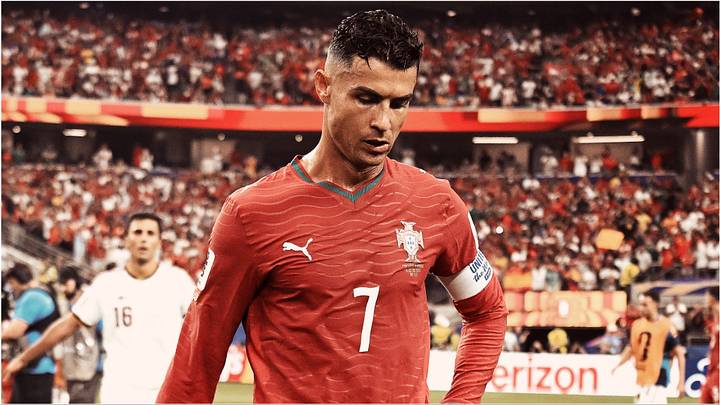
It ended not with a bang but a whimper in Dallas. Cristiano Ronaldo shed tears as his Portugal side fell to a late 1–0 defeat to Spain in the round of 16 at the World Cup.
The only fireworks were in Madeira as Ronaldo’s home island marked his international retirement by lighting up the sky with a drone display followed by the message “OBRIGADO, 7”.
At the AT&T Stadium, the 41-year-old was more or less anonymous for much of the match, taking just 19 touches all game, though he did force two shots on target.
It was an underwhelming World Cup overall for Ronaldo, who had briefly threatened to come alive at this tournament of superstars, screaming “I’m back” down the camera after a group stage brace against lowly Uzbekistan.
“I gave it my all,” he said, visibly emotional after the final whistle in Dallas, confirming this would be his final World Cup, with the trophy remaining elusive to his personal honors cabinet.
The tournament in 2030, then, will be the first since 2002 not to feature Portugal’s legendary No.7. Predictably, only Lionel Messi (31) has played in more World Cup matches than Ronaldo and no-one has featured in more tournaments (6).
It has been so long since Ronaldo wasn’t central for Portugal that it is hard to fathom what it will look like without him, but as one era ends another beckons.
Passenger Rather Than Protagonist

In truth, this was probably a tournament too far for Ronaldo, who—despite scoring three goals across five games in North America—was ineffectual as Portugal’s front man.
He played the full 90 in four out of five matches, with manager Roberto Martínez seemingly not having the bottle to sub off his superstar striker, no matter how much his team needed an attacking change-up.
In the end, the five-time Ballon d’Or winner became a lumbering liability in attack, unwilling or unable to press and link-up play. His instincts as an elite finisher may not have gone, but he now requires the entire team to play around him, rather than with him.
Former Premier League striker turned BBC Sport pundit Chris Sutton described Ronaldo as “waddling around the field like a grandad” in the Spain defeat, asking: “What is Roberto Martinez doing? How can you pander to a player so much?”
Martínez wasn’t the first Portugal manager to have to deal with the Ronaldo conundrum, with Fernando Santos famously catching flak for daring to bench the ageing forward during the 2022 World Cup. However, this is an issue the next Portugal boss will not have to face.
How Could Portugal Line Up Without Ronaldo?

So begins a new era in Portugal, who can now fully focus on the other (considerable) talent in its roster.
Few nations can boast such a stacked midfield. Double Champions League winners João Neves and Vitinha are among the world’s best midfielders—and young enough to return for multiple future tournaments. Bruno Fernandes ranks among the globe’s finest too, though at 31, it remains to be seen whether this might’ve also been his last shot at the big prize.
In defense, Portugal can also count on elite talent from some of Europe’s biggest club sides, including Rúben Días and Nuno Mendes, while Diogo Costa is a quality goalkeeper.
The issue for Portugal lies in attack. Martínez’s failed to score against both Colombia and Spain this summer and struggled badly to create good chances against DR Congo. Wingers João Felix, Pedro Neto and Rafael Leão have all shown flashes but lack consistency, while there is simply not a conveyor belt of top class strikers to pick from.
Possible Portugal Lineup Without Ronaldo

Ronaldo, ultimately, may not have become such an albatross for the national team in recent years had it had a truly outstanding candidate to replace him up front.
Gonçalo Ramos is the obvious candidate to become his country’s starting ‘nine’ and it was his header, after coming off the bench, that took Portugal past Croatia into the last 16. He also, famously, scored a hat trick against Switzerland after replacing Ronaldo at the 2022 World Cup. However, the 25-year-old is a patchy striker, who was relegated to the status of bit-parter at Paris Saint-Germain last season. Portugal fans will be watching eagerly to see if he can go to the next level and become the main man they need after a €74 million ($84 million) move to AC Milan this summer.
At the very least, he is a more mobile presence up top that will press and allow the creative midfielders more freedom to play in a system no longer centered around Ronaldo’s game and its limitations.
Pick Your Portugal XI for the Future!
Who Is Ronaldo’s Heir?

With Ronaldo’s exit, the Portugal team is not just losing a player, but a captain and focal point.
How the other players respond to being thrust into the spotlight with greater expectations to step up remains to be seen. Such was the former Real Madrid man’s star power that he sucked in all focus with his gravitational pull—good or bad.
From a commercial standpoint, there is simply no successor to Ronaldo, who ranks as one of social media’s most followed men (with over 673 million Instagram followers) and brings the world’s attention wherever he goes.
Fernandes and Felix may be huge names in the world of soccer but they do not have the global pull that Ronaldo does. Arguably, that will be a good thing for the team.
On the pitch, Fernandes, Dias and Bernardo Silva are candidates to inherit the armband, while the new manager will be able to draw on a wealth of top-tier experience from the likes of João Cancelo, Mendes and Vitinha. The real pressure will be on whoever inherits the No.7 shirt that has not just been synonymous with Ronaldo, but part of his identity.
Any and all future attacking wonderkids born in Portugal are also likely to face unhelpful Ronaldo comparisons from the moment they do something even vaguely impressive.
READ THE LATEST WORLD CUP NEWS, ANALYSIS AND INSIGHT FROM SI FC
 Add us as a preferred source on Google
Andy Headspeath is a Real Madrid correspondent for Sports Illustrated FC. Originally from the UK, the weather, culture and soccer lured him to Spain over a decade ago where he lives with his wife, son and two untrainable dogs. A player of unspeakably limited talents and only one fully functional knee, he has more than a decade's experience in a wide variety of editorial roles within sports media, from match reporting to in-depth feature writing and interviews. He specializes in soccer history and culture, as well as—of course—La Liga.