%20%20--%3E%0A%3Csvg%20version%3D%221.1%22%20id%3D%22Layer_1%22%20xmlns%3D%22http%3A%2F%2Fwww.w3.org%2F2000%2Fsvg%22%20xmlns%3Axlink%3D%22http%3A%2F%2Fwww.w3.org%2F1999%2Fxlink%22%20x%3D%220px%22%20y%3D%220px%22%0A%09%20width%3D%2239px%22%20height%3D%2240px%22%20viewBox%3D%220%200%2039%2040%22%20enable-background%3D%22new%200%200%2039%2040%22%20xml%3Aspace%3D%22preserve%22%3E%0A%3Cpath%20fill%3D%22%23FFFFFF%22%20d%3D%22M38.5%2C7H28.2v26h10.3V7z%22%2F%3E%0A%3Cpath%20fill-rule%3D%22evenodd%22%20clip-rule%3D%22evenodd%22%20fill%3D%22%23FFFFFF%22%20d%3D%22M26.1%2C25.5c0%2C5.8-4.1%2C7.5-12.9%2C7.5C3.9%2C33%2C0%2C31.2%2C0%2C25.2v-1.1h11.6%0A%09v2.4c0%2C0.7%2C0.1%2C1.4%2C1.2%2C1.4c1%2C0%2C1.2-0.4%2C1.2-1.3v-0.9c0-1.6-0.9-1.6-3.5-2.2C2.2%2C21.7%2C0%2C19.7%2C0%2C15.3v-0.9C0%2C9.3%2C5.5%2C7%2C12.9%2C7%0A%09c10.2%2C0%2C12.8%2C2.6%2C12.8%2C7.4v1.8h-11v-2.9c0-0.6-0.4-1.1-1.2-1.1c-0.6%2C0-1.2%2C0.4-1.2%2C1.1v0.9c0%2C1.5%2C0.9%2C2%2C3.3%2C2.5%0A%09c8%2C1.6%2C10.5%2C3.3%2C10.5%2C7.5V25.5z%22%2F%3E%0A%3C%2Fsvg%3E%0A)
The World Cup Has Exposed the NFL’s Turf Problem. Now It’s Time for Owners to Do Right By Their Players.
In this story:
Less than five minutes into the 2023 season that was going to change everything for the Jets, their fans were forced to hold their collective breath as Aaron Rodgers sat himself on the turf in disbelief. On just their fourth play from scrimmage, the newly acquired quarterback tore his left Achilles tendon as Bills defender Leonard Floyd took him down for a sack.
Season over. Done for the year.
The devastating turn of events not only put the kibosh on what was expected to be a turnaround season for a Jets team that desperately needed one, but also placed the league’s grass vs. turf debate to the forefront. Days after Rodgers’s injury, the NFLPA released a statement that called on the league to mandate the installation of grass surfaces in all NFL stadiums.
“[It’s] the easiest decision the NFL can make,” then executive director Lloyd Howell said. “The players overwhelmingly prefer it and the data is clear that grass is simply safer than artificial turf. It is an issue that has been near the top of the players’ list during my team visits and one I have raised with the NFL.”
Nearly three years later, however, little has changed. Fourteen of the league’s 30 stadiums are equipped with artificial playing surfaces—including East Rutherford, N.J.’s MetLife Stadium, the site of Rodgers’s fateful injury and one that has long been criticized by players for the staggering number of serious injuries suffered there.

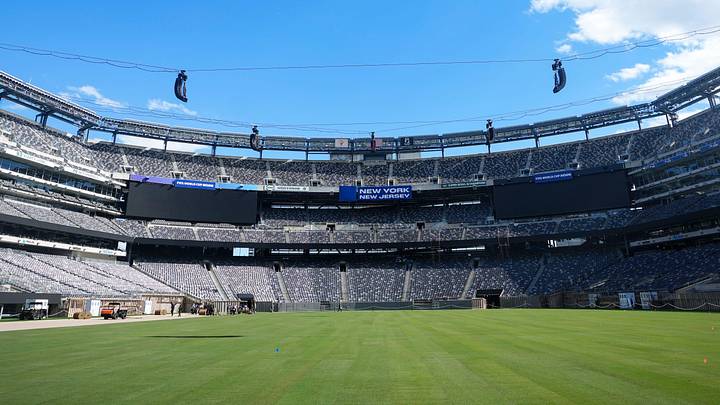
MetLife—err, New York/New Jersey Stadium—will also play host to the 2026 World Cup final next month. And thanks to FIFA’s strict requirements, will do so with natural grass installed.
Of the 16 stadiums across North America tasked with hosting World Cup matches this summer—and in turn have installed grass surfaces that meet FIFA’s standards—11 are NFL venues. Of those 11, seven normally use artificial turf. SI’s Dan Gartland went in-depth on the overhaul at the Falcons’ Mercedes-Benz Stadium here.
These temporary changes raise an obvious question: If the NFL (and in particular, the team owners who are in charge of these stadiums) is willing to bend the knee to FIFA’s requirements, why won’t it do so for its own players?
The short answer? Money.
The long answer? Also money.
The NFLPA recently polled its players and concluded that 92%(!) of them would prefer playing on natural grass fields. This is likely due to both the injury risk that artificial surfaces impose and the added wear and tear it brings to players’ bodies.
In fact, as noted by former PA president and current executive director JC Tretter, NFL injury data from 2012 to ’18 showed that players suffered a 28% higher rate of noncontact lower-extremity injuries when playing on artificial turf versus grass. More specifically, noncontact knee injuries occurred at a 32% higher rate, and noncontact foot and ankle injuries at a whopping 69% higher rate.
These risks factor into why FIFA has such strict requirements for its playing surfaces. The NFL, however, continues to balk at the idea of change.
Part of this reluctance is financial, as natural grass is more expensive to install and maintain than simply slapping down field turf. Additionally, these stadiums also serve as multipurpose venues, meaning on top of the eight or nine home games they host each season—and in the case of MetLife and SoFi Stadium, anywhere from 16 to 19—they’re also home to concerts, motorsports and other events throughout the year. Having a turf surface makes the reconfiguration process far easier, and avoids additional costs for damaged grass.
But is this really a good excuse? The NFL is the most profitable sports league in the entire world, reporting more than $23 billion in total revenue during its last fiscal year—a 14% increase from its previous 12-month period. The league also continues to see the value of its media rights deals skyrocket, and will continue to reopen negotiations in order to lock in higher rates. By comparison, the Premier League, La Liga, Bundesliga and Serie A combined to generate roughly $24.8 billion in total revenue last year.

In other words, the NFL’s owners can afford to deal with the monetary headaches that come with grass fields. They simply don’t want to.
Bill Belichick, arguably the greatest coach in NFL history, repeatedly said it best: “Players win games. You can’t win games without good players.”
You also can’t win games with injured players.
FIFA, for all of its flaws, has made player safety a priority—and is doing so in American football’s backyard. It’s time for the NFL to follow suit.
More NFL from Sports Illustrated
 Add us as a preferred source on Google
Mike Kadlick is a senior NFL news writer for Sports Illustrated. He’s also a New England Patriots reporter for CLNS Media, where he hosts the Patriots Daily podcast and covers the beat from Gillette Stadium. Before joining SI, Kadlick worked at WEEI sports radio in Boston. He holds a master’s degree in public relations from Boston University. When Kadlick’s not covering football, he can be found running, spending time with his wife and dog, and enjoying all things pizza.
Follow mikekadlick