%20%20--%3E%0A%3Csvg%20version%3D%221.1%22%20id%3D%22Layer_1%22%20xmlns%3D%22http%3A%2F%2Fwww.w3.org%2F2000%2Fsvg%22%20xmlns%3Axlink%3D%22http%3A%2F%2Fwww.w3.org%2F1999%2Fxlink%22%20x%3D%220px%22%20y%3D%220px%22%0A%09%20width%3D%2239px%22%20height%3D%2240px%22%20viewBox%3D%220%200%2039%2040%22%20enable-background%3D%22new%200%200%2039%2040%22%20xml%3Aspace%3D%22preserve%22%3E%0A%3Cpath%20fill%3D%22%23FFFFFF%22%20d%3D%22M38.5%2C7H28.2v26h10.3V7z%22%2F%3E%0A%3Cpath%20fill-rule%3D%22evenodd%22%20clip-rule%3D%22evenodd%22%20fill%3D%22%23FFFFFF%22%20d%3D%22M26.1%2C25.5c0%2C5.8-4.1%2C7.5-12.9%2C7.5C3.9%2C33%2C0%2C31.2%2C0%2C25.2v-1.1h11.6%0A%09v2.4c0%2C0.7%2C0.1%2C1.4%2C1.2%2C1.4c1%2C0%2C1.2-0.4%2C1.2-1.3v-0.9c0-1.6-0.9-1.6-3.5-2.2C2.2%2C21.7%2C0%2C19.7%2C0%2C15.3v-0.9C0%2C9.3%2C5.5%2C7%2C12.9%2C7%0A%09c10.2%2C0%2C12.8%2C2.6%2C12.8%2C7.4v1.8h-11v-2.9c0-0.6-0.4-1.1-1.2-1.1c-0.6%2C0-1.2%2C0.4-1.2%2C1.1v0.9c0%2C1.5%2C0.9%2C2%2C3.3%2C2.5%0A%09c8%2C1.6%2C10.5%2C3.3%2C10.5%2C7.5V25.5z%22%2F%3E%0A%3C%2Fsvg%3E%0A)
How Can Barcelona Afford Their Wild Transfer Window Spending
Suddenly, after years defined by the inability to compete in the transfer market due to a precarious financial situation, Barcelona are spending big this summer and have been the main protagonists of the summer window so far. What changed?
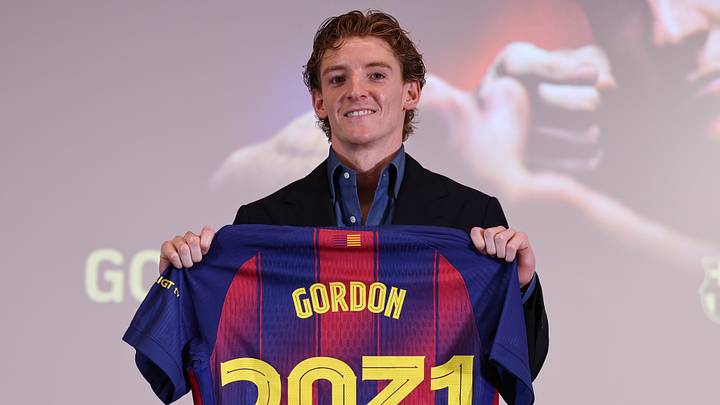
Just days after the end of 2025–26, England international Anthony Gordon landed in Catalonia as Barcelona’s first summer reinforcement for a fee worth $93.2 million (€80 million). To put this in perspective, the defending Spanish champions had spent just a little over $105 million (€88 million) in transfers since the start of the Hansi Flick era.
But all signs indicate that Barcelona are not done. An opening $116 million (€100 million) bid for Atlético Madrid striker Julián Alvarez has already been rejected, but the Catalans aren’t expected to give up on landing their priority target as negotiations appear destined to continue in the coming weeks.
Other world-class players have been firmly placed on Barcelona’s orbit as potential arrivals and their summer window business doesn’t seem anywhere close to being done. But after such a long time operating with handcuffs, how can Barça all of a sudden be back to being one of the main players in the transfer market?
Meeting La Liga’s Financial Fair Play Rules

Despite being a whopping $1.68 billion (€1.45 billion) in debt, per The Athletic, a shortage of money in the bank hasn’t been Barcelona’s main issue in recent years, evidenced by Forbes appointing the Catalans as the second most valuable soccer team in the world. The failure to comply with La Liga’s financial fair play regulations (namely the 1:1 rule which allows teams to spend $1 for every $1 earned) has been the biggest thorn in the club’s side.
Nevertheless, president Joan Laporta has long promised that Barça would finally operate within La Liga’s 1:1 rule this summer, allowing the club to sign—and more importantly register—players without much trouble.
La Liga executive Javier Gómez all but confirmed that Laporta’s promise would become a reality, according to The Athletic. And La Liga have already informed Barcelona that they can now operate without constraints after meeting the 1:1 rule, per Sport.
Incoming revenue from the reopening of the Camp Nou and La Liga’s approval to include the income of VIP seat sales at the stadium as part of revenue, as well as the exit of players—namely Robert Lewandowski—freeing up plenty of room in the team’s salary-bill contributed to Barcelona finally meeting La Liga’s financial fair play rules. Now, there is more room in their wage bill to register players.
Previously, Laporta employed creative “palancas,” financial levers that helped Barcelona sign and register players since the start of his presidency in 2021. Now, though, it seems that Barcelona’s finances are significantly improving in a much more straightforward and healthy manner.
Barcelona Need to Seize the Opportunity While They Can

As improved as Barcelona’s finances are, within the club there’s a feeling that they must act now to secure elite reinforcements, because they might not be in a position to do so in the near future.
Renovation work at the Camp Nou continues and although Barça will play at their spiritual home in 2026–27—with the third level of stands progressively reopening—it’s understood that the Catalans will have to leave and return to the Estadi Olímpic Lluís Companys in the summer of 2027 while the roof is placed on the renovated Camp Nou.
Leaving the Camp Nou again will impact the club’s revenue and, as a consequence, they could struggle to meet La Liga’s financial fair play rules, sentencing Barça to once again operate with constraints in the transfer market.
Apart from the obvious need to address voids on the roster such as Lewandowski’s, Barcelona’s 2026 summer strategy is to build their roster for the next two seasons, per Sport.
A drastic improvement in the club’s revenue streams make it viable for the Catalans to spend big and complete their ambitious summer transfer window objectives. But if they don’t capitalize on the opportunity now, they likely won’t be in position to do so until at least 2028.
READ THE LATEST BARCELONA NEWS, ANALYSIS AND INSIGHT FROM SI FC
 Add us as a preferred source on Google
Roberto Casillas is a writer for SI FC, focusing primarily on FC Barcelona, the Mexico National Team, Liga MX and all things Latin American football. Born and raised in Mexico City, he developed a deep passion for football from an early age and fell in love with Cruz Azul. The once future star of Mexican football still likes to showcase what’s left of his talent on the Sunday league pitch. He’s also a big fan of the New England Patriots—so much so he moved to the region for four years—, Chicago Cubs and is a life-long Formula 1 follower. When he takes a break from sports, he enjoys traveling the world, watching the latest great TV show, going to concerts and spending plenty of time with friends and family.