%20%20--%3E%0A%3Csvg%20version%3D%221.1%22%20id%3D%22Layer_1%22%20xmlns%3D%22http%3A%2F%2Fwww.w3.org%2F2000%2Fsvg%22%20xmlns%3Axlink%3D%22http%3A%2F%2Fwww.w3.org%2F1999%2Fxlink%22%20x%3D%220px%22%20y%3D%220px%22%0A%09%20width%3D%2239px%22%20height%3D%2240px%22%20viewBox%3D%220%200%2039%2040%22%20enable-background%3D%22new%200%200%2039%2040%22%20xml%3Aspace%3D%22preserve%22%3E%0A%3Cpath%20fill%3D%22%23FFFFFF%22%20d%3D%22M38.5%2C7H28.2v26h10.3V7z%22%2F%3E%0A%3Cpath%20fill-rule%3D%22evenodd%22%20clip-rule%3D%22evenodd%22%20fill%3D%22%23FFFFFF%22%20d%3D%22M26.1%2C25.5c0%2C5.8-4.1%2C7.5-12.9%2C7.5C3.9%2C33%2C0%2C31.2%2C0%2C25.2v-1.1h11.6%0A%09v2.4c0%2C0.7%2C0.1%2C1.4%2C1.2%2C1.4c1%2C0%2C1.2-0.4%2C1.2-1.3v-0.9c0-1.6-0.9-1.6-3.5-2.2C2.2%2C21.7%2C0%2C19.7%2C0%2C15.3v-0.9C0%2C9.3%2C5.5%2C7%2C12.9%2C7%0A%09c10.2%2C0%2C12.8%2C2.6%2C12.8%2C7.4v1.8h-11v-2.9c0-0.6-0.4-1.1-1.2-1.1c-0.6%2C0-1.2%2C0.4-1.2%2C1.1v0.9c0%2C1.5%2C0.9%2C2%2C3.3%2C2.5%0A%09c8%2C1.6%2C10.5%2C3.3%2C10.5%2C7.5V25.5z%22%2F%3E%0A%3C%2Fsvg%3E%0A)
U.S. Host City Reveals Total Amount Spent at World Cup—And It’s Staggering
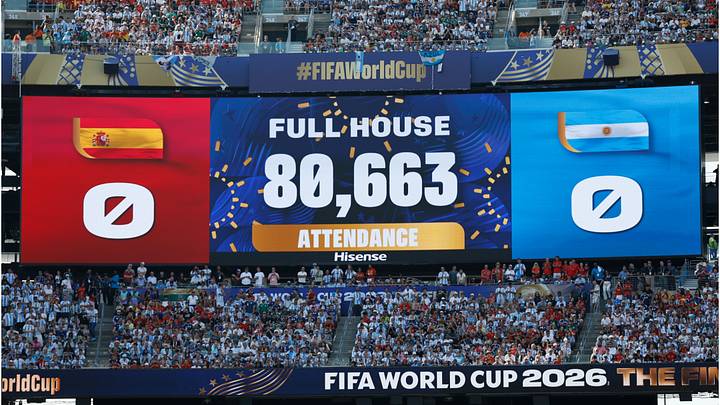
New York New Jersey hosted eight FIFA World Cup games this summer at MetLife Stadium, including the highly-coveted final, in what quickly proved to be the most expensive edition of the tournament for soccer fans to date. In case there was any doubt though, the host committee just revealed the numbers.
Soccer’s premier showcase generated a whopping $3.5 billion in total economic impact across New York and New Jersey, the committee announced Wednesday through a report conducted by Tourism Economics, an Oxford Economics company. It is a value roughly $200 million more than initially expected from the summer’s affair and does not even account for the exorbitant revenue from ticket sales, which went directly to FIFA.
Soccer’s governing body charged fans thousands of dollars to attend the most sought-after games, with resale prices (of which FIFA took a 15% cut) soaring even higher. In April, ticket prices for the lower bowl of the World Cup final began at $10,990, over quadruple the cost of the showpiece event in 2022 Qatar. And in the days leading up to the clash between Spain and Argentina, last-minute lower bowl tickets were set at a whopping $30,000—becoming the most expensive U.S. sporting event on record based on average purchase price.
In addition to exorbitant ticket prices, fans spared no expense on the rest of the World Cup experience, dollars the host cities actually saw themselves. The largest portion of New York New Jersey’s $3.5 billion total came from direct tournament spending ($1.9 billion). More than 645,000 fans attended matches at the East Rutherford, N.J. stadium, spending money on lodging in the area ($653 million), retail ($264 million), transportation ($200 million), local entertainment ($195 million) and food and drinks ($346 million).
Meanwhile, an additional 626,300 visitors traveled to the region just to participate in World Cup-related activities, doling out cash during events such as the World Cup Fan Zones throughout the five New York City boroughs.
One of the most contentious price tags in the region was that of public transit to and from MetLife Stadium. Typically just a $12.90 ticket to take the train from Penn Station in New York City to the sporting arena, the price jumped to nearly $100 for fans, sparking tensions between FIFA president Gianni Infantino and New Jersey Governor Mikie Sherrill in the process.
The other main portion of the $3.5 billion sum came from total labor income ($1.4 billion) from the over 27,000 total jobs the tournament created in the region.
“The final numbers demonstrate that New York and New Jersey didn’t just rise to the occasion—we exceeded expectations and delivered an impact that will be felt long after the final whistle,” said Alex Lasry, the CEO of the New York New Jersey host committee. “Billions of dollars flowed through our hotels, restaurants, small businesses and communities, tens of thousands of jobs were supported and people across the region shared in the benefits of welcoming the world.”
FIFA Generates Historic Revenue From 2026 World Cup

In large part to the historically-high ticket prices, the commercialization of “hydration breaks” and the inclusion of a record-48 tournament teams, FIFA walked away with a reported $15 billion in revenue, an all-time high for a World Cup and a figure over $4 billion more than initially projected.
Infantino, who has become known—for better or worse (mostly worse)—for his love of revenue streams, attested the staggering numbers to simply the state of the U.S. market.
“We have to look at the market,” he reasoned ticket pricing back in May. “We are in the market in which entertainment is the most developed in the world. So we have to apply market rates. In the U.S., it is permitted to resell tickets as well. So if you were to sell tickets at the price which is too low, these tickets will be resold at a much higher price.
“And as a matter of fact, even though some people are saying that the ticket prices we have are high, they still end up on the resale market at an even higher price, more than double our price.”
Infantino has been under fire over the last month for his last revenue-driving antic: selling stakes of future World Cups and other FIFA events to private investors, a secret proposal he has since been forced to abandon.
The majority of the soccer world continues to call for his departure as president. First, he made the world’s game financially inaccessible to the average fan. Second, he cosigned splicing matches into quarters to allow for commercial breaks that often ran over time. Third, he slapped a “for sale” sign on the World Cup. The last appears to be the nail in the coffin.
 Add us as a preferred source on Google
Sophia Vesely is a writer, reporter and editor for SI FC, with an emphasis on North American coverage. Her experience comes from regional journalism as a former sports reporter for the Orlando Sentinel, Dallas Morning News and Seattle Times. Vesely graduated from Swarthmore College, where she played collegiate soccer as a wingback. She specializes in MLS, NWSL and NCAA soccer.