%20%20--%3E%0A%3Csvg%20version%3D%221.1%22%20id%3D%22Layer_1%22%20xmlns%3D%22http%3A%2F%2Fwww.w3.org%2F2000%2Fsvg%22%20xmlns%3Axlink%3D%22http%3A%2F%2Fwww.w3.org%2F1999%2Fxlink%22%20x%3D%220px%22%20y%3D%220px%22%0A%09%20width%3D%2239px%22%20height%3D%2240px%22%20viewBox%3D%220%200%2039%2040%22%20enable-background%3D%22new%200%200%2039%2040%22%20xml%3Aspace%3D%22preserve%22%3E%0A%3Cpath%20fill%3D%22%23FFFFFF%22%20d%3D%22M38.5%2C7H28.2v26h10.3V7z%22%2F%3E%0A%3Cpath%20fill-rule%3D%22evenodd%22%20clip-rule%3D%22evenodd%22%20fill%3D%22%23FFFFFF%22%20d%3D%22M26.1%2C25.5c0%2C5.8-4.1%2C7.5-12.9%2C7.5C3.9%2C33%2C0%2C31.2%2C0%2C25.2v-1.1h11.6%0A%09v2.4c0%2C0.7%2C0.1%2C1.4%2C1.2%2C1.4c1%2C0%2C1.2-0.4%2C1.2-1.3v-0.9c0-1.6-0.9-1.6-3.5-2.2C2.2%2C21.7%2C0%2C19.7%2C0%2C15.3v-0.9C0%2C9.3%2C5.5%2C7%2C12.9%2C7%0A%09c10.2%2C0%2C12.8%2C2.6%2C12.8%2C7.4v1.8h-11v-2.9c0-0.6-0.4-1.1-1.2-1.1c-0.6%2C0-1.2%2C0.4-1.2%2C1.1v0.9c0%2C1.5%2C0.9%2C2%2C3.3%2C2.5%0A%09c8%2C1.6%2C10.5%2C3.3%2C10.5%2C7.5V25.5z%22%2F%3E%0A%3C%2Fsvg%3E%0A)
The Orioles Needed an Elite Starter, but Freddy Peralta May Not Be a Great Fit
In this story:
The Orioles landed one of the top remaining arms in free agency on Tuesday after agreeing to a five-year, $125 million deal with Freddy Peralta, according to a report from ESPN’s Jeff Passan.
After failing to retain Trevor Rogers, who opted to join the Cubs on a five-year, $120 million deal earlier Tuesday, Baltimore moved quickly to lock down free agency’s most accomplished starter not named Tarik Skubal. Peralta, 30, will earn $25 million per season throughout his deal with the O’s. The contract doesn’t include any deferred money or opt-outs, so Peralta will be tied to Baltimore through his age-35 season and will return to free agency after the 2031 season.
Why this deal makes sense
The Orioles were in need of a frontline starting pitcher, especially after Rogers declined the qualifying offer to test free agency. After Rogers agreed to sign with the Cubs, Baltimore wasted no time in locking up a deal for Peralta. Now, the 30-year-old is set to serve as the Orioles’ ace and lead a rotation that also consists of Kyle Bradish, Shane Baz, Cade Povich and Brandon Young.
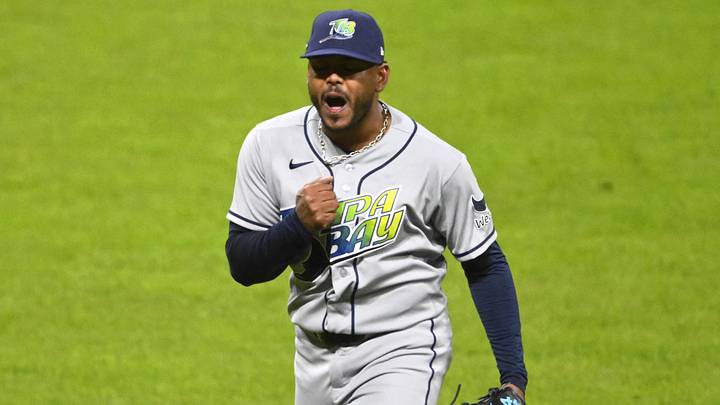
Last season, Baltimore’s starting pitchers were in the middle of the pack with a 4.24 ERA that ranked 17th in MLB and 760 strikeouts, which ranked 14th. That same group had the fifth-highest WHIP (1.38), walked the fifth-most batters (321) and surrendered the fourth-highest batting average to opposing hitters (.263). Peralta hovered right around league-average with a 3.36 BB/9 and opponents slashed just .208/.273/.330 against him throughout his 10-start stint with the Rays.
Peralta has been extremely durable throughout his career, too. He’s logged the 10th-most innings by any pitcher in MLB since 2023 (685), and is one of only six pitchers to hurl at least 160 innings in each of the last four seasons.
Fetching a top arm in free agency was never going to be a cheap endeavor. The Orioles were happy to be competitive in the market to restock their rotation, and they secured themselves one of the most sought-after options available.
Biggest risk factors
While Peralta comes with a proven track record of success, last season was not his finest. It was his first year away from the Brewers, who dealt him to the Mets in the offseason, where he struggled to find his footing. In New York, Peralta had a 4.99 ERA and surrendered 17 home runs across 22 starts. After a midseason trade to Tampa, the veteran righthander rebounded and logged a 3.25 ERA in his final 10 starts before impressing in the postseason. The risk for the Orioles is they’ll need to bank on the Rays and Brewers version of Peralta being the one that’s set to take the mound in Baltimore for the next half-decade, as opposed to the pitcher we saw in Queens.
As noted by SI’s Tom Verducci, Peralta’s fastball has historically played better in domed stadiums or stadiums with a closed roof. Throughout his career, opponents have a .198 batting average and .378 slugging percentage against his heater in domed stadiums. With an open roof, opponents are hitting .250 and slugging .401 against the pitch. His four-seam fastball also has more induced vertical break in domed stadiums than it does in non-domed environments. He spent the first seven years of his career playing in Milwaukee, and half of last season in Tampa, both of which have roofs. Camden Yards, however, does not. For a pitcher who threw his fastball 53% of the time last season, not getting the best version of Peralta’s go-to pitch could present something of a concern.
Furthermore, Peralta had a career-low strikeout rate in ‘26, and it actually worsened when he joined the Rays, despite him improving in most other areas. From 2021 (Peralta’s first All-Star campaign) to ‘25, the right-hander had a 10.9 K/9 and a 1.09 WHIP across 738 1/3 innings. Last season, his strikeouts per nine fell to 8.3, the lowest mark of his career, and his WHIP ballooned to 1.33, the worst its been since 2019 when he was still pitching out of the bullpen in Milwaukee.
Roster implications for the Orioles
With Chris Bassett and Rogers both hitting free agency, the Orioles had an opening in their starting rotation. They quickly locked down a new No. 1 starter in Peralta, who should be the face of their rotation for the foreseeable future. Because Peralta was traded to the Mets, and subsequently dealt to the Rays last season, he wasn’t eligible to receive the qualifying offer from Tampa. As such, the Orioles won’t be required to give up draft pick compensation in the deal to bring him to Baltimore, nor will they lose out on any international signing bonus money. Furthermore, because the Orioles issued the qualifying offer to Rogers, they’ll receive draft pick compensation as a result of his decision to join the Cubs.

Market impacts
Four of the top five starters in free agency have already secured new deals. Tarik Skubal agreed to a record-breaking $450 million deal with the Mets, while Rogers signed with the Cubs on a contract that carries a $24 million average annual value. Sonny Gray, the oldest of the group, signed a two-year pact with the Twins that pays him $27.5 million per year, and now, Peralta is heading to Baltimore on a five-year deal worth $25 million annually.
With some of the best arms off the market, Michael King is the top pitcher remaining, and there are still a handful of teams that should be pursuing him. The deals dished out to Peralta and Rogers should be of similar value to what King will receive, but if teams get desperate with multiple arms being taken off the market, the righthander could see his value go up.
Other pitchers that have already signed in free agency include Kris Bubic (one year, $17.5 million with the Guardians) and Dustin May (three years, $52.5 million with the White Sox). So, it seems like the going rate for mid-rotation pitchers is around $17 million annually, while higher-end starters stand to make in the range $24 million-plus.
Winners and losers of this deal
The Orioles are feeling good after securing Peralta on the long-term deal. Of course, he’ll need to pitch up to his expected levels for them to truly be considered a winner, but they had a need in the rotation and filled it with one of the top arms available.
As for losers, the Blue Jays instantly come to mind. Toronto was reportedly willing to offer Skubal as much as $400 million over nine seasons before being outbid by the Mets. Now, they’re treading dangerous water as they look to restock a rotation that saw Kevin Gausman, Max Scherzer and Shane Bieber depart this year. Losing out on both Rogers and Peralta is a big blow for the Blue Jays, and they’ll certainly be at the forefront of Michael King’s market as they aim to lock down a starter.
The Padres are also a loser in this instance. San Diego’s rotation was expected to be a focal point for the club this offseason, and they’ve now missed out on most of the best pitchers on the market. They’ll certainly be hoping to retain King in the coming days.
 Add us as a preferred source on Google

Karl Rasmussen is a staff writer for Sports Illustrated. A University of Oregon alum who joined SI in February 2023, his work has appeared on 12up and ClutchPoints. Rasmussen is a loyal Tottenham, Jets, Yankees and Ducks fan.
Follow Karlras920